Key takeaways
- Best for: Master bedrooms and large guest rooms (12×14 ft and up), bedrooms where the dresser will double as a media console or vanity.
- Pros: Stable top surface for a 50-55 inch TV, mirror, or decor; lower height keeps sightlines open; easier to access all drawers without reaching high.
- Cons: Requires a long, uninterrupted wall; can overwhelm a 10×12 ft room if placed opposite the bed.
- Placement rule: Leave at least 36 inches of clearance in front for drawer extension plus walking space, and 3 to 4 inches from the side wall to allow for baseboards and airflow.
What's inside
- Vertical vs. Horizontal: Which 4 Drawer Dresser Fits Your Room?
- Drawer Depth, Usable Space, and Weight Limits
- Material and Construction Trade-Offs
- Decision Matrix: Pick by Your Situation
- Assembly, Moving, and Durability Realities
- How to Maximize Storage in a Medium to Large Bedroom
- Frequently Asked Questions
A 4 drawer dresser is the most versatile storage size for a medium to large bedroom because it holds a full wardrobe category per drawer without the width of a 6-drawer double dresser or the height of a 5-drawer tall chest. Choose a horizontal (wide) 4-drawer if you have at least 55 inches of wall space and want a surface for a TV or mirror, and choose a vertical (narrow) 4-drawer chest if you have less than 40 inches of wall space and need to save floor area.
- Vertical vs. Horizontal: Which 4 Drawer Dresser Fits Your Room?
- Drawer Depth, Usable Space, and Weight Limits
- Material and Construction Trade-Offs
- Decision Matrix: Pick by Your Situation
- Assembly, Moving, and Durability Realities
- How to Maximize Storage in a Medium to Large Bedroom
- Frequently Asked Questions
Vertical vs. Horizontal: Which 4 Drawer Dresser Fits Your Room?
The same drawer count comes in two very different footprints, and the right one depends on your wall width, traffic flow, and what you want on top.

FOTOSOK White Dresser, Dresser for Bedroom, Small Dresser Chest of Drawers
Included for '4 Drawer Dresser: Best Options for Bedrooms, Hallways and Small Spaces' because the listing specifies Dresser for Bedroom and Small Dresser Chest of Drawers, details this guide uses to compare options.
View on Amazon
FOTOSOK Black Dresser, Dresser for Bedroom, Small Dresser Chest of Drawers
Included for '4 Drawer Dresser: Best Options for Bedrooms, Hallways and Small Spaces' because the listing specifies Dresser for Bedroom and Small Dresser Chest of Drawers, details this guide uses to compare options.
View on Amazon
HOUSUIT White Dresser with 4 Drawers, 29" W Chest of Drawers, Wood Dresser | Modern 4 Drawers Dresser, Space-Saving Vertical Storage Dresser with Large Equal Sized Drawers for Living Room, Hallway
Included for '4 Drawer Dresser: Best Options for Bedrooms, Hallways and Small Spaces' because the listing specifies 29" W Chest of Drawers and Wood Dresser, details this guide uses to compare options.
View on Amazon
furtble 4 Drawer Dresser for Bedroom, White Small Wooden Dresser, Modern Closet Drawers Storage Cabinet for Entryway, Small Chest of Drawers for Living Room, Hallway, Office, 23.6''W
Included for '4 Drawer Dresser: Best Options for Bedrooms, Hallways and Small Spaces' because the listing specifies White Small Wooden Dresser and Modern Closet Drawers Storage Cabinet for Entryway, details this guide uses to compare options.
View on AmazonHorizontal 4 Drawer Dresser (Wide Dresser)
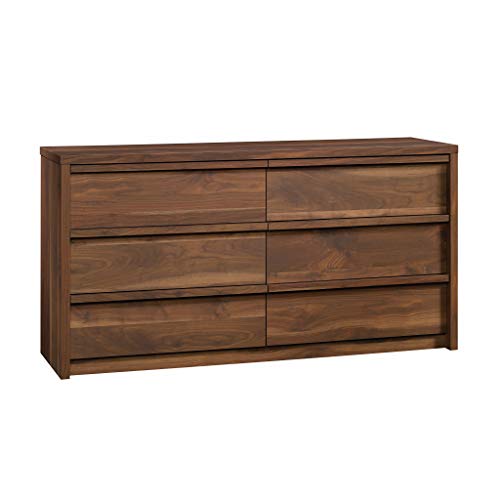
This is the classic low and wide form, usually configured as 2 drawers over 2 drawers or 4 side-by-side in two rows. Typical dimensions are 52 to 60 inches wide, 18 to 20 inches deep, and 30 to 34 inches high.
- Best for: Master bedrooms and large guest rooms (12×14 ft and up), bedrooms where the dresser will double as a media console or vanity.
- Pros: Stable top surface for a 50-55 inch TV, mirror, or decor; lower height keeps sightlines open; easier to access all drawers without reaching high.
- Cons: Requires a long, uninterrupted wall; can overwhelm a 10×12 ft room if placed opposite the bed.
- Placement rule: Leave at least 36 inches of clearance in front for drawer extension plus walking space, and 3 to 4 inches from the side wall to allow for baseboards and airflow.
Vertical 4 Drawer Dresser (Tall Chest)
Often called a 4-drawer chest or chest of drawers, this stacks four drawers vertically. Typical dimensions are 30 to 38 inches wide, 18 to 20 inches deep, and 42 to 50 inches high.
- Best for: Medium bedrooms (10×12 ft), hallways, entryways, and small apartments where floor space is limited.
- Pros: Uses vertical space; fits in corners, closets, or narrow hallways; leaves more wall space for nightstands or a desk.
- Cons: Top drawers can be hard to reach for shorter users; smaller top surface; taller center of gravity means wall anchoring is essential.
- Placement rule: In a hallway, ensure the chest depth (18-20 inches) plus 36 inches of passage clearance fits your hallway width. Most hallways are 36 to 42 inches wide, so a standard 20-inch deep chest will block traffic — look for a narrow-depth model at 15 to 16 inches deep for hallways.
Quick Fit Guide by Room Size
| Room Size | Recommended Configuration | Max Dresser Width | Why It Works |
|---|---|---|---|
| 10×12 ft (120 sq ft) | Vertical 4-drawer chest | 32-36 inches | Leaves 60+ inches for bed + nightstands on the same wall |
| 12×14 ft (168 sq ft) | Either; horizontal if wall is free | 52-58 inches | Enough linear wall space without crowding windows or doors |
| 14×16 ft+ (224 sq ft+) | Horizontal 4-drawer double | 58-60 inches | Proportions match larger furniture; top holds TV/mirror comfortably |
| Hallway / Entry (36-42″ wide) | Narrow vertical chest only | 30-32 inches | 15-16″ depth keeps 20-24″ walking path clear |
Drawer Depth, Usable Space, and Weight Limits
Outer dimensions are misleading. What matters is usable interior depth and how much weight the slides and bottom panel can hold.
Most 4 drawer dressers have an outer depth of 18 to 20 inches, which translates to an interior drawer depth of 14 to 16 inches. That is deep enough to fold sweaters, jeans, and towels in one layer, but shallow enough that items don’t get lost. Drawers shallower than 13 inches interior struggle with bulkier items like hoodies, while drawers deeper than 17 inches make it hard to see what’s at the back.
- Standard interior height per drawer: 6 to 8 inches. Use 6-inch drawers for t-shirts, underwear, and accessories; 7.5 to 8-inch drawers for jeans, sweaters, and linens.
- Weight capacity: Budget engineered-wood dressers with center wood glides usually support 25 to 35 lbs per drawer. Mid-range models with metal ball-bearing side slides support 40 to 50 lbs per drawer. Solid wood with undermount or heavy-duty slides can handle 50 to 75 lbs per drawer. Total dresser load including top surface is typically 150 to 250 lbs.
- What this means in practice: A drawer full of denim (8-10 pairs) weighs about 18 to 22 lbs. A drawer of winter sweaters weighs 12 to 15 lbs. You will hit volume limits before weight limits unless you store books, tools, or heavy collections inside.
Measure your folded clothes stack before buying. Fold your tallest sweater and measure its height — if it’s over 7 inches, you need deep-profile drawers, not the slim 5-inch top drawers found on many modern designs.
Material and Construction Trade-Offs
A 4 drawer dresser at different price points is not just a style choice — the material determines weight, durability, and how it handles humidity and moves.
| Construction Type | General Market Range | Weight (Empty) | Durability Reality | Best For |
|---|---|---|---|---|
| Solid Wood (pine, rubberwood, oak) | usually $500–$1,200 | 110–160 lbs | Most durable; resists sagging and can be refinished. Heaviest to move; may expand/contract with humidity. Drawer bottoms are usually solid or plywood. | Long-term use, families, humid climates |
| Engineered Wood (MDF / particleboard with veneer or laminate) | usually $200–$550 | 70–110 lbs | Affordable and stable finish, but vulnerable to moisture and chipping at edges. Particleboard drawer bottoms sag first under heavy loads. Avoid over-tightening screws. | Renters, budget updates, climate-controlled rooms |
| Wood Frame + Fabric Drawers (steel frame) | usually $80–$250 | 30–50 lbs | Lightest and easiest to assemble/move. Fabric bins hold 15–25 lbs max, lose shape with heavy items, and offer no dust protection. Frame can wobble if not leveled. | Dorms, closets, nurseries, temporary storage |
| Metal Frame + Wood Drawers | usually $300–$600 | 60–90 lbs | Very stable; resists racking. Can feel industrial; drawers may be noisier on metal slides. Powder coating prevents rust. | Modern lofts, small spaces needing slim frames |
Check two details that predict failure before the finish does: drawer slide type and drawer bottom thickness. Ball-bearing metal slides or undermount soft-close slides will outlast center wood glides by years. A drawer bottom thinner than 3mm (about 1/8 inch) in MDF will bow under folded jeans within a year — look for 5mm+ plywood or reinforced bottoms with a center support rail.
Decision Matrix: Pick by Your Situation
Use this to match your actual living situation to the right 4 drawer dresser type, rather than browsing by style alone.
| Your Situation | Best 4-Drawer Choice | Key Spec to Prioritize |
|---|---|---|
| Small apartment, need to maximize floor space | Vertical chest, 30-32″ wide | Depth under 18″ and wall-anchor kit included |
| Renters who move every 1-2 years | Engineered wood wide dresser with cam-lock assembly or fabric-frame dresser | Box weight under 90 lbs, disassembles without damage |
| Kids’ room or pets that bump furniture | Low horizontal dresser, solid wood or MDF with rounded edges | Anti-tip strap, soft-close drawers, low height under 34″ |
| Back pain / limited reaching | Horizontal wide dresser | Drawer heights under 36″ from floor, full-extension slides |
| Need TV or mirror on top | Horizontal dresser, 52″+ wide | Top rated for 80+ lbs, solid top panel not hollow core |
| Hallway or entry storage for linens | Narrow vertical chest, 15-16″ deep | Shallow depth, wall anchoring, 7″+ interior drawer height |
Assembly, Moving, and Durability Realities
A 4 drawer dresser is one of the heaviest flat-pack items in a bedroom, and assembly mistakes cause most wobbles and drawer failures — not the material itself.
- Box weight and delivery: Expect a shipping weight of 75 to 130 lbs for engineered wood and 120 to 170 lbs for solid wood, often in one or two boxes. Measure your doorway (standard interior door is 28 to 30 inches wide) and stairwell before delivery. The assembled dresser will not fit through a narrow doorway sideways if it is over 60 inches wide.
- Assembly time: Plan 60 to 120 minutes with two people. Horizontal dressers take longer due to more panels and alignment. Do not use a power drill on cam locks — hand-tighten to avoid stripping particleboard.
- What wears first: Drawer bottoms sag, then slides loosen, then the back panel bows. Reinforce from day one by not overloading beyond 40 lbs per drawer for engineered wood and by keeping the thin back panel tacked with all provided nails, not just a few.
- Leveling: Place on hard floors with felt pads; on carpet, use adjustable feet if included. An unlevel dresser causes drawers to slide open or bind. Check with a phone level app front-to-back and side-to-side.
- Anti-tip safety: Every vertical 4-drawer chest over 42 inches high must be anchored to a wall stud with the included strap or L-bracket, especially in homes with children. This is not optional — a loaded tall chest can tip when two drawers are open simultaneously.
- Maximizing storage: Use vertical folding (file folding) to double usable space versus stacking. Add drawer dividers for the top drawer to keep socks and accessories from wasting deep drawer height. Leave 1 inch of clearance at the top of each drawer so it closes without catching fabric.
How to Maximize Storage in a Medium to Large Bedroom
In a 12×14 ft bedroom, a 4 drawer dresser works best as part of a storage wall rather than a standalone piece. Place the horizontal dresser centered on the longest wall without windows, anchor a mirror above to create verticality, and keep 36 to 42 inches between the foot of the bed and the dresser front so drawers open fully even with bedding overhang. If using a vertical chest, flank it with a nightstand on one side and a full-length mirror on the other to balance height, and use the top for a lamp or jewelry tray rather than a TV — the 30-inch width is too narrow for stable media support.
For both configurations, avoid pushing the dresser flush against the wall if you have baseboard heating — leave 2 to 3 inches for heat circulation and to prevent moisture trapping on the back panel. In closets, a vertical 4-drawer chest at 18 inches deep can replace a built-in drawer unit and still leave 24 inches of hanging rod clearance in a standard 24-inch deep reach-in closet.
Frequently Asked Questions
Can a 4 drawer dresser hold a TV?
A horizontal 4 drawer dresser rated for 80 to 100 lbs on top can safely hold a 50 to 55-inch TV (usually 30 to 45 lbs with stand). A vertical chest is generally too narrow and too tall for comfortable viewing and is not recommended as a TV stand.
How deep should dresser drawers be for clothes?
An interior depth of 14 to 16 inches and interior height of 7 to 8 inches per drawer handles folded adult clothing without double-stacking. For bulky knitwear or towels, look for at least 7.5 inches of interior height.
Do I need to anchor a 4 drawer dresser?
Anchor any dresser over 30 inches tall if children or pets are in the home, and always anchor vertical chests over 42 inches regardless. Use the included anti-tip hardware into a wall stud, not just drywall anchors.