
Key takeaways
- The best resistance training bands for a growing routine are a set whose changes can be understood. Before buying a stronger band, identify what the...
What's inside
The best resistance training bands for a growing routine are a set whose changes can be understood. Before buying a stronger band, identify what the current setup is failing to provide. The issue might be resistance, the permitted stretch, a missing connection or an unsuitable exercise choice. Those problems should not all be answered by selecting a darker color.
This guide provides practical selection and use considerations. It does not report hands-on product testing.
Record the present setup
Note the exact band, its model or level, the exercise and the documented arrangement used. Keep the instructions available so the same setup can be recognized later. An entry that says only heavy band is less useful when several products use different naming systems.
Include relevant attachments and their configuration. If the routine uses an anchor, record the supported arrangement rather than inventing a shorter route to create more tension. Consistency starts with knowing how the equipment is being used, not merely owning a sequence of colors.
Ask whether resistance is actually the limitation
Use appropriate instruction to assess the movement before increasing its challenge. If the exercise cannot be performed as taught, a stronger band may not be the useful next purchase. Technique, equipment setup and exercise suitability deserve separate attention.
If a different resistance level is appropriate, compare the manufacturer’s documented options for that product. Do not translate a color from another brand as though it were a universal standard. Check any conditions attached to stated resistance figures and use them within their intended context.
Choose between an addition and a replacement
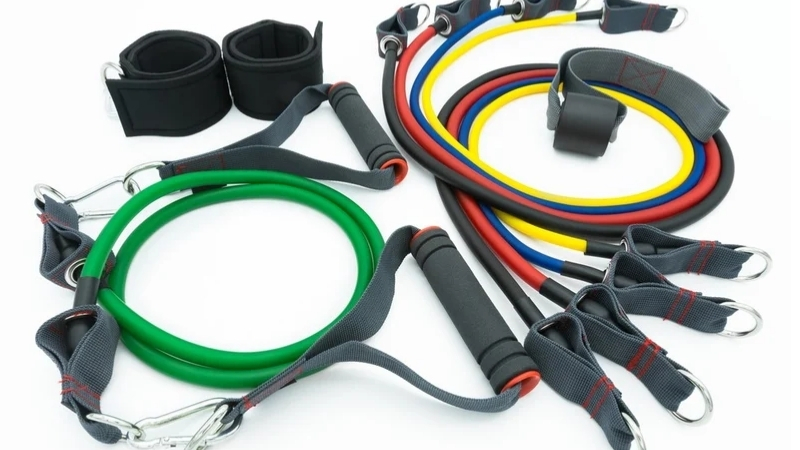
If the appropriate next level is unavailable in the same system, compare a complete compatible alternative rather than treating an unrelated component as a drop-in substitute. Include any new handles, instructions and storage needs in that comparison.
A new level can extend a suitable existing set, while a worn or damaged band needs the response described by its maker. Do not keep compromised equipment in the rotation merely because it offers a lighter option. Condition is not an alternative resistance setting.
If the current format cannot support a required exercise, changing band shape or system may be more relevant than adding another level. Compare that change as a new setup with its own instructions and components. Do not assume existing handles or anchors transfer automatically.
Product listings to compare
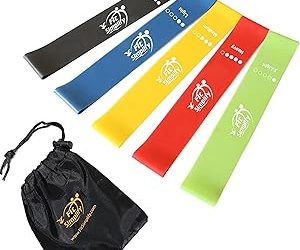
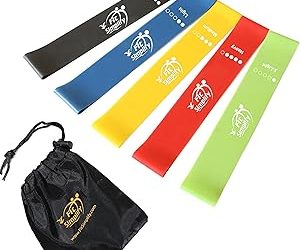
As an Amazon Associate we earn from qualifying purchases at no extra cost to you. Product prices and availability are accurate as of the date shown and are subject to change. Compare the selected variant and its current description with the requirements above.
As an Amazon Associate we earn from qualifying purchases at no extra cost to you. Product prices and availability are accurate as of the date shown and are subject to change.


Option #4


Keep combined configurations conditional
Some systems describe particular combinations of bands and accessories. Use those only within the documented arrangement and limits. Adding the printed values of unrelated bands does not establish the behavior or suitability of an improvised combined system.
Before paying for a bundle, check which combinations are actually supported and relevant to the routine. A large advertised total can be less helpful than a clear set of individual options. Keep the next purchase tied to the exercise requirement you identified.
Create a usable storage record
Store each component according to its care guidance and keep its identity clear. Avoid a drawer of tangled bands whose model information has been lost. Place the instructions or a concise equipment inventory where they can be found when someone asks which attachment belongs to which set.
For a shared household, establish a return position and a way to report a condition problem before another person uses the equipment. Do not modify the band or its connection to label it if that would conflict with the maker’s guidance. Organization should preserve the equipment, not alter it.
Expand from one answered question
After choosing an addition, check the delivered item against the exact ordered level and inspect it as directed. Return to the original exercise setup with suitable instruction before changing several variables together. This makes the effect of the new option easier to understand.
A well-chosen band collection need not include every available level. It needs appropriate current options, clear documentation and a reason for each addition. Keep future expansion deliberate: identify the limitation, confirm the supported solution and then buy the component that addresses it, instead of treating a bigger bundle as automatic progress.
Additional product links
- Start 30-Day Prime Free Trial →
- See Today’s Amazon Deals
- ▸ Try Amazon Prime — free 30-day trial
- ▸ Start an Audible Premium Plus free trial
- ▸ Read free with Kindle Unlimited
Related reading
- Best resistance training bands
- Chris Parker
- Best Pedal Resistance Bands: 6 Seated Training Picks Rated
- Best Resistance Bands Women Use: 6 Picks by Band Format
- Best Resistance Bands for Men: 5 Sets by Strength Level
- Best Resistance Bands Leggings: 6 Pairs for Home Training
- Best Resistance Bands Workout Gear for Full Body Strength
- Best changeable dumbbells
- Best rated yoga mat
- Best mat yoga
- Best home gym equipmen
- Best fitness equipment for home gym
- Best Dumbbells Set: 6 Complete Options for Home Training
- Best Kettlebell Training: 6 Bells to Build a Progression
- The Best Resistance Bands for a Full-Body Workout in 2026

Write Your Review
No reviews yet. Be the first to share your experience!