Key takeaways
- Pivot Hinge (Center or Offset Pivot): A top pivot in the header and a bottom pivot in the floor. This is the most common for a true hidden door because it can carry the most weight and hides hardware completely. Requires a solid, level floor and a mortised floor plate. Swing is typically in-swing only to the hidden side.
- Concealed Bookcase Hinges (Heavy-Duty European / SOSS Style): 4 to 6 massive concealed hinges mounted to a steel door frame. No floor work. Easier to retrofit into an existing 30 to 36-inch doorway. Weight capacity is lower than a pivot and the gap on the hinge side is slightly more visible.
- French / Double Bookcase Doors: Two narrower cases that meet in the middle and latch together. Used for openings 48 to 72 inches wide. Each leaf is lighter and puts less stress on the frame, but you lose 4 to 6 inches of usable depth where the cases meet and alignment is critical.
- Sliding / Barn-Style Track: The bookcase hangs from an overhead steel track and slides sideways. Best when there is no swing clearance. It is the easiest to install and does not need floor anchoring, but the track is visible unless concealed in a soffit, and the wall beside the opening must be completely clear and at least as wide as the bookcase.
What's inside
- How a Hidden Bookshelf Door Actually Works
- Clearance, Dimensions, and Weight: The Numbers That Decide If It Fits
- Material and Construction Trade-Offs
- Decision Matrix: Which Option Fits Your Situation
- Installation Costs and What To Expect in 2026
- Assembly, Moving, and Long-Term Durability
- Frequently Asked Questions
A bookshelf door for hidden room use is a full-height bookcase mounted on a concealed hinge system that swings or slides to seal a doorway, and it works only when hinge type, weight capacity, floor clearance, and wall framing all match – get one wrong and the door will sag, scrape, or reveal its seam.
- How a Hidden Bookshelf Door Actually Works
- Clearance, Dimensions, and Weight: The Numbers That Decide If It Fits
- Material and Construction Trade-Offs
- Decision Matrix: Which Option Fits Your Situation
- Installation Costs and What To Expect in 2026
- Assembly, Moving, and Long-Term Durability
- Frequently Asked Questions
Unlike a standard bookcase, a bookcase door for hidden room applications is engineered as a door first and furniture second. The case must stay rigid under load, the hinges must carry 300+ pounds without deflection, and the trim must hide the gap that allows the whole unit to move. Here is how to choose and plan one that actually functions daily.

MURPHY DOOR Hidden Hinge Hardware - Easy DIY Hidden Door System, Heavy Duty Swinging Door Hinge for Secret Door or Hidden Door Bookcase, Up to 300 lbs
Included for 'Bookshelf Door for Hidden Room: How It Works and What to Consider' because the listing specifies Easy DIY Hidden Door System and Up to 300 lbs, details this guide uses to compare options.
View on Amazon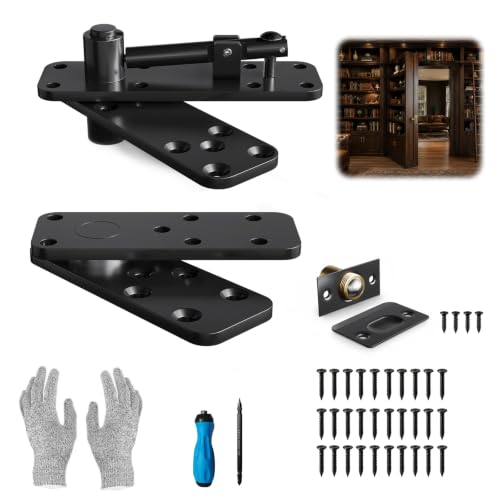
Easelife Hidden Door Pivot Hinge for Secret Door, Bookcase, Bookshelf Doors
Included for 'Bookshelf Door for Hidden Room: How It Works and What to Consider' because the listing specifies Bookcase and Bookshelf Doors, details this guide uses to compare options.
View on AmazonHow a Hidden Bookshelf Door Actually Works
The system has three parts: a steel or solid-wood frame anchored into the door’s jack studs and header, a pivot or hinge assembly that carries the weight, and the bookcase itself which is built with a reinforced back and fixed shelves to prevent racking. Most units replace the existing door jamb entirely. You do not hang a heavy bookcase on standard bedroom door hinges – residential interior hinges are rated for 40 to 60 pounds per hinge, while a loaded bookshelf door can weigh 250 to 500 pounds.
When closed, a magnetic latch, roller catch, or hidden lockset holds the case flush against weatherstripping or trim that blocks light and air – the two cues that give away a hidden room. When opened, the case swings as a single rigid door. If the case flexes, books fall and the door binds, which is why adjustable shelves are often eliminated or limited to the top section.
The 4 Hinge Systems and When to Use Each
Hinge choice determines clearance, weight limit, and whether you need to modify the floor.
- Pivot Hinge (Center or Offset Pivot): A top pivot in the header and a bottom pivot in the floor. This is the most common for a true hidden door because it can carry the most weight and hides hardware completely. Requires a solid, level floor and a mortised floor plate. Swing is typically in-swing only to the hidden side.
- Concealed Bookcase Hinges (Heavy-Duty European / SOSS Style): 4 to 6 massive concealed hinges mounted to a steel door frame. No floor work. Easier to retrofit into an existing 30 to 36-inch doorway. Weight capacity is lower than a pivot and the gap on the hinge side is slightly more visible.
- French / Double Bookcase Doors: Two narrower cases that meet in the middle and latch together. Used for openings 48 to 72 inches wide. Each leaf is lighter and puts less stress on the frame, but you lose 4 to 6 inches of usable depth where the cases meet and alignment is critical.
- Sliding / Barn-Style Track: The bookcase hangs from an overhead steel track and slides sideways. Best when there is no swing clearance. It is the easiest to install and does not need floor anchoring, but the track is visible unless concealed in a soffit, and the wall beside the opening must be completely clear and at least as wide as the bookcase.
| Hinge System | Typical Weight Capacity (Total Load) | Door Width It Supports | Floor Clearance Needed | Best For |
|---|---|---|---|---|
| Floor Pivot | 400 – 700 lbs | 28 – 36 inches | 3/8 – 3/4 inch under door + floor plate mortise 1/2 inch deep | New construction, heaviest solid-wood cases |
| Concealed Heavy-Duty Hinges (5-6 hinges) | 250 – 400 lbs | 24 – 32 inches | 1/2 – 3/4 inch under door | Retrofit without cutting concrete/flooring |
| Double French Leaves | 200 – 300 lbs per leaf | 48 – 72 inches total | 1/2 inch per leaf | Wide openings, closets, library walls |
| Overhead Sliding Track | 300 – 500 lbs | 30 – 42 inches | 1/4 – 1/2 inch under door, 0.75 inch wall gap | No swing space, renters if header can support track |
Clearance, Dimensions, and Weight: The Numbers That Decide If It Fits
A bookshelf door fails most often because of tight clearances, not hardware quality. Measure like a door installer, not a furniture buyer.
1. Swing Clearance: A standard 30-inch bookcase door needs a full 31 to 33-inch sweep radius when it swings. That means no light fixtures, rugs with thick pile, or furniture within that arc on the hidden side. If your hidden room is a 10×12 ft home office, a 32-inch in-swing case will consume about 7 sq ft of floor when open at 90 degrees, leaving you needing at least 36 inches of walkway on the other side to avoid blocking a desk.
2. Floor Gap and Level: Most systems require 1/2 to 3/4 inch of clear space from the bottom of the bookcase to the finished floor. If you add carpet after installation or have uneven hardwood, the door will drag. For pivot systems, the floor must be level within 1/8 inch across the door width or the pivot will bind.
3. Depth Matters: A functional bookcase door is 10 to 14 inches deep for books. Add 1.5 to 2 inches for baseboard and trim that allows the case to swing past the adjacent wall. Total projection from the wall is usually 12 to 16 inches. In a hallway that is only 36 inches wide, that depth can make the hallway feel impassable when the door is open.
4. Weight Limits Are Real: The case itself weighs 120 to 200 pounds empty if built from MDF or plywood. Add books at roughly 30 to 35 pounds per linear foot of shelf (a 30-inch shelf filled with hardcovers is about 70-80 pounds). A 6-foot tall case with five shelves filled can easily hit 450 pounds total, which exceeds concealed hinge limits. Plan to load only the top shelves with real books and use hollow faux book boxes or light decor on lower shelves if your hinge system is rated under 350 pounds.
5. Rough Opening: You need a framed opening with a solid header and king/jack studs. A typical retrofit requires a rough opening 2 inches wider and 1 inch taller than the bookcase case – for a 32×80 inch case, you need 34×81 inches minimum. Drywall-only openings without studs will not hold.
Material and Construction Trade-Offs
| Construction | Weight (Empty 32×80 inch Case) | Pros | Cons | Durability |
|---|---|---|---|---|
| Solid Hardwood (Poplar, Maple, Red Oak) | 160 – 220 lbs | Most rigid, holds screws best, can be stained, resists sagging over 10+ years | Heaviest, highest cost, expands with humidity | 15-25 years before hinge-side wear |
| Plywood with Hardwood Face Frame | 130 – 170 lbs | Excellent strength-to-weight ratio, less warping than solid wood, paints well | Visible edge if not banded, moderate cost | 12-20 years |
| MDF with Veneer / Paint | 140 – 180 lbs | Cheapest, perfectly smooth for paint, no wood movement | Sags under book load faster, screws strip if moved often, swells if exposed to water | 7-12 years before shelf sag or hinge tear-out |
| Steel Frame + Wood Shelves | 180 – 250 lbs | Highest stiffness, no racking, thinnest profile possible | Industrial look, heaviest, requires welding or specialty install | 20+ years |
For a daily-use hidden door to a bedroom, pantry, or safe room, plywood with a hardwood frame offers the best balance. Solid wood is ideal if budget allows and your hinge system is pivot-rated. Avoid full-MDF cases for any door that will hold real books and be opened more than once a day.
Decision Matrix: Which Option Fits Your Situation
| Your Situation | Recommended System | Why |
|---|---|---|
| Small apartment or townhouse, 30-inch doorway, no floor modification allowed | Concealed hinge kit on lightweight plywood case, or sliding track | No floor plate, lower total weight, can be restored when moving out |
| Kids and pets, door will be slammed daily | Floor pivot with soft-close hinge and magnetic latch + steel frame | Pivot absorbs lateral force best, latch prevents pets pushing it open |
| Renter, cannot alter framing | Freestanding sliding bookcase on ceiling-mounted track with header reinforcement | No jamb removal, track can be patched, no floor mortise |
| Home office or theater needing sound / light block | Pivot door with Full-perimeter weatherstripping and solid back panel | Seal blocks light and 8-12 decibel sound reduction vs standard gap |
| Wide closet or existing double doorway (48″+) | French double bookcase leaves | Halves the weight per leaf, no oversized custom hardware needed |
| Uneven floors or thick carpet | Overhead sliding track | Swing doors will scrape; slider only needs 1/4 inch floor gap |
Installation Costs and What To Expect in 2026
Costs break down into the case and the hardware/installation. Understanding the split prevents under-budgeting.
- Pre-built Bookcase Door Kit (Unfinished): Usually $1,200 – $2,800 for the case, frame, and heavy-duty hinges. Unpainted MDF or plywood kits are at the low end; pre-finished solid wood is at the high end.
- Custom Built-In (Carpenter / Millwork): Usually $3,500 – $7,500 installed, depending on wood species, height to ceiling, and trim matching. Curved walls, crown molding integration, or matching century-home trim adds cost.
- Hardware Alone: Heavy-duty pivot set usually $400 – $900, concealed hinge sets usually $300 – $650, sliding barn hardware rated for 400+ lbs usually $350 – $700.
- Professional Installation Labor: Usually $800 – $2,000 for a retrofit. This includes removing the old jamb, reinforcing the header, leveling the floor plate, hanging, and trimming to hide gaps. Complex flooring (tile, concrete) or moving electrical switches adds $300 – $600.
- DIY Reality: A skilled DIYer can install a pre-hung hinge-kit door in 6 to 10 hours with a helper – the case ships in one or two boxes weighing 180 to 300 pounds total and will not fit through a 28-inch doorway in the box. You will need a 30 to 32-inch clear path and two people to stand it up. Pivot installs that require mortising concrete or cutting hardwood floors are not DIY-friendly.
Durability realities after install: the first thing to wear is the bottom pivot bushing or hinge screws if the door is overloaded with books. Check that the door remains plumb every 6 months; a 1/8 inch sag at the top will cause the latch to miss. Felt pads on the strike side reduce trim scuffing. Plan to keep total loaded weight 15 to 20 percent below the hinge rating to extend hardware life, and anchor tall cases to the header frame with at least 3-inch screws into studs, not just drywall anchors.
Assembly, Moving, and Long-Term Durability
Most bookshelf doors ship as a pre-assembled case plus a separate knock-down frame. Even with fixed shelves, the case is not as rigid as a wall until it is anchored – carrying it flat can rack the joints. Always carry upright, and do not load books until after final leveling and latch adjustment.
If you move, a pivot door leaves a mortise in the floor about 4×4 inches and a header patch. A hinge-mounted door leaves only screw holes in the studs. Sliding systems leave track holes in the header. All can be patched, but pivot floor plates in tile or hardwood are the most visible to repair.
The finish wears where hands push the shelves. A clear satin polyurethane on wood edges or a high-pressure laminate on MDF edges will resist hand oils far better than flat paint. Expect to repaint the edge that acts as the “door edge” every 2 to 3 years with daily use.
Frequently Asked Questions
Can any doorway become a bookshelf door for hidden room use?
No. You need a wall deep enough for the case (at least 4.5-inch stud wall), a level floor, and 90 degrees of swing clearance on one side. Load-bearing walls require a proper header inspection before widening. Narrow 24-inch closets are too small for a case deep enough to look convincing.
How do you keep the hidden door from looking fake?
Match baseboard, crown, and floor trim continuously across the door and adjacent wall, use real books with varied heights and colors rather than uniform faux spines, and keep the reveal gap under 1/8 inch with shadow-line trim. A light switch or outlet on the bookcase wall is a common giveaway – relocate it.
Do bookshelf doors lock?
Yes. Options include magnetic push latches, keyed deadbolts hidden behind a tilting book, or electronic locks triggered by RFID or a hidden button. For a safe room or secure storage, use a mechanical deadbolt tied into the steel frame rather than just a magnet, which only holds 30 to 60 pounds of pull force.