Key takeaways
- The hardest part of buying table covers for picnic tables is that two covers can list very different sizes and both be right. A full cover wraps the whole table and benches; a fitted top cover hugs only the surface.…
The hardest part of buying table covers for picnic tables is that two covers can list very different sizes and both be right. A full cover wraps the whole table and benches; a fitted top cover hugs only the surface. This guide sorts the fit types so you measure for the one you actually want.
As an Amazon Associate we earn from qualifying purchases.
By KK Home Furnishings Editorial Team
How to Choose Picnic Table Covers
Picnic tables come in A-frame, attached-bench and detached-bench shapes, and the cover has to match that geometry and the protection you want. A full cover shields everything; a fitted top cover protects the surface only. Four things decide the buy: cover type, fit envelope, material, and how it stays on in wind.
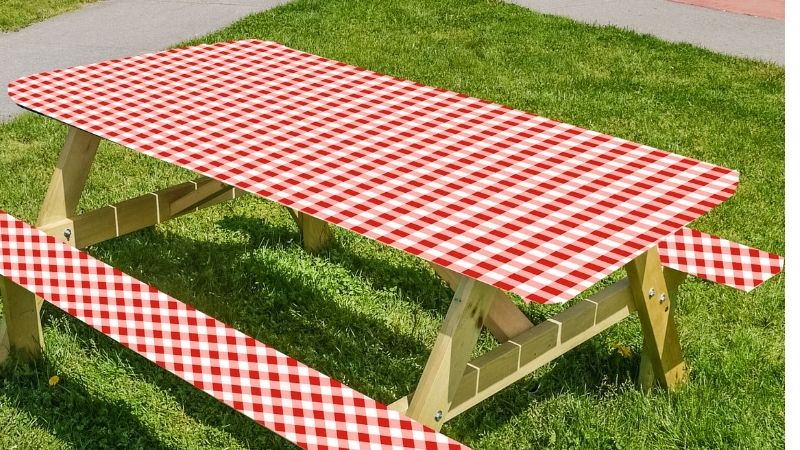
Full Cover or Fitted Top Cover
The first fork is what you are protecting. A full furniture cover, like the Duck Covers Ultimate at 72 by 57 by 30 inches, drapes over the whole table and benches; a fitted tabletop cover, like the LAIFUCAM three-piece at 30 by 72 inches, hugs only the surface and seats. They are not the same product measured differently.
Pick by how the table lives outside. Left out year-round through rain and snow, a full cover that encloses the legs and benches protects most; used often but parked between uses, a fitted top cover is quicker to put on and keeps the eating surface clean. Decide the use pattern before you compare any sizes.
Because the two types enclose different things, their dimensions do not compare one to one — a 72-inch full-cover length and a 72-inch tabletop length describe different coverage. Read each listing for what it wraps, not just the number, or you will buy a top cover expecting it to shield the benches it never touches.
Measure the Fit Envelope, Not Just Length
A cover fits a range, not a single size. The Coverstore Ultima Ripstop lists a maximum fit of 76 by 62 by 32 inches, meaning it covers tables up to those dimensions with some drape. Measure your table’s length, width and height — including bench overhang on an attached-bench table — before matching it to a cover’s envelope.
Aim for a cover slightly larger than the table so it clears the widest point, usually the bench ends. Too small and it will not close; too large and it flaps and pools water. For an attached-bench picnic table, the bench-to-bench width is often the real limiting dimension, not the tabletop, so measure that span specifically.
Getting the envelope wrong is the usual reason a cover fails early. A tight cover strains its seams and tears; a loose one whips in wind and abrades. Measure once more before ordering, and keep the receipt, since cover returns hinge on fit — a cover that does not match your table’s envelope protects nothing it was bought for.
Material and Weatherproofing
The fabric decides how long a cover lasts and how well it sheds water. Ripstop polyester with a waterproof coating resists tearing and UV better than thin vinyl, which cracks in cold and sun over a season or two. Look for a stated denier or a ripstop weave rather than a vague waterproof claim on the listing.
Breathability matters as much as waterproofing. A fully sealed cover traps condensation that can mildew a wood table, so vents or a breathable coated fabric let moisture escape. For a wood picnic table especially, a cover that lets the table dry out protects better over months than one that seals water against it.
Seams and finish set the lifespan. Taped or welded seams hold out water where sewn seams can wick it, and UV is what eventually makes any cover brittle. Store the cover dry when the table is in use, and expect even a good cover to be a periodic replacement, since sun degrades every outdoor fabric in time.
Keep It On in Wind
A cover that blows off protects nothing, so the tie-down system is a real criterion. Look for drawstring hems, buckle straps or elastic that cinch the cover to the table against gusts. A full cover with click-close straps stays put better than one relying on weight alone, especially on an exposed patio or open lawn.
Match the hold-down to your exposure. A sheltered spot forgives a simple drawstring; a windy yard wants straps or added weight at the corners. Some covers include an air vent that doubles as pressure relief, cutting the ballooning that pops a cover off in a gust, which is worth having where wind is the main threat.
Attachment points are also wear points. Straps fray and buckles crack with UV, so a cover whose fasteners are replaceable or reinforced lasts longer. Check the tie-downs each season and re-cinch after storms. A cover that stays snug sheds water and resists abrasion, which is most of what makes one last beyond a season.
Top Picks
Three current covers handle the main cases — two full covers and one fitted top set — plus a measuring checklist, since the right pick depends entirely on your table’s shape. Full-cover and tabletop sizes do not compare one to one, so read each for what it wraps. Each leans on stated specs and a tier; confirm the price.
| Product | Best For | Key Spec | Watch Out For |
|---|---|---|---|
| Duck Covers Ultimate UPT725730 | Best overall full cover | 72×57×30 in full cover | Measure bench width to the envelope |
| Coverstore Ultima Ripstop | Best for larger tables | Fits up to 76×62×32 in | Full-cover size, not tabletop fit |
| LAIFUCAM 3-piece fitted | Best for surface-only protection | 30×72 in tabletop fit | Does not cover the legs or ground |
| Any picnic table cover | Get the fit right first | Length, width, height, bench span | Full vs fitted sizes differ |
Duck Covers Ultimate UPT725730: Best Overall Full Cover
For whole-table protection, the Duck Covers Ultimate at 72 by 57 by 30 inches wraps the top, legs and benches of a standard picnic table. It reads mid tier for a quality full cover; prices move, so confirm the current price and that your table fits within those dimensions, bench width included, before ordering.
It suits a table left outside through the seasons, since enclosing the legs and benches keeps the whole set drier than a top-only cover. Measure the widest point — usually bench end to bench end — against the 57-inch width, because the benches, not the tabletop, are often what a full cover has to clear.
A full cover traps more moisture than a fitted one, so look for vents or a breathable coating to let a wood table dry out. The straps and seams are the wear points: re-cinch them after storms and store the cover dry in use. Expect UV to make any cover a periodic replacement, so buy one whose fit you can repeat.
Coverstore Ultima Ripstop: Best for Larger Tables
For bigger picnic tables, the Coverstore Ultima Ripstop lists a maximum fit of 76 by 62 by 32 inches in a ripstop fabric built to resist tearing. It reads mid-to-premium tier; verify the current price and measure your table against that envelope, since this is the upper size limit, not a one-size figure.
The larger envelope suits oversized or extra-wide picnic tables that a standard full cover cannot close over. Ripstop fabric handles wind and abrasion better than thin vinyl, which matters on an exposed site. As a full cover, its numbers describe total coverage and do not compare to a tabletop-only cover’s fit.
Confirm the hold-down system and seam type before buying, since a larger cover catches more wind and strains its fasteners. Taped seams and cinch straps are what keep it on and watertight. Store it dry when the table is in use, and check the straps each season, because the attachment points wear before the fabric.
LAIFUCAM 3-Piece Fitted: Best for Surface-Only Protection
When you only need to keep the eating surface clean and dry, the LAIFUCAM three-piece fitted cover hugs a 30 by 72 inch tabletop and benches rather than draping over everything. It reads budget tier; confirm the current price and that your table matches that surface size, since fitted covers have little size tolerance.
A fitted top cover is quick to put on and take off, which suits a table used often but protected between meals. It keeps bird mess, pollen and rain off the surface you eat on. Because it covers only the top and seats, it is not the choice for year-round protection of the legs and frame underneath it.
Its 30-by-72-inch fit does not compare to a full cover’s dimensions — it protects a different thing — so do not cross-shop the two on size alone. Fitted covers can abrade at the edges where they grip, so check the seams and store it dry. For whole-table, all-season cover, step up to one of the full covers above.
What to Measure Before Buying Any Cover
Covers are returned over fit more than quality, so measure four things first. Length and width across the widest point — usually bench end to bench end on an attached-bench table — then height from the ground to the tabletop. Write those down before you look at any cover’s size, since the table decides the cover.
Then decide the cover type, because full-cover and tabletop-fit numbers are not interchangeable. A 72-inch full cover and a 72-inch top cover protect different areas, so match the number to the coverage you want. Aim for a cover slightly larger than the table so it closes over the widest point without pulling tight.
Finally, check availability and the hold-down before ordering, since outdoor covers go in and out of stock by season and a sold-out listing is no help. Confirm the cover is currently available in your size, has straps or a drawstring for wind, and is a fabric that breathes, so a wood table can dry out under it.
Frequently Asked Questions
Cover shoppers ask the same few things: how to measure, whether a cover can stay on all year, what fabric lasts longest, and whether a cheap cover is worth the money. The answers below use the fit types and the sizes above so you buy for your table’s real shape rather than a size label on the box.
How Do I Measure a Picnic Table for a Cover?
Measure length and width at the widest point and height from the ground up. On an attached-bench table, the bench ends usually stick out past the tabletop, so that bench-to-bench span is the real width a cover must clear, not the top. Record all three numbers before comparing any cover’s fit envelope at all.
Aim for a cover slightly larger than those numbers so it closes over the widest point without straining. Too tight tears at the seams; too loose flaps and pools water. If your table sits between a full cover and a top cover in need, decide which parts must stay dry, then measure for that cover type specifically.
If your table has detached benches, decide whether to cover them separately or buy a full cover sized to the whole grouping, since one cover rarely fits a table and loose benches well. Measuring each piece and the gap between them tells you whether one cover or two is the cleaner solution for your setup.
Can I Leave the Cover On All Year?
You can, if it breathes and stays secured. A waterproof cover left on year-round protects against rain and UV, but a fully sealed one traps condensation that can mildew a wood table, so choose a vented or breathable cover for long-term use. Secure it against wind, since a cover that blows off protects nothing.
Check under the cover periodically in damp seasons to make sure the table is drying, not sweating. Re-cinch the straps after storms, and clear standing water or snow load off the top so it does not pool. For tables you use often, a fitted top cover you remove at mealtimes avoids the trapped-moisture problem entirely.
In snow country, clear accumulation off the top so the weight does not pool and stretch the fabric, and make sure water drains rather than collecting in a sag. A cover pitched slightly or shaped to shed water lasts far longer than a flat one that holds a puddle through every freeze-and-thaw cycle of winter.
What Cover Material Lasts Longest Outdoors?
Coated ripstop polyester generally outlasts thin vinyl outdoors. Ripstop resists tearing and handles UV and wind better, while cheap vinyl grows brittle and cracks after a season or two of sun and cold. Look for a ripstop weave, a stated fabric weight and taped seams rather than a vague waterproof label on it.
Whatever the fabric, UV is what eventually ends every outdoor cover, so treat even a good one as a periodic replacement. Store it dry when the table is in use, keep the straps intact, and rinse off grime that holds moisture. Breathable construction matters as much as raw waterproofing for protecting a wood table.
Color and coating play a part too: lighter covers show less heat stress, and a UV-stabilized fabric resists the fading and brittleness that sun causes first. Whatever you choose, storing the cover out of direct sun when the table is in use adds seasons, since idle UV ages a cover as much as active weather does.
Is a Cheap Cover Worth It?
Sometimes, for a fitted top cover you remove often; less so for an all-season full cover. A lighter top cover that keeps the surface clean between uses does its job. A loose, thin full cover left out year-round flaps and traps water, so fit and fabric, not the price, decide whether it actually protects.
Judge value by fit and fabric, not the sticker: a well-fitted ripstop cover that stays on and breathes protects a table for seasons, while a poor fit fails whatever it cost. Measure first, match the cover type to your table, and check the straps and seams — those separate a cover that lasts from one that does not.
Buy the cover last, after you know the table’s exact measurements and how it will live outside, so you are matching a product to a known need rather than guessing. A correctly sized, mid-fabric cover that you actually secure will out-protect both a bargain that does not fit and a premium one left loose in the wind.
Final Thoughts
The right table covers for picnic tables match your table’s real shape and the protection you need — a full cover for all-season shielding, a fitted top cover for quick surface care. Measure length, width and height at the widest point first, confirm the cover is in stock in your size, and pick a breathable, well-secured fabric.