Key takeaways
- Buying chair cushions for outdoor furniture goes wrong when the cushion fits the photo but not your chair, or when a water-repellent label gets mistaken for waterproof. This guide compares four current options by measured size, how they attach, and…
Buying chair cushions for outdoor furniture goes wrong when the cushion fits the photo but not your chair, or when a water-repellent label gets mistaken for waterproof. This guide compares four current options by measured size, how they attach, and how they handle weather, so replacements actually fit and last a season outside.
As an Amazon Associate we earn from qualifying purchases.
By KK Home Furnishings Editorial Team
How to Choose Outdoor Chair Cushions
Replacement cushions succeed or fail on fit and weather, so measure first and read the fabric claims carefully. Weigh four things: the exact size of your seat, how the cushion stays put, what its weather claim really means, and how it holds up to sun and cleaning over a season outdoors on an exposed chair.
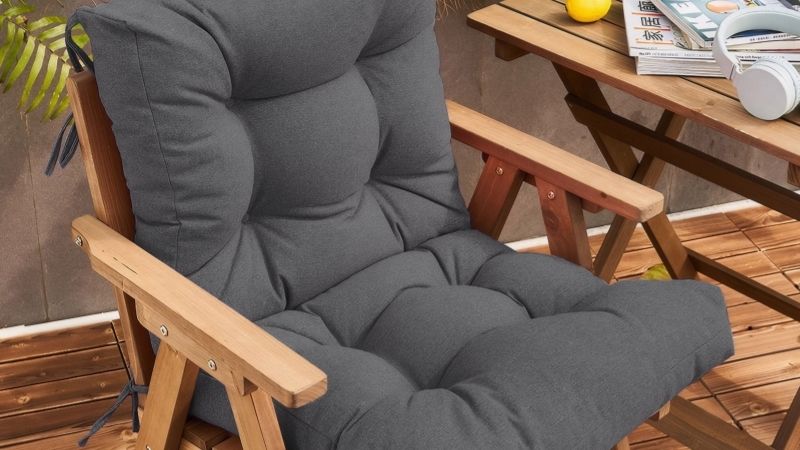
Measure your seat first
The single most useful number is your seat’s own size — width, depth and the thickness you want — not the old cushion, which may have shrunk or been wrong. IKEA’s FRÖSÖN/DUVHOLMEN pads, for example, are a precise 17 3/8 by 17 3/8 by 2 inches, so you can check them against a tape measure rather than guessing from a photo.
Measure the usable seat area and compare it to the cushion’s stated dimensions, allowing for a snug rather than overhanging fit. A pad that overhangs looks sloppy and catches rain at the edges, while one that is too small slides around. For shaped or bucket seats, measure at the widest point and the seat back separately.
Thickness is the part people skip, and it changes both comfort and fit under armrests. A 2-inch pad like IKEA’s suits firm bistro chairs, while deep lounge chairs want more loft; too thick and the cushion lifts you out from under the arms. Confirm the depth as well as the footprint before ordering a replacement pad.
How it attaches
A cushion that does not stay put is a cushion you chase across the patio. Attachment ranges from simple fabric ties to elastic straps and hook-and-loop; IKEA’s FRÖSÖN/DUVHOLMEN uses an elastic strap to hold it to the seat, which is quicker than knotting ties every time you sit down and more secure in a breeze.
Match the attachment to your chair and your weather. Ties work on chairs with a clear back rail, straps suit seats where ties have nothing to grip, and a breezy balcony needs a firmer hold than a sheltered porch. Check that the fastening reaches your chair’s frame before buying, since a universal cushion may not tie to every seat.
Attachments also wear, so they matter for longevity. Elastic loosens and ties fray with sun and repeated knots, so look for replaceable or reinforced fastenings. On an exposed seat, a cushion that clips or straps firmly will outlast one that relies on gravity, which simply blows off and lands in a puddle on the first windy day.
What the weather claim means
This is where outdoor cushions mislead, because water-repellent, water-resistant and waterproof are different claims and should never be treated as the same. Water-repellent fabric, like IKEA’s, sheds light rain and dries quickly but is not sealed against soaking; a truly waterproof cushion is rare and can trap moisture inside.
Read the exact wording and plan around it. A water-repellent pad is fine for showers and dew if you can bring it in or stand it on edge to dry, but it will soak through in a downpour or if left flat in a puddle. Match the claim to your exposure, and store or tilt cushions so water runs off rather than pooling on them.
Fabric type backs up the claim: solution-dyed acrylic resists fading and mildew far better than printed polyester, which can fade in a season of direct sun. For a cushion that will live outdoors, the fabric and the honest weather claim matter more than the pattern, since a faded, mildewed pad is replaced long before it wears out.
Care and longevity
Cushions live hard outdoor lives, so cleaning and storage decide how long they last. A removable, machine-washable cover like the one on IKEA’s FRÖSÖN/DUVHOLMEN makes upkeep simple, while fixed covers mean spot-cleaning only. Easy cleaning is what keeps a pale cushion usable rather than permanently stained after one season.
Sun and damp are the real enemies. UV fades color and weakens fibers over months, and trapped moisture breeds mildew, so cushions that dry fast and store dry last longest. Bring them in or into a deck box over winter and after heavy rain, since a season left soaking will outlast no fabric regardless of its weather rating.
Budget for replacement covers rather than whole cushions where you can. A line that sells replacement covers lets you refresh a faded set cheaply, while a sealed cushion must be binned once the cover goes. Over a few seasons, washable, re-coverable cushions cost less to keep looking good than cheaper fixed-cover pads.
Top Picks
These four cover the range of chair cushions for outdoor furniture, from a precisely measured IKEA pad to patterned Pillow Perfect and Greendale options. IKEA publishes exact dimensions; the others are shown with manufacturer-stated details, so measure your own seat and confirm each pad’s size before ordering a replacement set.
| Product | Best For | Key Spec | Watch Out For |
|---|---|---|---|
| IKEA FRÖSÖN/DUVHOLMEN | Best overall, documented fit | 17 3/8 x 17 3/8 x 2 in; elastic strap; water-repellent; washable cover | Water-repellent, not waterproof |
| Pillow Perfect Daytrip | Best for patterned seats | Manufacturer-stated outdoor fabric; standard seat size | Dimensions not confirmed here — measure your seat |
| Pillow Perfect Veranda | Best for a solid look | Manufacturer-stated outdoor fabric; runs about 13% more per cushion than Daytrip | Dimensions not confirmed here — verify the depth |
| Greendale 18-inch Square | Best for 18-inch seats | Named 18-inch square; retailer-stated outdoor fabric | Retailer data; confirm thickness and ties |
IKEA FRÖSÖN/DUVHOLMEN — Best Overall, Documented Fit
IKEA’s FRÖSÖN/DUVHOLMEN pad is the top pick because everything you need to check is published: a precise 17 3/8 by 17 3/8 by 2 inches, an elastic strap to hold it in place, a water-repellent, quick-drying cover and a machine-washable cover for easy cleaning. It sits in the budget-to-mid tier for outdoor seat pads.
The exact dimensions make fit predictable, and the washable cover is the detail that keeps it usable — a pale pad you can throw in the machine stays presentable far longer than one you can only sponge. The elastic strap holds it to a seat better than loose ties on a breezy balcony, and it dries quickly after a shower.
The honest limit is the weather claim: it is water-repellent, not waterproof, so it will soak in a downpour and should come in or stand on edge to dry. It is sized for firm bistro-style seats, so deep lounge chairs may want more loft, and the cover and insert are a system you should match when replacing either part.
Pillow Perfect Daytrip — Best for Patterned Seats
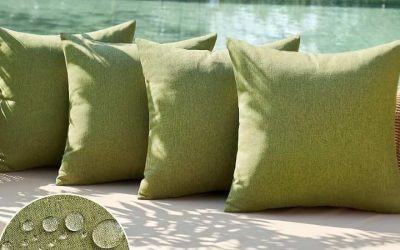
Pillow Perfect’s Daytrip is the choice when you want a patterned outdoor look: it comes in outdoor fabrics made to resist sun and moisture. Its exact dimensions were not confirmed here, so treat the size as manufacturer-stated and measure your seat against the listing before ordering, rather than assuming it matches a standard chair.
The appeal is pattern and a standard seat size that suits common bistro and dining chairs, which makes it an easy refresh for a faded set. Because it ships as a pair, it suits a two-seat set in one order; confirm the stated dimensions and the fabric’s exact weather wording before buying so the fit and the care match your chairs.
The drawbacks are unconfirmed specs and the usual outdoor-fabric caveats: printed patterns can fade faster than solution-dyed fabric in full sun, and the pad is weather-resistant rather than sealed. Verify the size, the tie or strap style and the fabric type, and plan to store the cushions out of prolonged rain and winter damp.
Pillow Perfect Veranda — Best for a Solid Look
Pillow Perfect’s Veranda covers a cleaner, solid-color look in outdoor fabric. As with the Daytrip, its exact dimensions were not confirmed here, so read them off the current listing. By the brief’s figures it runs roughly 13 percent more per cushion than the Daytrip, so weigh the look against the small step up in price.
A solid color hides less than a busy print but reads more modern on neutral furniture, and the outdoor fabric is made to take sun and showers. Confirm the stated size against your seat and the attachment style against your chair frame, since a cushion that cannot tie or strap on securely will not stay put on an exposed seat.
Its limits mirror the Daytrip’s: unconfirmed dimensions and a weather-resistant rather than waterproof rating, so measure and verify before buying. Solid outdoor fabrics can still fade over a hard season of sun, so choosing a color that hides UV change and storing the pads over winter will keep the set looking right for longer.
Greendale 18-inch Square — Best for 18-inch Seats
The Greendale 18-inch square is the pick when your seat matches that size: it is sold as an 18-inch square pad, which makes it a quick fit for common square patio chairs. Its data comes from retailer listings rather than a maker spec sheet, so treat the details as retailer-stated and confirm the thickness and ties before buying.
A named standard size takes the guesswork out of ordering for an 18-inch seat, and square pads suit the straight-sided chairs common in budget patio sets. Check how it attaches and how thick it is, since those are the variables a size name does not capture, and a too-thin pad on a hard seat adds little comfort.
The caution here is source and specifics: with retailer data rather than a manufacturer sheet, the fabric’s exact weather claim and the attachment can be vague, so read the listing closely. Confirm the pad is an outdoor fabric rather than an indoor one relabeled, and plan the same dry storage that any outdoor cushion needs to last.
Frequently Asked Questions
A few questions decide whether replacement cushions fit and survive outside, usually about measuring, weather claims and keeping pads in place. The answers below lean on the one set with published dimensions and flag where you must measure your own seat, since most outdoor cushions are sold to approximate sizes.
How do I measure for a replacement cushion?
Measure the chair’s seat, not the old cushion. Take the width and depth of the usable seat area and decide how thick you want the pad — IKEA’s pads, for reference, are 17 3/8 inches square and 2 inches thick. A worn cushion has often compressed or shrunk, so it is an unreliable template for a replacement.
Aim for a snug fit rather than an overhang, since edges that hang past the seat catch rain and wear at the corners. For shaped or bucket seats, measure the widest points and the back separately, and note any cutouts for armrest posts. Write the numbers down and compare them to each listing’s stated size before ordering.
If your seat falls between offered sizes, size down slightly rather than up so the pad sits inside the frame, and use a tie or strap to stop it sliding. A cushion that is a touch small but well secured looks and lasts better than an oversized one that overhangs, slips and soaks at the edges after the first rain.
Water-repellent or waterproof — what’s the difference?
They are not the same, and treating them as equal is the most common cushion mistake. Water-repellent fabric, like IKEA’s, sheds light rain and dries quickly but soaks through under a downpour or if left sitting in water. Waterproof means sealed against water, which is rare in seat cushions and can trap moisture in the foam.
What changes your choice is exposure. A repellent pad is fine on a covered porch or where you can bring cushions in, but a fully exposed seat in a rainy climate needs either a genuinely waterproof design or a routine of storing and drying. Stand repellent pads on edge after rain so water runs off instead of soaking in.
Fabric type matters as much as the label: solution-dyed acrylic resists water and fading better than printed polyester, and a quick-drying foam recovers faster than a dense one that stays damp. For a seat that lives outdoors, pair an honest weather claim with a fabric built for it, and plan dry winter storage regardless.
How do I keep cushions from blowing away?
Secure them and, in strong wind, store them. Attachment is the first line of defense — ties, elastic straps or hook-and-loop hold a pad to the seat, and IKEA’s elastic strap is quicker than knotting ties. A cushion that only rests on the seat will blow off the first windy day and often lands somewhere wet.
Match the fastening to your chair and conditions. Ties need a rail or slat to grip, straps suit solid seats, and an exposed balcony needs a firmer hold than a sheltered corner. In gusty weather even secured cushions can lift, so a deck box or quick indoor stash for the windiest days saves chasing them across the yard.
For a longer-term fix, cushion clips or non-slip pads add grip on smooth seats, and heavier cushions stay put better than thin ones. If wind is a constant, choose pads with built-in ties or straps rather than planning to add them, since an aftermarket fastening is only as good as what it can grip on your chair.
How do I stop cushions fading or getting moldy?
Fading and mildew are the two things that end outdoor cushions before the fabric wears out. Fading comes from UV, so solution-dyed acrylic lasts far longer in sun than printed polyester; mildew comes from trapped damp, so quick-drying fabric and dry storage prevent it. A washable cover, like IKEA’s, makes keeping them clean realistic.
The routine matters more than the product. Bring cushions in or into a deck box after heavy rain and over winter, let them dry fully before storing, and clean them before stains set. Even a weather-resistant pad left flat and soaking through a wet season will mildew, so the habit of drying and storing is what extends its life.
If a cushion only needs a refresh, washing a removable cover or buying a replacement cover beats replacing the whole pad. Choose colors that hide UV change for an exposed spot, and keep cushions off bare ground where damp wicks up, since the foam holding moisture is what breeds the mildew you smell before you see it.
Final Thoughts
The right chair cushions for outdoor furniture are the ones that match your measured seat, attach firmly enough for your wind, and carry a weather claim you read correctly — repellent is not waterproof. Measure the seat rather than the old pad, confirm each cushion’s size and fabric, and plan dry storage so a season outside does not end them early.