
Key takeaways
- The best sleeper couch has to do two jobs well: be a comfortable sofa by day and a real bed by night, and most compromise on one. This guide compares four current models by sleeping surface, mattress type and conversion…
The best sleeper couch has to do two jobs well: be a comfortable sofa by day and a real bed by night, and most compromise on one. This guide compares four current models by sleeping surface, mattress type and conversion mechanism, so the one you pick suits how often it actually gets slept on.
As an Amazon Associate we earn from qualifying purchases.
By KK Home Furnishings Editorial Team
How to Choose a Sleeper Couch
A sleeper couch is judged on the sleeping surface first and the sofa second, so weigh both roles. Consider four things: the bed size and sleeping area, the mattress type and comfort, the conversion mechanism and how often you will use it, and the footprint and daily sofa use, so it fits both your room and your guests.
Bed size and sleeping area
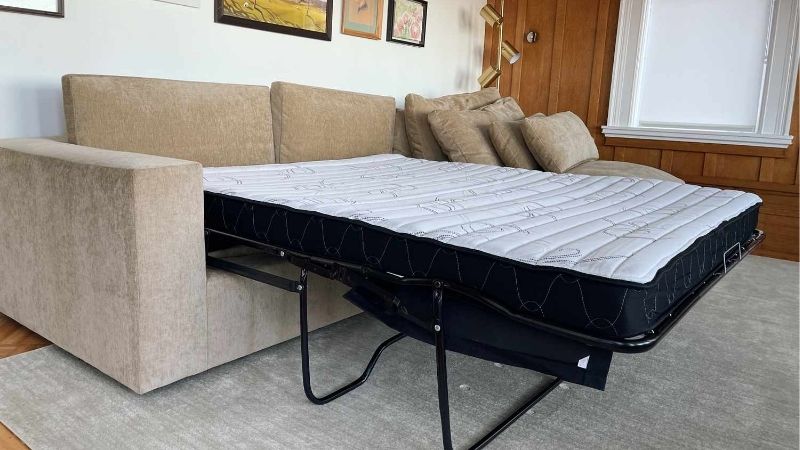
The number that matters most is the sleeping area, not the sofa’s look. The FRIHETEN sofa bed opens to about 30.9 square feet of sleeping surface, and the FRIHETEN sectional to about 30.8 square feet — within a fraction of a percent, so effectively the same bed — while the NYHAMN models offer their own documented sleeping dimensions.
Match the sleeping area to who sleeps on it: a single guest needs less than a couple, and the opened bed’s dimensions, not the sofa’s footprint, decide whether two adults fit. Measure where the bed will open to, since a sleeper couch needs clear floor in front to extend, which a tight room may not have.
Because the two FRIHETEN beds are effectively the same sleeping size, the choice between them is about the sofa shape and footprint rather than the bed, so do not read the sectional as a bigger bed. Compare the opened dimensions across models directly, since a larger sofa does not always mean a larger sleeping surface.
Mattress type and comfort
Sleeping comfort comes from the mattress, and sleeper couches differ here. The NYHAMN is offered with a foam mattress or a pocket-spring one, and the pocket-spring version typically runs about 10 percent more; springs generally give more even support for regular overnight use, while foam is firmer and cheaper for occasional guests.
Match the mattress to how often the couch is slept on. For frequent or nightly use, a pocket-spring surface is worth the step up for support, while for a few guest nights a year a foam mattress is fine and cheaper. The FRIHETEN uses a fold-out design with its own feel, so try or read reviews on the sleeping comfort before buying.
Comfort also depends on the fold: a couch where the mattress lies flat without a bar under the sleeper’s back sleeps better than one with a felt frame edge. For regular use, favor a thicker mattress and a flat sleeping surface, since the difference between occasional and nightly comfort is what separates a true bed from a backup.
Conversion mechanism
How the couch becomes a bed decides how often you will actually use it. A simple fold-out or pull-out chaise, like the FRIHETEN’s, converts quickly with little effort, while a more involved mechanism can discourage nightly use. Match the mechanism’s ease to your frequency: daily use rewards a quick, one-motion conversion.
The mechanism is also the part most likely to wear, so a simpler design with fewer moving parts tends to last longer under regular use. Check how heavy the conversion is and whether one person can manage it, since a couch that takes two people to open is less practical for a solo host converting it each night.
Storage can be part of the mechanism: some sleeper couches, including FRIHETEN designs, include under-seat storage for bedding, which is a real convenience when the couch doubles as a guest bed. Confirm whether bedding storage is built in, since keeping sheets and a duvet with the couch makes nightly conversion far more practical.
Footprint and daily sofa use
A sleeper couch spends most of its life as a sofa, so its footprint and daily comfort matter. A sectional like the FRIHETEN anchors a larger room and adds a chaise, while a standard sofa bed suits a smaller space; both need clear floor in front to open into a bed, so map the room for both the sofa and the extended bed.
Match the footprint to the room and the opening space: measure where the bed extends to, not just where the sofa sits, since a couch that cannot fully open in a tight room defeats the purpose. A sectional’s chaise also fixes the layout to one orientation, so confirm it suits your room before choosing it over a standard sofa bed.
Daily comfort as a sofa is the other half: a couch slept on rarely can prioritize sofa feel, while one slept on often must balance both. Over years, the cushions and the conversion mechanism are the wear points, so favor removable, washable covers and a simple mechanism for a couch that works hard in both roles.
Top Picks
These four cover the range of the best sleeper couch, from a storage sofa bed to foam and pocket-spring options, all from one retailer so treat it as a same-brand read. They are judged on sleeping area, mattress type and conversion rather than price, and two share effectively the same bed size, so compare the sofa shape.
| Product | Best For | Key Spec | Watch Out For |
|---|---|---|---|
| NYHAMN Pocket Spring | Best for regular overnight use | Pocket-spring mattress; runs about 10% above the foam version | Premium of the two mattresses; confirm dimensions |
| FRIHETEN Sofa | Best for daily sofa use with storage | About 30.9 sq ft sleeping area; under-seat bedding storage | Needs clear floor in front to open |
| NYHAMN Foam | Best for occasional guests | Foam mattress; lower-priced of the two NYHAMN versions | Firmer; confirm comfort for nightly use |
| FRIHETEN Sectional | Best for a corner layout | About 30.8 sq ft sleeping area; chaise sectional | Near-ties the FRIHETEN sofa on bed size |
NYHAMN Pocket Spring — Best for Regular Overnight Use
The NYHAMN with a pocket-spring mattress is the pick for a couch slept on often: the spring surface gives more even support than foam for nightly or frequent use, which is what separates a real bed from a backup. It runs about 10 percent above the foam version, a modest step for better sleep. It sits in the mid tier for sleeper couches.
The pocket-spring mattress suits a guest room that doubles as a bedroom or a small home where the couch is slept on regularly, and the NYHAMN’s modular design makes it flexible. Confirm the opened sleeping dimensions against your guests and the clear floor to extend it, since the bed needs room in front to lie flat.
The honest drawbacks are the step up over the foam version and the need to confirm specs: it costs more, and the exact dimensions were not detailed here, so verify them. As a modular couch, check that the cover is removable and washable, since regular overnight use wears the sleeping surface and cover faster than occasional use.
FRIHETEN Sofa — Best for Daily Sofa Use With Storage
The FRIHETEN sofa bed is the pick when the couch is mainly a sofa with occasional bed duty: it opens to about 30.9 square feet of sleeping surface and includes under-seat storage for bedding, which makes nightly conversion practical. The built-in storage is the standout convenience here. It sits in the mid tier for sleeper couches.
The storage keeps sheets and a duvet with the couch, and the quick fold-out converts with little effort, so it suits a living room that hosts guests now and then. Confirm the clear floor in front to open the bed, since the chaise design extends into the room, and measure both the sofa footprint and the opened bed.
The drawbacks are that the fold-out feel is firmer than a dedicated mattress and the specs need confirming: verify the opened dimensions and the cover’s washability. For a couch slept on nightly, a pocket-spring NYHAMN sleeps better, so the FRIHETEN is the pick when daily sofa use and storage matter more than overnight comfort.
NYHAMN Foam — Best for Occasional Guests
The NYHAMN with a foam mattress is the value pick for occasional use: it is the lower-priced of the two NYHAMN mattresses and suits a guest surface used a few nights a year rather than nightly. Foam is firmer and cheaper than the pocket-spring version, which is the trade for the lower price. It sits in the budget-to-mid tier.
The foam surface is fine for occasional guests and keeps the couch’s cost down, and the NYHAMN’s modular design and cover options add flexibility. Confirm the opened dimensions and the clear floor to extend it, and consider the pocket-spring upgrade if the couch will be slept on more often than you first expect over its life.
The drawbacks are comfort for regular use and unconfirmed specs: a foam surface suits occasional nights better than nightly sleep, so verify the dimensions and try the comfort if you can. For frequent overnight use, the roughly 10 percent step up to the pocket-spring version is usually worth it for the better support.
FRIHETEN Sectional — Best for a Corner Layout
The FRIHETEN sectional is the pick for a corner or larger room: it opens to about 30.8 square feet of sleeping surface — effectively the same bed size as the standard FRIHETEN sofa — in a chaise sectional that anchors a bigger space. The bed is not larger, but the sofa footprint is. It sits in the mid tier for sleeper couches.
The sectional adds a chaise and more daily seating, which suits a family room that occasionally hosts a guest, and it shares the FRIHETEN’s quick conversion and storage. Because its sleeping area near-ties the standard sofa, choose it for the sofa shape and seating rather than a bigger bed, and confirm the chaise orientation suits your room.
The drawbacks are footprint and the near-tie on bed size: the sectional needs more floor and fixes the layout to one orientation, and it does not sleep larger than the standard sofa. Confirm the opened bed clears the room and that the chaise side matches your layout, since a sectional is harder to reposition than a standard sofa.
Frequently Asked Questions
A few questions come up about sleeper couches, usually about comfort, bed size and how often they will be slept on. The answers below use the documented sleeping areas and mattress options and stress matching the couch to your actual frequency of use, since daily and occasional use call for different choices.
Are sleeper couches comfortable to sleep on?
It depends on the mattress and the fold. A pocket-spring surface, like the NYHAMN’s spring version, gives more even support for regular use, while a foam mattress or a basic fold-out is firmer and better suited to occasional guests. The key is whether the sleeping surface lies flat without a frame bar under the sleeper’s back.
What changes the answer is how often it is slept on. For nightly or frequent use, favor a thicker, pocket-spring mattress and a flat sleeping surface; for a few guest nights a year, a foam fold-out is fine and cheaper. Match the sleeping surface to the frequency rather than assuming any sleeper couch sleeps like a real bed.
If comfort matters for regular use, a thin mattress topper can improve a fold-out surface at low cost, and removable covers keep it fresh. Try the sleeping comfort or read owner feedback before buying, since the gap between occasional and nightly comfort is the main thing that separates a true guest bed from a backup seat.
How big is the bed on a sleeper couch?
It varies, and the opened sleeping area matters more than the sofa’s size. The FRIHETEN sofa opens to about 30.9 square feet and the sectional to about 30.8 — effectively the same bed — so a larger sofa does not always mean a larger bed. Confirm the opened dimensions, not the sofa footprint, to see if two adults fit.
Match the sleeping area to who sleeps on it: a single guest needs less than a couple, and the extended bed’s length and width decide the fit. Measure the clear floor in front too, since a sleeper couch needs room to open into a bed, which a tight room may not have even if the sofa itself fits against the wall.
Because some models share effectively the same bed size despite different sofa shapes, compare the opened dimensions directly rather than assuming the bigger-looking couch sleeps more. Confirm both the bed size and the opening space before buying, so the couch actually sleeps your guests comfortably rather than just looking larger as a sofa.
Foam or pocket-spring mattress — which is better?
It depends on how often the couch is slept on. A pocket-spring mattress, like the NYHAMN’s spring version, generally gives more even support for regular overnight use, which is why it runs about 10 percent more than the foam version. Foam is firmer and cheaper, which suits occasional guests rather than nightly sleep.
Match the mattress to frequency and budget: for frequent use, the step up to pocket springs is usually worth it for support and long-term comfort, while for a few nights a year foam is fine. Your sleeping preference matters too, since some people prefer a firmer foam surface, so weigh comfort alongside how often it will be used.
If you choose foam but later use the couch more, a mattress topper can improve the surface cheaply before you consider upgrading. Confirm which mattress a listing includes, since the same couch can be offered with either, and the sleeping comfort you get depends on that choice as much as on the couch’s frame and fold.
How much space does a sleeper couch need?
More than the sofa alone, because it has to open into a bed. Measure the sofa’s footprint against the wall and the clear floor in front where the bed extends, since a sleeper couch needs room to fully open. A sectional like the FRIHETEN also fixes the layout to one orientation, so confirm the chaise side suits your room.
Match the footprint to the room and the opening space: a standard sofa bed suits a smaller room, while a sectional anchors a larger one but needs more floor. Map where the bed extends to, not just where the sofa sits, since a couch that cannot fully open in a tight room cannot do its main job as a guest bed.
Also plan the path in and daily traffic: a larger sleeper couch has to clear doorways and leave walking room, and a bed opened into a walkway blocks the room. Confirm both the sofa and the opened bed fit with space to move, so the couch works as seating by day and a bed by night without crowding the space.
Final Thoughts
The best sleeper couch is the one whose sleeping surface and mattress suit how often it is actually slept on, not the one that looks biggest as a sofa. Match the mattress type to your frequency, confirm the opened bed size and the clear floor to extend it, and favor built-in storage and a simple conversion for a couch used often.
