Key takeaways
- A marble top coffee table is a statement piece, but genuine marble brings a usable-surface question and a real care burden that laminate lookalikes do not. This guide compares four current tables by actual surface area, load and the upkeep…
A marble top coffee table is a statement piece, but genuine marble brings a usable-surface question and a real care burden that laminate lookalikes do not. This guide compares four current tables by actual surface area, load and the upkeep marble needs, so you choose one that fits your room and your patience.
As an Amazon Associate we earn from qualifying purchases.
By KK Home Furnishings Editorial Team
How to Choose a Marble Top Coffee Table
A marble table is judged on surface, sturdiness and upkeep as much as looks, so weigh them together. Consider four things: whether the marble is genuine or a lookalike, the usable surface area and size, the load and weight figures read correctly, and the care the stone demands, so the table suits your room and your household.

Genuine marble vs a lookalike
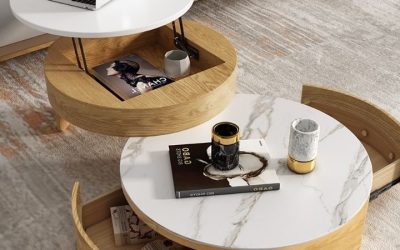
The first question is whether the top is genuine marble or a printed lookalike, since they age and cost very differently. All four tables here use real marble — the West Elm Olina a 36-inch round top, the Odilia a 1-inch-thick 42-inch top — while many budget marble tables use laminate or sintered stone that mimics the look without the care.
Match the material to what you want: real marble has depth, cool touch and natural veining that no two slabs share, but it is heavy and needs sealing, while a quality lookalike is lighter, cheaper and far more stain-resistant. Decide whether you want authentic stone or the look without the upkeep before narrowing by size or price.
The trade-off is permanence versus care: genuine marble lasts for decades and can be re-polished, but it etches and stains without maintenance, while a lookalike resists stains but cannot be refinished once the surface wears. Confirm the listing states real marble rather than marble-effect, since the word changes both the care and the cost.
Usable surface and size
A coffee table’s usefulness is its surface area, which varies widely here. The Pedestal’s 30.5-inch round top gives about 5.07 square feet, the Olina’s 36-inch round about 7.07, and the Odilia’s 42-inch top about 9.62 — nearly double the smallest — so match the top area to how much you set on it and the sofa it serves.
Measure the space in front of your sofa and leave room to walk past, since a large marble top is heavy and hard to nudge once placed. A round top softens a seating group and suits tight spaces with no corners, while a larger table anchors a big room but needs the floor to carry it. Confirm the height suits your sofa seat too.
Surface area also shapes daily use: a small top holds drinks and a book, while a larger one serves a family or entertaining. Because marble is heavy, size up only if the room and the floor can take it, and confirm the table’s weight for your floor, since a large stone top plus a base is a substantial load to place and leave.
Load and weight
Marble tables quote several different numbers, and conflating them is a common mistake. Product weight, top thickness, load capacity and surface area are separate metrics: the Pedestal lists a 170-pound top load and the Odilia a 500-pound capacity, while thickness and area are different figures again, so read each number for what it describes.
Match the load rating to use: a stated capacity covers what the top safely holds, not whether you can sit on it, and marble can crack under a sharp impact even within its rating. Keep heavy or hard items from being dropped on the surface, and do not use a coffee table as a seat or a step regardless of the number.
Because these figures are not comparable across tables, judge sturdiness by the base and the stated top load together rather than one number. A heavier table is more stable but harder to move, and a higher capacity suits a busy household, so weigh the load rating alongside the base design rather than reading product weight as strength.
The care burden
Genuine marble’s real cost is upkeep, so weigh the care burden before the look. Marble is porous and etches when acids like wine, citrus or coffee sit on it, and it stains without sealing, so it needs periodic resealing and prompt wiping of spills. That maintenance is the trade for the natural stone surface over the years.
Match the upkeep to your household: a formal living room with careful use suits marble well, while a home with young children or frequent entertaining may find the etching and staining frustrating. Use coasters and trivets, wipe spills immediately, and reseal on the maker’s schedule, since marble rewards routine care and punishes neglect.
Longevity is high if you maintain it: sealed, well-cared-for marble lasts decades and can be re-polished to remove etches, which a lookalike cannot. So the choice is between a surface that needs attention but lasts and refinishes, and one that resists stains but wears permanently, which is the real decision behind a marble coffee table.
Top Picks
These four cover the range of a marble top coffee table, from a compact pedestal to a large statement piece, all in genuine marble. They differ most in surface area and load, which are separate metrics, so compare them on size and the care marble needs rather than conflating weight, thickness and capacity into one figure.
| Product | Best For | Key Spec | Watch Out For |
|---|---|---|---|
| West Elm Olina | Best overall round top | 36-in round genuine marble; about 7.07 sq ft top | Marble etches with acids; use coasters |
| Marble-Topped Pedestal | Best for tight spaces | 30.5-in diameter x 14.9 H; Carrara marble; 170-lb top load | Smallest surface here; care for the stone |
| Ellington | Best classic style | Genuine marble top; mid surface area | Specs not confirmed here — verify dimensions |
| Odilia | Best large statement | 42-in diameter x 15 H; 1-in marble top; 500-lb capacity | Premium tier; heavy to place and move |
West Elm Olina — Best Overall Round Top
The West Elm Olina is the balanced pick: a 36-inch round genuine-marble top of about 7.07 square feet on a clean base, a size that serves most sofas without overwhelming a room. The round shape has no corners and softens a seating group. It sits in the mid-to-upper tier for marble coffee tables, with real stone rather than a lookalike.
The 36-inch round surface holds drinks, books and a tray comfortably and suits a standard sofa, and the genuine marble gives the depth and cool touch a laminate cannot. Confirm the height against your sofa seat and the weight for your floor, since a real-marble top plus a base is heavy to place and awkward to move once set.
The honest drawback is the care marble demands: it etches with wine, citrus and coffee and stains without sealing, so use coasters and reseal on schedule. It also costs more than a lookalike of the same size, so it is the pick if you want authentic stone and will maintain it, rather than the look without the upkeep.
Marble-Topped Pedestal — Best for Tight Spaces
The Marble-Topped Pedestal is the compact pick: a 30.5-inch round Carrara top about 14.9 inches tall, giving roughly 5.07 square feet — the smallest surface here — with a stated 170-pound top load. The pedestal base and small round top suit a tight room or a small sofa. It sits in the mid tier for marble coffee tables, in genuine stone.
The compact footprint fits an apartment or a small seating group where a larger table would crowd the space, and the Carrara marble brings the classic grey-veined look. Confirm the 14.9-inch height suits your sofa, since a lower table can feel too low for some seating, and keep heavy items within the stated top load.
The drawbacks are the small surface and the usual marble care: it holds less than the larger tables, so it suits drinks and a book more than entertaining, and the Carrara top etches and stains without sealing. Use coasters and wipe spills promptly, and treat the 170-pound figure as a top load, not an invitation to sit on it.
Ellington — Best Classic Style
The Ellington is the classic-style pick: a genuine-marble coffee table with a traditional look, sitting in the middle of this group on surface area. Its exact dimensions were not confirmed here, so treat the size as manufacturer-stated and verify it on the current listing before buying, rather than assuming it matches the other tables’ footprints.
Its appeal is a more traditional design for a living room that leans classic rather than modern, in real marble rather than a lookalike. Confirm the top dimensions, the thickness and the base before buying, since those were not detailed here, and check the height against your sofa seat so the table sits at a comfortable working level.
The drawbacks are the unconfirmed specs and the same marble upkeep: verify the dimensions and load, and plan for sealing and careful use, since genuine marble etches and stains. As a classic-styled real-marble table it suits a traditional room, but confirm it is genuine stone rather than a marble-effect finish before relying on the look.
Odilia — Best Large Statement
The Odilia is the large statement pick: a 42-inch round top about 15 inches tall with a 1-inch-thick marble slab and a 500-pound capacity, giving roughly 9.62 square feet — nearly double the smallest table here. The substantial top and high capacity make it a centerpiece. It sits firmly in the premium tier for marble coffee tables.
The large surface serves a big sofa or entertaining and the thick 1-inch slab reads as a genuine statement piece, with the 500-pound capacity covering heavy use. Confirm the 42-inch footprint leaves room to walk past and that your floor can carry the weight, since a thick stone top at this size is very heavy to place and leave.
The drawbacks are size, weight and price: it needs a large room and a floor that can take the load, it is hard to move once placed, and it is the costliest here in the premium tier. The marble still etches and stains, so plan the same sealing and care, and confirm delivery can carry the heavy top into the room.
Frequently Asked Questions
A few questions come up about marble coffee tables, usually about whether the marble is real, how much care it needs, and what the numbers mean. The answers below use the documented surfaces and loads and stress reading each figure for what it describes, since weight, thickness, load and area are separate measures.
Is the marble real or a lookalike?
It depends on the table, so confirm the material before buying. The tables here use genuine marble — the Olina a 36-inch round top, the Odilia a 1-inch slab — while many budget marble tables use laminate or sintered stone. The term marble-effect signals a lookalike, so read the listing for genuine stone rather than a printed finish.
What changes your choice is care and weight: real marble has depth and a cool touch but is heavy, porous and needs sealing, while a quality lookalike is lighter, cheaper and far more stain-resistant. Decide whether you want authentic stone with its upkeep or the look without it, since the two age and cost very differently over the years.
If you want the marble look with minimal care, a sintered-stone or laminate top resists stains and etching that genuine marble does not. But only real marble can be re-polished to remove etches, so for a long-term piece you will maintain, genuine stone lasts and refinishes, while a lookalike trades that for everyday stain resistance.
How much care does a marble coffee table need?
More than most surfaces, because marble is porous and reactive. It etches when acids like wine, citrus or coffee sit on it and stains without sealing, so it needs prompt wiping of spills and periodic resealing on the maker’s schedule. That routine is the real cost of a genuine-marble top over the years you own it.
What changes the burden is your household: a careful, formal living room suits marble well, while young children or frequent entertaining raise the risk of etches and stains. Use coasters and trivets, keep acidic drinks off the bare stone, and reseal as recommended, since marble rewards routine care and shows neglect more than many materials.
If an etch or stain does appear, sealed marble can often be cleaned and, for etches, re-polished, which a lookalike cannot. So the upkeep buys a surface that lasts decades and can be refreshed, but it is real work, so weigh whether you will keep up the care before choosing genuine marble over a lower-maintenance lookalike.
What do the weight and load numbers mean?
They describe different things, so do not conflate them. A marble table quotes product weight, top thickness, load capacity and surface area separately — the Pedestal lists a 170-pound top load, the Odilia a 500-pound capacity — so read each figure for what it measures rather than as one score of how sturdy the table is.
Match the load rating to use: a stated capacity covers items on the top, not someone sitting on it, and marble can crack under a sharp impact even within its rating. Keep heavy or hard objects from being dropped on the surface, and never use a coffee table as a seat or step, regardless of the capacity number quoted.
Because the figures are not comparable across tables, judge sturdiness by the base design and the stated top load together, not by product weight. A heavier table is more stable but harder to move, and a higher capacity suits a busy home, so weigh the base and the load rating rather than reading raw weight as strength.
Is a marble coffee table practical for a family?
It can be, with care, but it asks more than a lookalike. Genuine marble etches with acidic spills and stains without sealing, so a home with young children or heavy entertaining needs coasters, prompt wiping and regular resealing. A rounded table like the Olina also reduces corner risks, which helps in a busy living room.
What changes the answer is how the room is used and whether you will maintain the stone. For careful households, marble is a durable centerpiece that lasts decades; for homes where spills are constant, a sintered-stone or laminate lookalike resists stains far better and refinishes less but needs no sealing, which may suit family life more.
If you want marble in a family room, favor a sealed, rounded table and keep acidic drinks on coasters, and accept that some etching may develop. The stone can be re-polished if it does, so weigh the upkeep against the look, since a marble coffee table rewards care but is less forgiving than many family-friendly materials.
Final Thoughts
The right marble top coffee table is the one whose real surface area fits your sofa, whose load and base suit your use, and whose care burden matches your household — not just the one that looks most dramatic. Confirm the marble is genuine, read weight, load and area as separate figures, and plan for sealing and careful use before you buy.