
Key takeaways
- A white bedside table sounds simple until you notice that white comes in very different finishes, from painted and lacquer to cerused wood, and they do not match or clean alike. This roundup compares four verified picks by finish type…
A white bedside table sounds simple until you notice that white comes in very different finishes, from painted and lacquer to cerused wood, and they do not match or clean alike. This roundup compares four verified picks by finish type first, then width, storage and build, so the white you choose actually suits the room and the use.
As an Amazon Associate we earn from qualifying purchases.
By KK Home Furnishings Editorial Team
How to Choose a White Bedside Table
The word white hides more than it reveals on a nightstand. A crisp lacquer, a flat painted surface and a cerused white that shows the wood grain read very differently beside a bed, and they wear and clean differently too, so sort the finish first, then compare the width, the storage layout and the material behind it before buying.
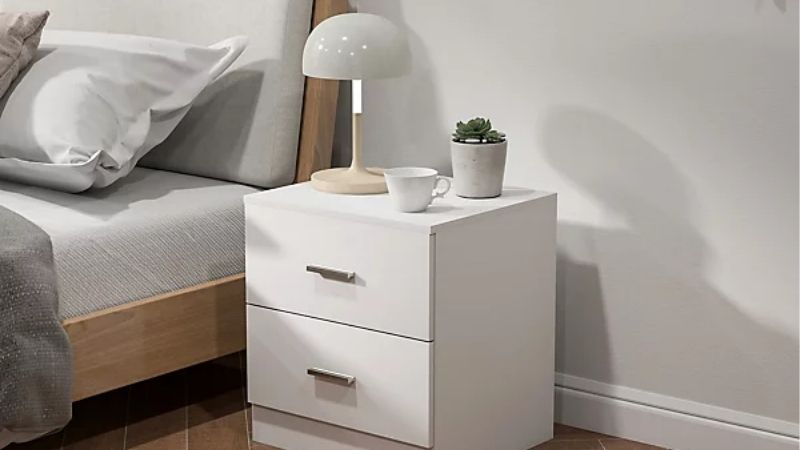
Distinguish Painted White, Lacquer and Cerused White
White is not one finish, and the difference changes the look. The West Elm Mid-Century is a cerused white, which leaves the wood grain visible, while the Crate & Barrel Mason is a white lacquer with a smooth sheen, and budget units often use a flat painted or foil-wrapped white. None of these will match the others exactly beside your bed.
Choose the finish for the style you want. A lacquer like the Mason reads crisp and modern and reflects light; a cerused white like the West Elm keeps a warmer, textured, wood-forward look; a plain painted white is the most neutral. Picture the finish next to your bed frame, because white rarely pairs cleanly with another white.
Each finish wears and cleans differently. Lacquer wipes clean but shows scratches on its sheen, cerused white hides marks in the grain but is harder to touch up, and painted engineered wood can chip at edges. Match the finish to how hard the nightstand will be used, since a busy bedside sees spills, rings and knocks over time.
Measure Width Before Choosing Storage
Width sets what will fit beside the bed and how much the nightstand can hold. The picks here run from the IKEA HAUGA at 15.625 inches to the Crate & Barrel Mason at 26, with the West Elm at 18 and the Rockefeller at 20.08, so the span is over ten inches and the narrowest and widest suit very different beds and rooms.
Match the width to the gap and the bed height. A narrow table like the HAUGA slips beside a bed in a tight room, while a 26-inch Mason suits a larger bed and holds more, but needs the wall space to match. Measure the clearance between the bed and the wall or furniture before deciding how wide a nightstand to buy here.
Wider is not automatically better. A broad nightstand holds a lamp, books and a charger comfortably but can crowd a small room or overwhelm a single bed, while a narrow one keeps the walkway clear at the cost of surface. Let the room and the bed size set the width, then choose the storage that fits within it rather than beyond.
Compare Drawer and Open-Shelf Layouts
Storage style decides what stays hidden and what stays reachable. The Crate & Barrel Mason offers two drawers for a tidy look, the West Elm has two drawers as well, the IKEA HAUGA mixes a drawer with two open spaces, and the Rockefeller pairs a drawer with an open shelf, so each balances concealment and access differently.
Pick the layout for your bedside habits. Drawers hide clutter and suit a minimal look; an open shelf keeps a book or remote within easy reach and shows what is there. A mix, like the HAUGA’s, does both. Decide whether you would rather tuck things away or grab them quickly, because that is what separates these layouts day to day.
Mind the limits on budget units. The Rockefeller lists a published capacity of about 11 pounds for its shelf and drawer, which is fine for books and a lamp but not for heavy items, so match what you store to the rating. Drawers on engineered-wood units can also loosen if overloaded, so keep the heaviest things off them entirely.
Match Material and Care to Daily Use
Material decides durability and upkeep as much as finish does. The West Elm uses solid ash with engineered wood and oak veneer, the Mason poplar with engineered wood under lacquer, while the HAUGA and Rockefeller rely on particleboard, fiberboard or MDF, so the sturdier builds cost more and the budget ones ask for gentler handling.
Match the build to how hard the nightstand will work. A solid-wood-and-veneer piece like the West Elm tolerates daily knocks and the occasional spill better, while a particleboard unit is fine in a calm bedroom but chips at edges and swells if wet. New engineered-wood furniture meets the EPA’s formaldehyde limits under TSCA Title VI.
Plan the care around the finish and the core. Wipe spills quickly on any white surface to avoid rings, avoid soaking engineered-wood edges, and expect a lacquer to show scratches a matte painted finish would hide. None of these is maintenance-free, so choose the one whose upkeep matches how careful the bedside will realistically be.
Top Picks
Each pick below fills a clear role, with finish, width and build drawn from the makers’ listings, current as of October 2026. Prices move and one reflects a sale, so confirm before buying. The table pairs the standout detail with the main catch for each nightstand before the fuller notes that follow below it here.
| Product | Best For | Key Spec | Watch Out For |
|---|---|---|---|
| West Elm Mid-Century | Best Overall | 18 in W; 2 drawers; solid ash + veneer | Cerused White shows wood grain |
| IKEA HAUGA | Best Compact White | 15.625 in W; drawer + open storage | Particleboard construction |
| Rockefeller 1.0 | Best Open-Shelf White | 20.08 in W; drawer + shelf | MDF; ~11 lb published capacity |
| Crate & Barrel Mason | Best Larger Two-Drawer | 26 in W; 2 drawers; white lacquer | Widest model here |
West Elm Mid-Century: Best Overall
The West Elm Mid-Century nightstand is the overall pick for a balance of looks and build. It measures 18 inches wide by 15 deep by 24 tall, offers two drawers, and is made of solid ash with engineered wood and oak veneer in a Cerused White, listing around $299 on sale from a $399 regular price at West Elm as of October 2026.
It suits a bedroom that wants a warm, textured white and the tidiness of two drawers, and the solid-ash-and-veneer build tolerates daily use better than particleboard. The 18-inch width fits most beds without crowding. Confirm the Cerused White suits your scheme, since it reads differently from a flat painted or a lacquer white.
The catch is the finish character: Cerused White leaves the wood grain visible, so it will not match a smooth painted or lacquer white elsewhere in the room, and some buyers want a cleaner, solid white. If you prefer that, a lacquer like the Mason fits better; choose the West Elm when the wood-forward look is what you are after.
IKEA HAUGA: Best Compact White
The IKEA HAUGA is the pick when space and budget are tight. It measures 15.625 inches wide by 14 deep by 24.625 tall, the narrowest here, pairs a drawer with two open spaces, and lists around $49.99 at IKEA as of October 2026, by far the cheapest option and a genuine budget nightstand for a small bedroom or a pair.
It suits a narrow gap beside a bed where a wider table would not fit, and the mix of a drawer and open shelving covers both hidden and reachable storage. The low price makes it easy to pair two of them. Measure the 15.625-inch width against your clearance, since its compact footprint is the main reason to choose this one.
The catch is construction: it is built from particleboard and fiberboard, so it chips at edges and swells if it gets wet, and it will not take the heavy daily use a solid-wood piece shrugs off. Keep it in a calm bedroom, wipe spills quickly, and it serves well for the price; just do not expect it to last like hardwood.
Manhattan Comfort Rockefeller 1.0: Best Open-Shelf White
The Manhattan Comfort Rockefeller 1.0 is the pick for easy-reach open storage. It measures 20.08 inches wide by 17.62 deep by 21.65 tall, pairs a drawer with an open shelf in an MDF build with a white top, and lists around $110.99 at Target as of October 2026 in the budget tier for a nightstand of this particular size.
It suits a bedside where you want a book, remote or glasses within instant reach on the open shelf, with a drawer for what you would rather hide. The 20-inch width gives a usable top for a lamp and more. Confirm the shelf height suits what you store, since open shelving shows whatever sits on it at all times of day.
The catch is capacity and material: it is MDF with a published capacity of about 11 pounds for the shelf and drawer, so it holds books and a lamp but not heavy items, and overloading risks sagging. Keep the weight modest and the edges dry, and the open-shelf layout earns its place for the price in a low-key bedroom.
Crate & Barrel Mason: Best Larger Two-Drawer
The Crate & Barrel Mason is the pick for a larger white nightstand with clean drawer storage. It is 26 inches wide, the broadest here, with two drawers in a poplar-and-engineered-wood build under a white lacquer, and lists around $499 at Crate & Barrel as of October 2026, the premium option in this group of four tables.
It suits a larger bed and a room with the wall space to carry a 26-inch nightstand, where the two drawers and generous top hold a lamp, books and more while keeping clutter hidden. The lacquer reads crisp and modern. Measure the 26-inch width against the gap beside the bed, as it needs more room than the others here.
The catches are size and finish care. At 26 inches it is far wider than the others, so it can overwhelm a small room or a single bed, and the lacquer, while easy to wipe, shows scratches on its sheen over time. Choose it when you want the larger surface and the crisp lacquer look, and have the wall space to suit it.
Frequently Asked Questions
Buyers of white nightstands ask the same practical things, mostly about finish, size and how white holds up. Each answer below starts with the direct reply, then adds the condition that changes it, so you can apply it to the exact finish and bedroom you have in mind rather than treating every white the same way at all.
Is cerused white the same as plain white?
No. Cerused white is a finish that leaves the wood grain visible, giving a textured, warmer look, as on the West Elm Mid-Century, while plain or painted white is a solid, even color, and a white lacquer like the Mason’s adds a smooth sheen. The three read noticeably differently side by side beside a bed in the same room.
The difference matters most when matching pieces. A cerused white will not blend seamlessly with a flat painted white bed frame or a lacquer dresser, because the grain and tone differ, so decide whether you want everything uniform or are happy mixing. If a clean, solid white is the goal, lacquer or painted suits better than cerused.
It also affects upkeep. Cerused white hides small marks in the grain but is harder to touch up if damaged, while a painted or lacquer surface is easier to wipe but shows scratches more plainly. Choose the finish by both the look you want and how forgiving it needs to be for a busy bedside, not by the word white alone.
How wide should a bedside table be?
It depends on the bed and the gap, but these span 15.625 to 26 inches, which covers most needs. A narrow table near 16 inches, like the HAUGA, suits a tight space or a single bed, while a 26-inch Mason suits a larger bed with wall space to match. Measure the clearance beside the bed before fixing on a width here.
A common aim is a top roughly level with or just below the mattress, with enough surface for a lamp, a book and a charger. Wider nightstands hold more but crowd a small room; narrower ones keep the walkway clear at the cost of surface. Balance what you set down against the floor you can spare on that side of the bed.
Consider symmetry if you use two. Matching nightstands on both sides look balanced but need the wall width for both, so a pair of narrow tables often works better in a smaller room than one wide one. Let the bed size, the wall space and whether you want a pair guide the width rather than a single fixed number for all rooms.
Is a drawer better than an open shelf beside a bed?
Neither is better outright; they suit different habits. A drawer, as on the Mason or West Elm, hides clutter for a tidy look, while an open shelf, as on the Rockefeller, keeps a book or remote within instant reach. The IKEA HAUGA offers both, mixing a drawer with open spaces, which many bedsides find the most practical of all.
Choose by what you keep beside the bed. If you like a clean surface and tucking things away, drawers win; if you reach for the same few items nightly, an open shelf saves opening and closing. Think about whether dust on an open shelf bothers you, since exposed storage shows and collects it more than a closed drawer does.
Mind the weight either way on budget units. An open shelf or a drawer on an engineered-wood nightstand has a modest capacity, around 11 pounds on the Rockefeller, so heavy books or a large lamp base may be too much. Match what you store to the layout and the rating, and a mix of the two often covers the most needs.
Does white furniture yellow or discolor?
It can over time, depending on the finish, light and materials, though makers rarely publish a guarantee against it. Some white surfaces shift tone with prolonged sun or from cleaning products, so treat any claim of a white that never yellows with caution unless the maker states it, which none of these four does on the pages checked.
What influences it is exposure and care. Direct sunlight can alter some finishes, and harsh cleaners can dull or discolor a painted or lacquer surface, so keeping it out of strong sun and wiping it with a gentle cleaner helps it hold its color. Cerused and lacquer finishes also age differently from a flat painted white.
Set realistic expectations rather than chasing a promise. Because no finish here is advertised as permanently white or stain-proof, assume normal aging and protect it: avoid harsh chemicals, clean spills quickly, and limit sun. That ordinary care does more to keep a white nightstand looking fresh than any label claim would.
Final Thoughts
Choosing a white bedside table starts with the finish, not the color name: decide between painted, lacquer and cerused white, then compare width, storage and build for the use. The warm West Elm cerused, compact HAUGA, open-shelf Rockefeller and larger lacquer Mason each suit a specific bed, room and finish preference.
