Key takeaways
- A low, TV-rated media cabinet is usually the easiest answer to the search query what to use for tv stand. Other workable options include a compatible TV floor stand, an approved wall mount, or a purpose-built mobile TV cart. A…
A low, TV-rated media cabinet is usually the easiest answer to the search query what to use for tv stand. Other workable options include a compatible TV floor stand, an approved wall mount, or a purpose-built mobile TV cart. A dresser, cube shelf, or table is not automatically suitable just because the television fits on top. Start with the screen’s weight, stand footprint, and anchoring instructions.
As an Amazon Associate we earn from qualifying purchases.
By KK Home Furnishings Editorial Team
What to Use for TV Stand Support at Home
Choosing an alternative is about where the television’s weight goes and how the installation resists a tip-over. The U.S. Consumer Product Safety Commission recommends placing TVs on furniture designed for televisions and anchoring TVs and furniture. The options below separate approved screen supports from tempting but unverified household substitutes [CPSC, 2026].
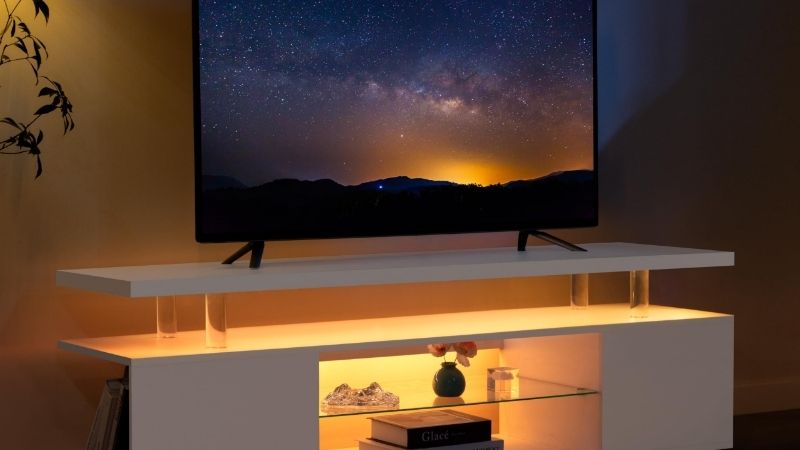
| Option | Most Useful When | Must Verify | Main Limitation |
|---|---|---|---|
| Purpose-built TV bench | The screen sits on its own feet or pedestal | Published maximum TV weight and full base fit | Uses floor space and may need anchoring |
| TV-rated media credenza | You want closed storage beneath the screen | Maker permits a TV on top, plus load and usable depth | Doors and partitions can limit device ventilation |
| Compatible wall mount | You prefer open floor space and separate storage | TV mounting pattern, bracket rating, wall structure | Installation and cable routing require planning |
| Freestanding VESA TV floor stand | You want the TV elevated without a cabinet | Exact TV size, mass, mounting pattern, base clearance | No built-in storage; exposed base needs clear floor |
| TV-rated mobile cart | You move a screen between rooms | TV compatibility, approved load, wheel-lock instructions | Wheel and cord hazards require active management |
| Integrated TV entertainment unit | You need one coordinated storage system | Which part actually carries the TV and its stated rating | Large footprint and more assembly |
| Ordinary dresser, table, or cube shelf | You hope to repurpose existing furniture | Whether maker explicitly designs or approves it for TV use | Do not treat a generic shelf-load rating as TV approval |
These are furniture and mounting categories, not a ranking of seven tested products. Two illustrative U.S. listings show the importance of model-specific ratings: IKEA’s 63-inch LACK TV unit lists a maximum TV weight of 55 pounds, while its approximately 71-inch BESTÅ TV unit lists 66 pounds [IKEA, October 2026]. Neither rating transfers to an unrelated cabinet.
Confirm the TV’s Base Footprint and Weight
First decide whether your television is meant to rest on a surface or attach to a VESA-compatible bracket. For tabletop placement, check the weight with its factory stand installed, the complete width between the feet or size of its center pedestal, and the furniture maker’s maximum television weight. All contact points need a level, unobstructed approved surface.
The TV’s diagonal screen size does not tell you where its feet land. Two televisions described as 65-inch models can have different stand designs and mounting arrangements. IKEA’s 63-inch LACK unit is a useful published example because it specifies a 55-pound maximum TV weight, rather than leaving buyers to infer strength from its width [IKEA, October 2026].
Choose a Support Designed for Television Loads
A TV-rated bench or cabinet is a clearer choice than an attractive piece of general storage furniture. A bookshelf may publish a shelf load, but that does not confirm the assembled shelf is intended to hold a screen on top. The difference includes stability, where loads are applied, surface design, and the anchoring prescribed by the manufacturer.
For a concrete comparison, IKEA sells a KALLAX TV unit that expressly lists a 35-pound maximum television weight. Separate KALLAX shelf-unit listings can publish top-load figures, but those are specifications for different furniture and configurations, not permission to substitute any shelf for a TV bench [IKEA, October 2026]. Read the exact product name and manual.
Plan the Screen, Storage, and Cables Together
Screen support is only one part of the setup. A media bench may also hold streaming boxes, game systems, receivers, and cables. Closed doors can make a living room look calmer but may restrict airflow or remote access. A floor stand saves cabinet width yet leaves you to find another place for devices and power supplies.
Keep the manufacturer’s ventilation instructions for each powered device in mind, including where exhaust air leaves the enclosure. Do not wedge a hot-running receiver into a tight shelf or route power cords under a rolling base. Select the storage layout after the TV-support method, not the other way around; appearance cannot compensate for unsupported weight or unstable furniture.
Adjust Your TV Support for the Room You Have
The best alternative depends on who uses the room, whether the wall can be drilled, and whether the television must move. These situations focus on practical placement decisions rather than repeating a generic yes-or-no answer about owning a TV stand. Each option remains conditional on the exact TV and support manufacturer’s directions.
For a Small Apartment With Limited Floor Space
A properly mounted television with a narrow cabinet underneath can free up visual space, provided the wall structure, bracket, and installation meet the TV maker’s requirements. A compatible freestanding floor stand may be more practical where drilling is not permitted. Neither option is automatically safer than furniture; both need the stability measures specified for the actual hardware.
Before ordering a floor stand, mark the footprint of its base with removable tape on the floor. Check that its feet will not block a doorway or a frequently used walking path. If you choose a compact TV bench instead, give priority to its approved TV load and the full width of the television’s feet rather than choosing the smallest cabinet that looks attractive.
For a Family Room With Children or Pets
Use a television support designed for the screen, follow its wall-anchoring instructions, and secure the TV itself as directed. The CPSC’s February 2026 guidance specifically urges anchoring TVs and heavy furniture. It also advises sturdy low bases when anchoring is not possible, while keeping cords and climb-attracting objects beyond children’s reach [CPSC, 2026].
A heavy dresser may look solid, yet drawers can create climbing opportunities and its top may not be intended for television support. Keep toys and remotes off high surfaces, and do not turn a cube shelf into a makeshift TV platform based only on a claimed weight limit. Check both the furniture instructions and the TV’s securing method, not just one.
For a Bedroom With an Existing Dresser
Using the dresser you already own may seem efficient, but a normal clothing dresser should not become a default TV support. The CPSC recommends furniture designed to hold televisions. If the dresser’s manufacturer does not explicitly approve that use, select a dedicated low TV unit, a compatible wall mount, or a floor stand instead [CPSC, 2026].
For a wall-mounted bedroom setup, keep the dresser as storage rather than making it bear the TV. Do not anchor a screen to a dresser or attach makeshift straps as a substitute for following approved hardware instructions. If an older television is being moved into a bedroom, check its actual weight and base arrangement again; the rules do not become less important for a secondary screen.
For a Living Room That Needs Hidden Media Storage
A TV-rated credenza or enclosed media console is a strong candidate when you want a neat furniture line beneath the picture. It can conceal remotes, game accessories, and streaming equipment while providing a published screen-support surface. IKEA BESTÅ is one current family of dedicated TV units; a particular 70 7/8-inch model specifies 66 pounds as the maximum TV weight [IKEA, October 2026].
That example does not mean every BESTÅ version or every credenza supports the same television. Verify the configuration, required legs and fasteners, internal shelf dimensions, and instructions for securing a floor-standing unit. If the TV is mounted to the wall instead, the credenza’s role changes to storage; the television’s mounting system must be evaluated separately.
For a Gaming Setup With Multiple Devices
A TV-rated bench with open equipment bays may suit a console, soundbar, and accessories better than a narrow decorative table. The television still needs a clear supported surface, while electronics need access for plugs and ventilation. Closed storage can work when each component maker’s clearances are respected and there is a practical way to route cables.
Do not place a game console or receiver where it blocks the TV feet, and avoid stacking devices on a narrow pedestal. Consider where controllers will be charged and where family members will reach for accessories. If you prefer a VESA floor stand for the screen, a separate low cabinet can carry equipment without pretending that the cabinet also supports the television.
For a Flexible Room Where the TV Needs to Move
A purpose-built rolling TV cart can be useful in a classroom, workout room, or multipurpose home space. It is different from putting an ordinary tabletop TV on a wheeled side table. The cart must support the television’s mounting pattern and specified weight, and its manual determines how the display should be assembled, moved, and secured when stationary.
Check wheel locks, the base’s clearance under furniture, the cord route, and the stability requirements before moving the screen. Avoid pulling a loaded cart by the display and do not treat locking wheels as a replacement for the manufacturer’s instructions. When the room layout will stay fixed, a purpose-built bench or correctly mounted television may be the simpler arrangement.
Frequently Asked Questions
The following questions address details that often cause mistakes after someone has selected a support style. They cover general furniture ratings, improvised setups, and the difference between holding equipment and actually supporting the TV. The best answers come from the instructions for the exact models involved.
Can I Put a TV on a Coffee Table?
Not merely because the table is low and wide. A coffee table designed for drinks or decor may have a stated overall load but no approval for supporting a television and resisting screen-related tip-over hazards. The CPSC advises using furniture intended to hold TVs, such as a TV stand or media center [CPSC, 2026].
If your table’s instructions expressly describe TV use, check the approved load, flat support area, installation, and required anchoring. Without that documentation, a small dedicated TV bench or an approved mounting solution is the more defensible choice. A sturdy appearance and a successful short-term trial cannot establish long-term safe use.
Is a VESA Floor Stand the Same as a TV Bench?
No. A VESA floor stand typically carries the TV through its rear mounting points, whereas a TV bench supports its feet or pedestal. That changes the compatibility checks. A floor stand needs the correct hole pattern, mounting hardware, television weight rating, and a stable base for the specific installation.
Many floor stands offer little or no storage, so accessories may still need a separate shelf or cabinet. Do not assume any stand described as universal accepts every TV: curved backs, mounting-hole spacing, hardware depth, and the exact display weight can affect compatibility. Follow both manufacturers’ installation documents.
Does a Shelf’s Weight Capacity Make It a TV Stand?
No. A shelf-load statement tells you something about a particular shelf under specified conditions, not whether the furniture is approved to bear a television in the intended location. The KALLAX TV unit’s published maximum TV weight and separate KALLAX shelf-unit load figures illustrate why model and use conditions matter [IKEA, October 2026].
Do not combine ratings from separate compartments or place a TV across adjoining cabinets unless the maker approves that configuration. Concentrated loads from pedestal feet, contact with decorative trim, and unstable assembly can make a visually wide surface unsuitable. Use the complete TV-support instructions rather than a single capacity number.
Can I Keep My TV on Its Feet Without Anchoring It?
Do not assume that is sufficient. The CPSC recommends securing TVs and furniture to prevent tip-overs and specifically highlights anchoring as a preventive measure. If anchoring is impossible, it advises a sturdy, low base with the TV pushed back, but that is a fallback precaution rather than a guarantee against injury [CPSC, 2026].
Follow the television and furniture makers’ instructions for the exact anchoring and placement method. Keep cords managed so they cannot be pulled easily, and move objects that could invite climbing away from the screen area. A room without young children still benefits from assessing instability and accidental impacts.
Final Thoughts
If you are deciding what to use for tv stand support, start with a dedicated TV-rated bench or media cabinet. Choose a compatible wall mount, floor stand, or mobile cart when your room calls for it. Avoid improvising with dressers and shelves unless the manufacturer expressly approves TV use; confirm the weight, footprint, and anchoring instructions first.