Key takeaways
- Airflow: Match the fan’s CFM rating to the room size and use pattern. Smaller bathrooms may need around 50–80 CFM, while larger or heavily used rooms benefit from 100 CFM or more.
- Noise: Look for a low sone rating if the bathroom is near a bedroom, nursery, or living area. Around 1.0 to 1.5 sones is a comfortable target for everyday use.
- Ceiling fit: Confirm the housing dimensions, duct size, ceiling depth, and existing cutout before buying. A compact grille does not always mean a compact housing.
- Lighting: Integrated LEDs save ceiling space and reduce visual clutter. Dimmable output, selectable color temperatures, and a nightlight are especially useful in small bathrooms.
- Controls and moisture: Humidity sensors and adjustable speeds can prevent over-ventilating while still handling steam. For shower locations, verify the product’s wet-location suitability and follow local electrical requirements.
What's inside
Choosing a bathroom ceiling fan is less straightforward than it looks. A model may promise powerful ventilation, but still be too noisy for a small apartment, too large for the ceiling opening, or poorly suited to a shower-heavy room. Lighting, humidity control, duct compatibility, and installation depth can matter just as much as airflow.
This guide focuses on the details that make a real difference in compact bathrooms: effective moisture removal, manageable sound levels, useful lighting, flexible controls, and space-conscious installation. The recommendations below cover practical options for everything from a half bath to a frequently used family bathroom.
As an Amazon Associate we earn from qualifying purchases.




How to Choose a Bathroom Ceiling Fan (2026)
- Airflow: Match the fan’s CFM rating to the room size and use pattern. Smaller bathrooms may need around 50–80 CFM, while larger or heavily used rooms benefit from 100 CFM or more.
- Noise: Look for a low sone rating if the bathroom is near a bedroom, nursery, or living area. Around 1.0 to 1.5 sones is a comfortable target for everyday use.
- Ceiling fit: Confirm the housing dimensions, duct size, ceiling depth, and existing cutout before buying. A compact grille does not always mean a compact housing.
- Lighting: Integrated LEDs save ceiling space and reduce visual clutter. Dimmable output, selectable color temperatures, and a nightlight are especially useful in small bathrooms.
- Controls and moisture: Humidity sensors and adjustable speeds can prevent over-ventilating while still handling steam. For shower locations, verify the product’s wet-location suitability and follow local electrical requirements.
The Best Bathroom Ceiling Fans (2026) Reviewed
100CFM Quiet Fan with Dimmable 5CCT LED
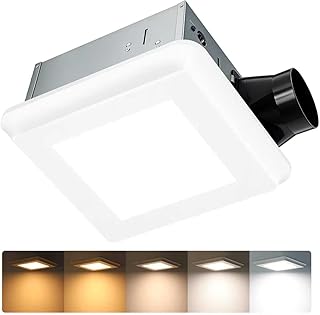
This round ceiling-mount fan is a strong all-in-one choice for compact bathrooms that need dependable ventilation and a clean ceiling profile. Its 100 CFM output, 1.2-sones operation, selectable color temperature, dimmable LED, wet rating, and ETL certification give it an appealing balance of performance and convenience.
Panasonic WhisperFit FV-0511VFL1
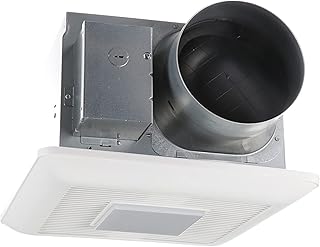
The WhisperFit is a smart pick when installation flexibility matters. Its selectable 50, 80, or 110 CFM settings let it adapt to different room sizes, while the dimmable LED keeps a separate light fixture from taking up valuable ceiling space. Panasonic’s quiet-focused design is particularly well suited to bathrooms beside sleeping areas.
Panasonic WhisperCeiling DC FV-1115VQL1
For buyers who prioritize stronger ventilation, the WhisperCeiling DC offers a robust solution with integrated LED lighting. It makes the most sense in larger bathrooms, rooms with persistent condensation, or households that want substantial airflow without moving to a visibly industrial-looking fixture.
Panasonic WhisperGreen Select FV-0511VKSL3K
This model stands out for adjustability. Its selectable range from 30 to 110 CFM, dual-speed operation, customizable controls, and 5CCT LED allow homeowners to fine-tune the fan instead of accepting a one-size-fits-all setting. It is a particularly good fit for remodels where future flexibility is worth paying for.
130CFM Fan with Light and Humidity Sensor
The built-in humidity sensor makes this fan useful for households that do not want to remember to switch ventilation on or off. With 130 CFM, a 1.0-sones rating, adjustable settings, and selectable 5CCT lighting, it is geared toward fast moisture removal while remaining quiet enough for routine use.
Frequently Asked Questions
What size bathroom ceiling fan do I need?
For a small bathroom, a fan in the 50–80 CFM range is often sufficient. Larger bathrooms, rooms with high ceilings, and bathrooms that collect heavy steam may benefit from 100 CFM or more. Always compare the rating with the room’s dimensions and the manufacturer’s guidance.
Is a quieter bathroom fan worth the extra cost?
Usually, yes. A quieter fan is more likely to be used consistently and is less disruptive when the bathroom shares a wall with a bedroom or home office. Sound ratings are measured in sones, and lower numbers indicate quieter operation.
Should I choose a fan with a humidity sensor?
A humidity sensor is convenient because it can start or continue ventilation automatically as moisture rises. It is especially helpful in guest bathrooms, rental properties, and busy households, although sensor sensitivity and installation requirements vary by model.
Can I replace a bathroom fan without changing the ceiling opening?
Sometimes, but not always. Check the existing housing, cutout dimensions, duct connection, wiring, and joist arrangement before ordering. A replacement grille may look compatible while the internal housing requires a larger opening or different mounting method.
Final Thoughts
For a balanced combination of quiet operation, lighting, and everyday performance, the 100CFM Quiet Fan with Dimmable 5CCT LED is an appealing choice. The Panasonic WhisperFit FV-0511VFL1 is better for flexible airflow and compact installations, while the 130CFM Humidity Sensor Fan is a strong option for bathrooms that regularly struggle with steam.