Key takeaways
- Side sleepers: Look for enough cushioning beneath the shoulders and hips to reduce pressure, without allowing the midsection to sag. Medium or medium-soft comfort can be a useful starting point.
- Back sleepers: Prioritize even support through the lumbar area. A medium-firm mattress often offers a practical balance between cushioning and a stable sleeping surface.
- Stomach sleepers: A firmer, more supportive feel can help keep the hips from sinking too deeply. Pay close attention to the mattress’s support core rather than judging by height alone.
- Combination sleepers: Choose a surface that allows repositioning without excessive effort. Hybrid construction or moderately responsive foam may feel more adaptable than deeply contouring memory foam.
What's inside
Choosing a mattress in a box is less about finding the thickest option and more about matching the bed to your room, sleep position, body weight, and tolerance for movement. A boxed mattress can simplify delivery—especially in an apartment, narrow hallway, or compact bedroom—but the wrong construction can leave you short on support or usable floor space.
This guide explains how to compare foam, hybrid, and gel-infused designs, how to plan for unboxing in a small home, and which specifications deserve your attention. Our recommended picks below include several promising queen-size options, but the best choice is the one that fits both your sleep needs and your room’s practical limits.
As an Amazon Associate we earn from qualifying purchases.


Start With Your Space and Bed Size
Before comparing comfort layers, measure the room. A queen mattress is typically 60 by 80 inches, while a king needs 76 by 80 inches. Allow additional clearance for walking, opening drawers, and making the bed. In a small bedroom, a queen often provides a better balance between sleeping area and usable storage than a king.
Measure the route from your front door to the bedroom, including stair turns, elevator dimensions, and narrow doorways. A boxed mattress is easier to maneuver than a fully expanded one, but its carton can still be bulky. Clear the path before delivery and decide where the package will rest while you prepare the bed frame.
Choose the Right Mattress Construction
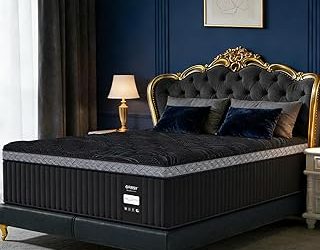
All-foam mattresses use layers of foam for cushioning and support. They tend to absorb movement well, which is useful for couples, and they usually produce little noise. The EGOHOME 10 Inch Queen Mattress, Novilla 12 Inch Queen Mattress, and FATHOM Medium 12 Inch Queen Mattress are examples of memory-foam designs with cooling or gel-focused features. Foam can feel enveloping, so sleepers who prefer easy movement or a more buoyant surface may want a hybrid instead.
Hybrid mattresses combine foam with pocket springs. The coils can add responsiveness, edge structure, and airflow while the comfort layers cushion pressure points. The Sleepmax 14 Inch Queen Mattress and the 12 Inch hybrid options with pocket springs are worth considering if you want a less “sinking” feel. Pocketed coils may also help limit motion transfer, although the exact result depends on the mattress’s layer design and the sleeper.
Match Firmness to Your Sleep Position
- Side sleepers: Look for enough cushioning beneath the shoulders and hips to reduce pressure, without allowing the midsection to sag. Medium or medium-soft comfort can be a useful starting point.
- Back sleepers: Prioritize even support through the lumbar area. A medium-firm mattress often offers a practical balance between cushioning and a stable sleeping surface.
- Stomach sleepers: A firmer, more supportive feel can help keep the hips from sinking too deeply. Pay close attention to the mattress’s support core rather than judging by height alone.
- Combination sleepers: Choose a surface that allows repositioning without excessive effort. Hybrid construction or moderately responsive foam may feel more adaptable than deeply contouring memory foam.
Firmness is subjective and can change with body size, sleeping position, and the bed base underneath. Treat labels such as “medium” or “medium firm” as useful guidance, not a universal measurement.
Look Beyond Thickness and Cooling Claims
A taller mattress is not automatically more supportive. Thickness usually reflects the combined height of the comfort and support layers, so inspect the construction whenever details are available. A 10-inch mattress may suit a low-profile setup, while a 12- or 14-inch model can provide additional cushioning—but it may also require deeper sheets and make a platform bed feel higher.
Cooling features can improve the sleep experience, but they do not turn foam into an actively cooled surface. Gel-infused foam, breathable covers, and coil systems may help manage heat, while room temperature, bedding, and body heat remain major factors. If you sleep warm, favor breathable sheets, avoid an overly thick mattress protector, and consider a hybrid with airflow through its spring layer.
Check Safety, Setup, and Return Terms
Look for clear material and certification information. Several listed models specify CertiPUR-US certification, which relates to certain foam emissions, content, and durability criteria. Some also advertise fiberglass-free construction or removable covers. Read the manufacturer’s care instructions before removing a cover; “removable” does not always mean machine washable or intended for routine removal.
Unbox the mattress on its final base, because moving it after expansion is significantly harder. Confirm that the bed frame provides adequate center support and does not exceed the manufacturer’s slat-spacing limit. Let the mattress expand for the time recommended on its instructions, and ventilate the room if there is a temporary new-foam odor. Review the trial period, warranty, exclusions, and return procedure before buying. A long trial is valuable only if returns are genuinely manageable.
Tips
- Use a tape measure to record the room, doorway, stairwell, and bed-frame dimensions before ordering.
- Place a washable mattress protector on the bed after the mattress has fully expanded; it helps preserve the trial condition.
- Give your body several nights to adjust, unless the mattress causes sharp pain, severe pressure, or an obvious support problem.
- Rotate the mattress only if the manufacturer recommends it; most modern mattresses are not designed to be flipped.
Frequently Asked Questions
How long does a mattress in a box take to expand?
Expansion time varies by model, temperature, and how long the mattress remained compressed. It may look usable quickly but need additional time to reach its intended shape. Follow the included instructions before judging comfort or placing heavy bedding on it.
Are hybrid mattresses better than memory-foam mattresses?
Neither is universally better. Memory foam is often appealing for pressure relief and motion absorption, while a hybrid can provide more bounce, airflow, and ease of movement. Your sleeping position and preferred feel matter more than the category name.
Can I put a boxed mattress on any bed frame?
No. Use a stable platform, foundation, or frame that meets the mattress maker’s requirements for slat spacing, center support, and weight capacity. An unsuitable base can cause sagging and may affect warranty coverage.
What should I do if the mattress feels too firm at first?
Check that it has fully expanded and that the room is not unusually cold, since temperature can influence foam feel. Give it a reasonable adjustment period, then use the seller’s trial or return process if the support remains unsuitable.
Conclusion
The best mattress in a box for 2026 is the one that supports your sleeping position, fits your frame and room, and comes with clear materials, setup instructions, and return terms. Compare construction rather than thickness alone: choose foam for contouring and motion control, or a hybrid for responsiveness and airflow. With careful measurements and realistic expectations, boxed delivery can be a smart solution for both compact homes and full-size bedrooms.