Key takeaways
- Twin XL: Best for one sleeper, a guest room, or a narrow bedroom. It offers length without unnecessary width.
- Queen: The practical shared-bed option for many rooms, but make sure both sides remain accessible.
- Split King: Made from two Twin XL sections, allowing each sleeper to adjust independently. It requires careful alignment and more planning around bedside space.
What's inside
An adjustable bed can make a small bedroom feel more useful, not more crowded—provided you choose the right footprint and plan for the moving parts. Raising your head or legs may improve reading, screen viewing, relaxation, and bedtime comfort, while built-in lighting and USB ports can reduce the need for extra furniture.
This guide explains how to choose the best adjustable bed in 2026, with particular attention to compact-room organization. You’ll learn which size and split configuration make sense, what features are genuinely useful, how to check mattress compatibility, and which details matter when the bed must work hard in a limited space.
As an Amazon Associate we earn from qualifying purchases.

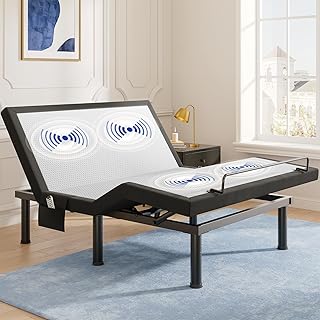


Start With the Room, Not the Feature List
Measure the entire bed zone before comparing models. Record the wall-to-wall width, available length, ceiling height near the headboard, and clearance around both sides. An adjustable base needs room to articulate, and a split model may require more visible hardware than a standard platform.
For a single sleeper, Twin XL is often the most space-efficient choice because it provides adult-friendly length without the width of a queen. A queen is a better fit when two people share the room, but leave enough clearance to walk around it and access drawers or doors. Split King bases offer independent adjustment, yet they are a substantial commitment in both floor area and budget.
Also check the path into the room. Measure stairways, elevator doors, tight turns, and the bedroom entrance. A base that arrives in manageable cartons is easier to install than one large, rigid frame.
Choose the Base and Mattress as a Pair
The mattress is not an interchangeable afterthought. Most adjustable bases work best with a flexible foam, latex, or hybrid mattress, but firmness, thickness, and weight affect how smoothly it bends. A mattress that is too rigid may resist movement; one that is excessively heavy can place greater demand on the motor.
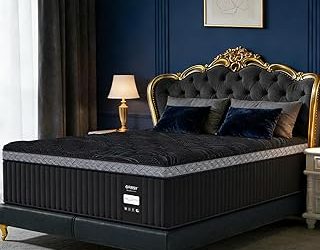
Some products combine the base and mattress, which simplifies compatibility. Examples include the Sven & Son Classic Adjustable Bed Base with its 14-inch hybrid mattress, the SF Split King Adjustable Bed Frame with a 12-inch cooling gel memory foam mattress, and the 3000 Series Twin XL adjustable frame with a medium hybrid mattress. These bundled options are convenient for a first purchase, but verify the stated dimensions and feel before ordering.
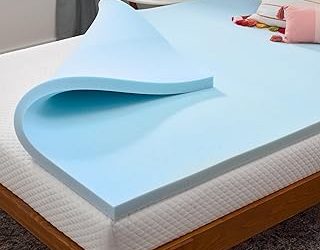
If you already own a mattress, look for the manufacturer’s compatibility guidance. Keep the mattress on the base during normal operation, and avoid adding a thick, rigid topper that could restrict the hinge points.
Prioritize Features That Reduce Bedroom Clutter
In a compact room, the best features are often the ones that replace separate objects. Under-bed lighting can serve as a discreet nighttime path light, while USB ports reduce the need for a bedside charging station. Side pockets, such as those on the Tami T600 Adjustable Bed Frame, can hold a remote, glasses, or a phone without requiring a nightstand.
Massage, zero-gravity positioning, and head-and-foot incline are comfort features rather than storage solutions. They can be worthwhile, but do not let a long feature list distract from basics such as stable construction, a quiet motor, a usable remote, and sensible leg height.
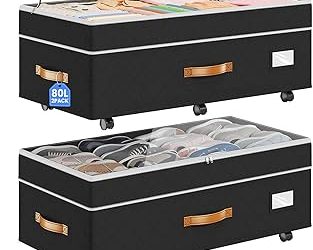
The Marsail Queen Adjustable Bed Frame is especially relevant to flexible room layouts because it includes height-adjustable legs, USB ports, LED lighting, and head-and-foot incline. Adjustable legs can help accommodate storage bins, although you should measure the resulting clearance before assuming containers will fit.
Decide Between Queen, Twin XL, and Split King
- Twin XL: Best for one sleeper, a guest room, or a narrow bedroom. It offers length without unnecessary width.
- Queen: The practical shared-bed option for many rooms, but make sure both sides remain accessible.
- Split King: Made from two Twin XL sections, allowing each sleeper to adjust independently. It requires careful alignment and more planning around bedside space.
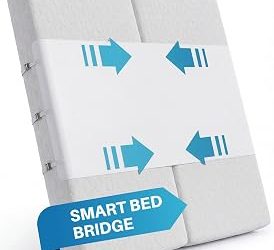
A split design can be valuable when partners have different sleeping preferences, but it may introduce a seam and separate controls. The ESHINE Split King Adjustable Bed Frame includes features such as lumbar support, a head-pillow tilt, dual USB, a smart app, and under-bed lighting. Those extras are useful only if both sleepers can comfortably live with the room’s larger footprint.
Check Assembly, Controls, and Everyday Usability
Ask how much assembly the base requires and whether the legs, remote, power supply, and mattress are included. “Easy assembly” usually means attaching legs and connecting cables, not carrying the complete bed upstairs. Keep the power cord away from moving joints and leave enough slack for the base to rise safely.
A wireless remote should have clearly labeled controls and a reliable place to live. Preset positions such as zero gravity are convenient, but manual adjustment is important when you want a precise reading or lounging angle. If the model offers an app, treat it as a bonus rather than your only control method.
Noise matters in small rooms because sound reflects off nearby walls and furniture. Look for a quiet motor description, then read current owner feedback for comments about operation, remote reliability, and long-term performance. Confirm the warranty, return window, weight capacity, and replacement-parts policy before purchase.
Tips
- Draw the bed’s footprint on the floor with painter’s tape, then test whether doors, drawers, and wardrobes still open.
- Use the lowest leg setting that provides adequate cleaning access; extra height can make a small room look visually heavier.
- Place a surge protector where it remains reachable without creating a cable trip hazard.
- Keep a narrow bedside shelf or wall-mounted ledge if the base has no pocket for the remote and personal items.
Frequently Asked Questions
What is the best adjustable bed size for a small bedroom?
Twin XL is usually the most efficient choice for one person, while a queen works when two people share the room and there is enough side clearance. Measure first rather than relying on the room’s advertised dimensions.
Can I use my existing mattress on an adjustable base?
Often, yes, if it is flexible and listed as compatible by its manufacturer. Foam, latex, and many hybrids are commonly suited to movement, but check thickness, weight, and warranty conditions before pairing them.
Are split adjustable beds difficult to keep aligned?
They can shift slightly if the sections are pushed or pulled independently, especially on smooth flooring. Follow the installation instructions, use any supplied connectors, and leave enough space to access both sides during setup.
Are massage and under-bed lights worth paying for?
Under-bed lights can replace a separate night-light and are particularly useful in compact rooms. Massage is more personal: choose it if you expect to use it regularly, not simply because it appears in the specification.
Conclusion
The best adjustable bed is the one that fits your room, mattress, routine, and storage plan—not necessarily the model with the longest feature list. For small spaces, begin with accurate measurements, favor a suitable mattress pairing, and prioritize practical additions such as USB ports, lighting, quiet operation, and manageable assembly. From the compact Twin XL package to a feature-rich queen or split king, choose the configuration that improves daily comfort without compromising how the room functions.