Key takeaways
- Leather type: Confirm whether your sofa is finished, aniline, semi-aniline, faux leather, or vinyl before applying anything; products are not universally interchangeable.
- Cleaner versus conditioner: Cleaner lifts surface grime, while conditioner helps replenish the finish and improve suppleness. A neglected sofa may need both, used separately.
- Color safety: Even products advertised for all colors should be patch-tested, especially on white, pale, distressed, or unevenly dyed upholstery.
- Application: Look for a manageable cloth, sponge, or controlled formula. In a small home, less mess and fewer accessories make regular care more realistic.
- Coverage: Measure your sofa and consider whether you are treating one sectional, several chairs, or only high-contact areas. Larger bottles can be better value but need sensible storage.
What's inside
A leather sofa can look tired long before it is truly worn out. Dust settles into textured grain, body oils leave dull patches, and the wrong cleaner may darken, dry, or discolor the upholstery. In a small living room, where the sofa often carries most of the visual weight, neglected leather can make the entire space feel less polished.
This guide compares practical leather-care options for sofas, from single-purpose cleaners and conditioners to complete kits. The focus is on easy application, furniture-friendly versatility, and products that suit routine maintenance without adding unnecessary bottles to a compact storage area. Always check your sofa manufacturer’s care label and test any product on a hidden section first.
As an Amazon Associate we earn from qualifying purchases.



How to Choose a/an Leather Care For Sofa (2026)
- Leather type: Confirm whether your sofa is finished, aniline, semi-aniline, faux leather, or vinyl before applying anything; products are not universally interchangeable.
- Cleaner versus conditioner: Cleaner lifts surface grime, while conditioner helps replenish the finish and improve suppleness. A neglected sofa may need both, used separately.
- Color safety: Even products advertised for all colors should be patch-tested, especially on white, pale, distressed, or unevenly dyed upholstery.
- Application: Look for a manageable cloth, sponge, or controlled formula. In a small home, less mess and fewer accessories make regular care more realistic.
- Coverage: Measure your sofa and consider whether you are treating one sectional, several chairs, or only high-contact areas. Larger bottles can be better value but need sensible storage.
The Best Leather Care For Sofa (2026)s Reviewed
Leather Honey Leather Conditioner
Leather Honey Leather Conditioner is a strong choice for owners who already have a suitable cleaner and want a dedicated conditioning step. Its stated use across furniture and multiple leather goods makes it a versatile cupboard staple, while the non-toxic positioning and suitability for all colors, including white, may appeal to households seeking a straightforward maintenance product. Apply sparingly and allow adequate drying time so the sofa does not feel overly coated.
Leather Honey Leather Cleaner
For sofas that need grime removed before conditioning, Leather Honey Leather Cleaner is the more focused pick. It is designed for leather, faux leather, and vinyl, giving it useful range in homes with mixed upholstery; however, a patch test remains essential because finishes can react differently even when a formula is marketed for any color.
Leather Honey Complete Leather Care Kit
The Leather Honey Complete Leather Care Kit combines 8-ounce bottles of cleaner and conditioner, making it a sensible starting point for someone building a sofa-care routine from scratch. Having both stages together reduces guesswork and avoids storing separate products from different brands. It is particularly practical for small spaces because one compact kit can cover furniture, shoes, bags, and other leather items.
Bick 4 Leather Conditioner & Cleaner
Bick 4 Leather Conditioner & Cleaner is a convenient one-bottle option for light, regular upkeep when you do not want a multi-step process. Its stated promise not to darken leather makes it worth considering for lighter couches, though no product should be applied heavily or skipped past the hidden-area test. The 8-ounce size is easy to store in a narrow cabinet or cleaning caddy.
Leather Honey Complete Leather Care Kit with Cloths
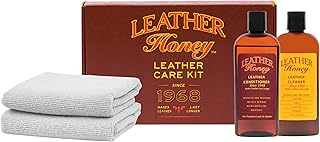
This Leather Honey Complete Leather Care Kit adds cloths to the cleaner-and-conditioner pairing, which can simplify setup for first-time users. It is a useful choice when you want a dedicated sofa-care bundle rather than assembling tools separately, and the included accessories can help keep the process contained. Use separate sections of the cloth for cleaning and conditioning to avoid spreading lifted dirt back across the upholstery.
Frequently Asked Questions
How often should I clean and condition a leather sofa?
Light dusting can be done weekly, while a deeper clean is usually needed every few months or whenever visible grime appears. Conditioning is best performed according to the sofa maker’s guidance and the leather’s condition; over-conditioning can leave buildup.
Can I use leather care products on faux leather?
Only use a product that specifically identifies faux leather or vinyl as compatible. Genuine-leather formulas may not behave properly on synthetic coatings, so inspect the label and test an inconspicuous area first.
How much product should I apply?
Start with a small amount on a soft cloth or the supplied applicator, working in thin, even sections. More product is not automatically better; excess can create a greasy surface, attract dust, or make drying uneven.
What should I do before treating the whole sofa?
Vacuum crumbs and dust with a soft attachment, read the sofa’s care instructions, and test the product behind or beneath the furniture. Wait until the test area dries completely before judging any change in color, texture, or sheen.
Final Thoughts
For a complete routine, the Leather Honey Complete Leather Care Kit is the most convenient starting point, while Leather Honey Cleaner suits sofas that mainly need careful grime removal. Bick 4 is a compact choice for simpler maintenance, and the separate Leather Honey Conditioner is useful when your existing cleaner is already working well.