Key takeaways
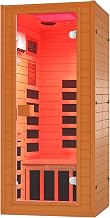
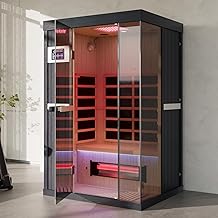
- Wooden cabins: The best fit for a dedicated wellness corner. They look like permanent furniture, provide a more upright seating experience, and generally offer cleaner cable management. The OUTEXER Far Infrared Sauna is a compact example for shoppers prioritizing a Canadian hemlock enclosure and tempered glass door.
- Full-spectrum cabins: These combine more than one infrared wavelength and may include red-light panels. The 2-Person Full Spectrum Infrared Sauna adds a larger footprint, speakers, and a dedicated red-light panel, so it suits buyers with a room to spare.
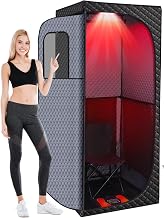
- Portable tents: These are easiest to store in a closet and can be useful in apartments or multipurpose rooms. They typically require a chair inside and may use steam as well as infrared heat, so they feel different from a dry wooden cabin.
What's inside
Choosing the best infrared sauna for 2026 is less about buying the biggest cabin and more about matching heat style, footprint, electrical needs, and daily habits. In a home, especially a compact one, an impressive feature list can be less useful than a door that opens comfortably, a sensible warm-up time, and a location you will actually use.
This guide compares the main formats—from full-size wooden cabins to folding sauna tents—and explains what to check before buying. You will learn how infrared heating differs from steam, how to plan floor space and ventilation, and which features deserve your budget when a sauna must fit neatly into a home.
As an Amazon Associate we earn from qualifying purchases.




Start With the Space You Have
Measure the intended area before comparing wattage or light therapy. Record the available width, depth, and ceiling height, then leave room for the door to swing open and for you to enter and exit without twisting around nearby furniture. A cabin that measures roughly 35 by 28 inches still needs usable clearance around it.
Also check the route to the room. A tall, assembled sauna may not pass through a narrow hallway, stairwell, or doorway. Modular wooden cabins are usually easier to move than they look because the panels separate, but confirm assembly requirements. If you rent, move often, or have limited storage, a folding model such as an Infrared Sauna Tent with 3L Steamer or the Infrared Sauna Box can be a more practical choice.
Choose the Right Sauna Format
- Wooden cabins: The best fit for a dedicated wellness corner. They look like permanent furniture, provide a more upright seating experience, and generally offer cleaner cable management. The OUTEXER Far Infrared Sauna is a compact example for shoppers prioritizing a Canadian hemlock enclosure and tempered glass door.
- Full-spectrum cabins: These combine more than one infrared wavelength and may include red-light panels. The 2-Person Full Spectrum Infrared Sauna adds a larger footprint, speakers, and a dedicated red-light panel, so it suits buyers with a room to spare.
- Portable tents: These are easiest to store in a closet and can be useful in apartments or multipurpose rooms. They typically require a chair inside and may use steam as well as infrared heat, so they feel different from a dry wooden cabin.
Evaluate Heat, Controls, and Electrical Requirements
Infrared saunas warm the body directly with infrared emitters rather than heating the surrounding air as aggressively as a traditional sauna. That often means a gentler atmosphere, but the experience still varies by heater layout, insulation, temperature range, and seating position. Look for clear specifications rather than relying on phrases such as “deep heat.”
Check the voltage, plug type, wattage, and circuit guidance before delivery. A higher-wattage cabin may require more planning than a compact 110V model, while a tent with a 3L steamer needs safe access to both electricity and water. Controls should be reachable from the seat, with a straightforward timer and an automatic shutoff. Bluetooth, radio, and color lighting are pleasant extras, but they should not outweigh construction quality or reliable controls.
Understand Low-EMF and Light-Therapy Claims
“Low EMF” is not a universal performance grade. Ask the manufacturer how and where the measurement was taken, whether it applies to the heater surface or seating position, and whether the result is independently tested. The most useful listing is specific about test conditions instead of presenting low EMF as an unexplained guarantee.
Red-light therapy is another feature that deserves careful reading. Wavelengths such as 660nm and 850nm are commonly listed on portable units, but the presence of a wavelength does not by itself establish a medical benefit. Treat built-in red lights as an optional wellness feature, not a substitute for clinical care. The 3-Person Ceramic Infrared Sauna with Red Light Therapy combines far- and near-infrared heating with a granite-look backdrop, while the Infrared Sauna Box specifically lists 660nm and 850nm lamps.
Prioritize Materials, Cleaning, and Everyday Comfort
For a cabin, inspect the wood type, panel construction, glass thickness, bench dimensions, heater coverage, and finish. Hemlock is common because it has a relatively even appearance and is used widely in indoor sauna construction. A two-person label does not guarantee two-adult comfort, so compare interior dimensions and bench width rather than the marketing category alone.
Think about maintenance in the same way you would evaluate a sofa or storage cabinet. Smooth, accessible surfaces are easier to wipe down. Removable or washable tent liners are helpful, and a towel on the seat protects the surface from perspiration. Any sauna should be installed in a dry, level location with the ventilation and clearance recommended by its manual. Do not use a portable steam model on a wet floor or leave it packed away while damp.
Tips
- Use painter’s tape to mark the sauna’s footprint and door swing before ordering.
- Keep the sauna away from radiators, direct sunlight, sprinklers, and clutter that could block ventilation.
- Start with shorter sessions and moderate heat, then follow the manufacturer’s operating instructions.
- Have water nearby, avoid alcohol before use, and stop if you feel dizzy, nauseated, or unwell.
Frequently Asked Questions
Is an infrared sauna better than a traditional sauna?
Neither is universally better. Infrared models usually operate at lower ambient temperatures and are often easier to install indoors, while traditional saunas create a hotter, more air-focused experience. Choose based on comfort, available space, electrical capacity, and how much heat you enjoy.
What is the best infrared sauna for a small apartment?
A folding tent is usually the easiest format to store, provided you have a safe, dry setup area. A compact wooden cabin such as the OUTEXER can work when you want a permanent feature and have enough clearance. Measure carefully; a small room can feel crowded once door access and ventilation are included.
Do I need a two-person sauna if I live alone?
Not necessarily. A two-person cabin may provide a more comfortable solo seat, but it consumes more floor space and electricity. If the sauna will nearly always be used by one person, a well-sized one-person or compact two-person model may be the better balance.
Are sauna tents as effective as wooden cabins?
They can provide heat and perspiration, but the experience is not identical. Tents are lighter, less expensive to store, and often combine infrared heating with steam. Cabins generally feel more stable and furniture-like. Compare heat controls, insulation, cleaning requirements, and warranty terms rather than judging by format alone.
Conclusion
The best infrared sauna for 2026 is the one that fits your room, circuit, comfort preferences, and real routine. Choose a wooden cabin for a lasting wellness zone, a full-spectrum model for broader built-in features, or a folding tent when storage flexibility matters most. Careful measurements, transparent specifications, and sensible safety features will serve you better than the longest feature list.