Key takeaways
- Measure the clearance: Leave about 36 inches between the island and surrounding cabinets for comfortable passage, and more where multiple people cook or appliance doors open.
- Match the footprint: A slim cart suits a small kitchen, while a stationary island works better when you have a generous, predictable traffic path.
- Prioritize useful storage: Deep cabinets can hide bulky cookware, while drawers, open shelves, spice racks, and towel bars make frequently used items easier to reach.
- Choose the right work surface: Solid wood adds warmth and can tolerate daily prep, whereas faux-marble finishes offer a polished appearance with less visual weight than some stone tops.
- Think beyond cooking: Drop leaves, extendable tops, and built-in seating can turn an island into a breakfast bar or dining area, but confirm the extended dimensions before buying.
What's inside
A kitchen island can add valuable prep space, but the wrong one can make a compact room feel blocked, crowded, and difficult to work in. Buyers also have to weigh fixed versus mobile designs, seating capacity, storage access, countertop durability, and whether an island will leave enough room for doors and drawers to open comfortably.
This guide compares standout kitchen islands for different layouts, from narrow rolling carts to substantial seating islands. The recommendations focus on space planning, everyday usability, storage flexibility, mobility, and features such as drop leaves, power outlets, adjustable shelves, and integrated waste storage.
As an Amazon Associate we earn from qualifying purchases.



How to Choose a/an Kitchen Island (2026)
- Measure the clearance: Leave about 36 inches between the island and surrounding cabinets for comfortable passage, and more where multiple people cook or appliance doors open.
- Match the footprint: A slim cart suits a small kitchen, while a stationary island works better when you have a generous, predictable traffic path.
- Prioritize useful storage: Deep cabinets can hide bulky cookware, while drawers, open shelves, spice racks, and towel bars make frequently used items easier to reach.
- Choose the right work surface: Solid wood adds warmth and can tolerate daily prep, whereas faux-marble finishes offer a polished appearance with less visual weight than some stone tops.
- Think beyond cooking: Drop leaves, extendable tops, and built-in seating can turn an island into a breakfast bar or dining area, but confirm the extended dimensions before buying.
The Best Kitchen Island (2026)s Reviewed
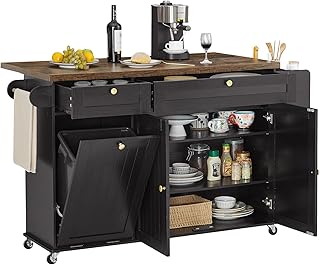
60-Inch Kitchen Island with Trash Storage
This black-and-rustic-brown rolling island makes a strong choice for kitchens that need concealed waste storage without sacrificing a work surface. Its drop leaf, adjustable cabinet shelf, and power outlet support flexible prep, serving, and appliance use, although its 60-inch length requires careful clearance planning.
71-Inch Modern Kitchen Island with Seating
Designed for larger kitchens, this white island combines a faux-marble look with seating for up to four and dedicated fridge space. The drawers and stationary cabinet create a furniture-like centerpiece, but the substantial footprint is best reserved for open layouts where the seating zone will not interrupt circulation.
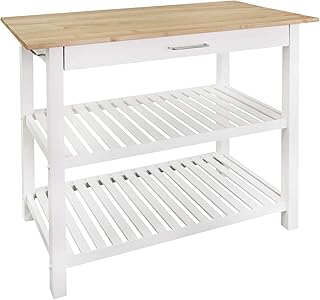
Casual Home Kitchen Island
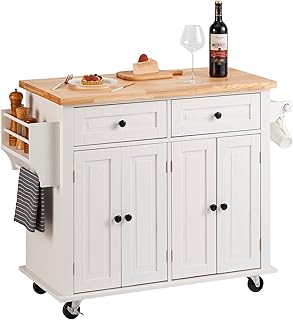
The Casual Home island is a practical middle ground for smaller homes, pairing a solid American hardwood top with a relatively compact 40-inch width. Its natural-and-white finish works well in bright, transitional kitchens, and the manageable scale makes it easier to position without overwhelming the room.
Homestyles Mobile Kitchen Island Cart
This blue Homestyles cart brings color and adaptability to a modest kitchen, with a wood top and a drop-leaf breakfast bar that can expand when needed and fold away afterward. Its mobile format is especially useful for renters or cooks who want to clear floor space after meal preparation.
VEVOR Kitchen Island Cart
The VEVOR cart is organized around everyday convenience, offering a solid wood top, storage cabinet, drawer, spice rack, and towel rack in a mobile design. Height-adjustable shelving helps accommodate items of different sizes, making this a particularly capable choice when vertical storage matters more than seating.
Frequently Asked Questions
How much space should be between a kitchen island and cabinets?
Aim for roughly 36 inches of clearance around the island for ordinary movement and food preparation. Increase that distance near dishwashers, refrigerators, ovens, or seating areas so doors and people do not compete for the same space.
Are mobile kitchen islands better for small kitchens?
Often, yes. Wheels let you reposition the island for cooking, cleaning, or entertaining, while a drop leaf can provide temporary dining or prep space without permanently occupying the full footprint.
What countertop material is best for a kitchen island?
Solid wood offers warmth, can be refinished, and suits frequent prep when properly maintained. Faux-marble surfaces provide a decorative stone-inspired appearance, while the best choice ultimately depends on maintenance preferences, heat exposure, and how heavily the island will be used.
Can a kitchen island replace a dining table?
Some can, particularly models with seating for four or an extendable dining section. Check the seating height, legroom, overhang, and fully extended dimensions to make sure the arrangement is comfortable rather than merely space-saving.
Final Thoughts
The Casual Home Kitchen Island is a smart compact pick, while the VEVOR Kitchen Island Cart delivers especially useful organization in a mobile format. For larger rooms, the 71-Inch Modern Kitchen Island adds generous storage and seating, and the 60-Inch model stands out when concealed trash storage and an integrated outlet are priorities.