Key takeaways
- Connection: Check that the hose uses the correct 3/4-inch FHT fitting for your dehumidifier. A matching thread is essential for a secure, drip-free attachment.
- Length: Measure the route to the drain, allowing a little extra for gentle bends. Avoid buying excessive length, which can coil behind furniture and restrict water flow.
- Construction: Brass or rust-resistant connectors are useful in damp rooms, while a thickened hose wall can better withstand regular handling and accidental pinching.
- Flexibility: Look for a hose that can curve gradually without collapsing. In a narrow storage area, a no-kink design is especially helpful around shelves and appliances.
- Drain route: The hose should run downhill continuously whenever possible. Keep the outlet free of sharp bends, raised loops, and obstructions that could cause water to back up.
What's inside
When a dehumidifier sits in a compact laundry area, basement corner, or closet, emptying its bucket can become a daily chore. A drain hose solves that problem, but the wrong length, connector, or routing can create leaks, kinks, and an awkward trip hazard in an already crowded space.
This guide focuses on practical, continuous-drain setups for small homes. We compare hose length, connector construction, flexibility, and routing considerations so you can choose a dependable fit without wasting floor space. Always confirm your dehumidifier’s outlet size before ordering; most options below use a 3/4-inch FHT connection.
As an Amazon Associate we earn from qualifying purchases.




How to Choose a/an Dehumidifier Drain Hose (2026)
- Connection: Check that the hose uses the correct 3/4-inch FHT fitting for your dehumidifier. A matching thread is essential for a secure, drip-free attachment.
- Length: Measure the route to the drain, allowing a little extra for gentle bends. Avoid buying excessive length, which can coil behind furniture and restrict water flow.
- Construction: Brass or rust-resistant connectors are useful in damp rooms, while a thickened hose wall can better withstand regular handling and accidental pinching.
- Flexibility: Look for a hose that can curve gradually without collapsing. In a narrow storage area, a no-kink design is especially helpful around shelves and appliances.
- Drain route: The hose should run downhill continuously whenever possible. Keep the outlet free of sharp bends, raised loops, and obstructions that could cause water to back up.
The Best Dehumidifier Drain Hose (2026)s Reviewed
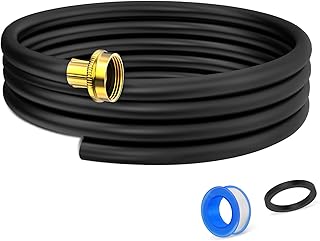
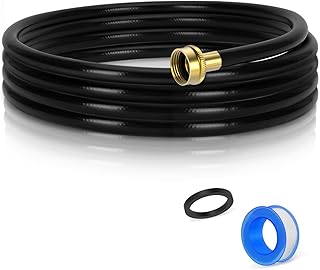
12FT Dehumidifier Drain Hose with Brass Fittings
This 12-foot option is a strong choice when the nearest floor drain, utility sink, or condensate line is several feet away. Its rust-resistant brass fitting adds confidence in a damp environment, while the multiple length options make it easier to avoid stretching the hose or placing the dehumidifier in an inconvenient spot.
5FT No-Kink Black Dehumidifier Hose
The 5-foot Dehumidifier Hose with a ¾-inch FHT Connection is well suited to compact laundry rooms and basement corners where the drain is nearby. Its no-kink design is particularly practical behind a cabinet or beside a storage rack, where a conventional hose may flatten during installation.
Multi-Length Dehumidifier Drain Hose with Brass Connector
This version combines a 3/4-inch FHT connector with seven length choices, giving small-space organizers more control over the installation. It is a sensible pick when you want a close-fitting route that does not leave a long, untidy coil on the floor.
5FT Thickened Leakproof Dehumidifier Hose
The 5FT Dehumidifier Drain Hose is designed for short indoor runs and features a rustproof connector with a thicker hose body. It works well when the appliance can sit close to a drain, especially in a utility closet where reducing bends and exposed tubing helps preserve usable floor space.
5FT Dehumidifier Hose with Premium Brass Connectors
This 5-foot drainage hose keeps the setup straightforward with premium brass connectors and a familiar 3/4-inch FHT connection. It is a good everyday option for a dehumidifier positioned near a sink or drain, provided the outlet is low enough to maintain a steady downhill path.
Frequently Asked Questions
How do I know which drain hose fits my dehumidifier?
Check the continuous-drain outlet in your dehumidifier’s manual or inspect the threaded connection at the rear of the unit. Many models use a 3/4-inch FHT fitting, but compatibility should be confirmed by brand and model rather than assumed from appearance alone.
What length of hose should I buy?
Measure from the dehumidifier outlet to the drain, then choose the shortest option that allows a relaxed, downhill route. A little extra length is useful for repositioning, but too much hose can form loops that trap water or become difficult to manage behind furniture.
Can a dehumidifier hose run uphill?
Most gravity-drain setups work best when the hose slopes downward continuously. An uphill section can slow drainage or cause water to collect in the hose, so elevate the dehumidifier only when the manufacturer allows it and the entire route remains properly angled.
How can I prevent leaks around the connection?
Use the correct threaded fitting, seat it straight, and tighten it securely without forcing the connector. Keep the hose supported near the outlet, inspect the connection after the first several hours of operation, and replace any washer or fitting that shows damage.
Final Thoughts
For longer routes, the 12FT Dehumidifier Drain Hose with Brass Fittings offers useful reach and durable connector construction. The 5FT No-Kink Dehumidifier Hose is better for tidy, close-range installations, while the Multi-Length Dehumidifier Drain Hose with Brass Connector provides the most flexibility when your furniture layout or drain position may change.