Key takeaways
- Confirm the dimensions: Match the blade’s length, width, and thickness to your saw’s manual; even a small mismatch can prevent proper tracking or tensioning.
- Choose the tooth pitch: Fine pitches such as 24 TPI suit thin-wall tubing and sheet, while coarser or variable pitches are better for thicker solid stock.
- Look for M42 bi-metal: M42 high-speed-steel teeth welded to a flexible alloy backing offer a useful balance of edge life, toughness, and affordability.
- Match the workpiece: Aluminum, mild steel, stainless steel, and tubing place different demands on a blade, so select a pitch that keeps several teeth engaged during the cut.
- Break in the blade carefully: Use light pressure and a slower initial feed for the first cuts, then increase performance gradually once the tooth edges have seated.
What's inside
Choosing a metal-cutting band saw blade is rarely as simple as matching the blade length to the saw. Tooth pitch, blade width, material, and the type of stock you cut all affect whether the blade makes clean, controlled cuts or quickly dulls, wanders, and overheats. In a compact home workshop, the right blade also reduces vibration and makes better use of limited bench space.
This guide compares practical M42 bi-metal options for furniture makers, repair projects, and general metal fabrication. We focus on fit, tooth configuration, material range, and everyday usability so you can choose a blade that suits your saw and workload rather than relying on a promising specification alone.
As an Amazon Associate we earn from qualifying purchases.


How to Choose a Band Saw Blade For Metal (2026)
- Confirm the dimensions: Match the blade’s length, width, and thickness to your saw’s manual; even a small mismatch can prevent proper tracking or tensioning.
- Choose the tooth pitch: Fine pitches such as 24 TPI suit thin-wall tubing and sheet, while coarser or variable pitches are better for thicker solid stock.
- Look for M42 bi-metal: M42 high-speed-steel teeth welded to a flexible alloy backing offer a useful balance of edge life, toughness, and affordability.
- Match the workpiece: Aluminum, mild steel, stainless steel, and tubing place different demands on a blade, so select a pitch that keeps several teeth engaged during the cut.
- Break in the blade carefully: Use light pressure and a slower initial feed for the first cuts, then increase performance gradually once the tooth edges have seated.
The Best Band Saw Blade For Metal (2026)s Reviewed
Imachinist S933414 M42 Bi-Metal Blade
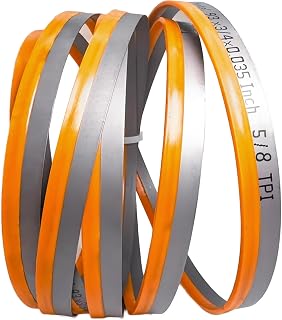
This 93-inch, 3/4-inch blade uses a 10/14 TPI variable tooth pattern, making it a versatile choice for mixed metal stock. It is especially appealing for a home furniture workshop that moves between tubing, brackets, angle iron, and medium-thickness solid pieces without wanting to change blades constantly.
Imachinist S93121224 24 TPI Blade
The 93 1/2-inch by 1/2-inch profile and fine 24 TPI configuration are well suited to thinner material, small tubing, and cleaner detail cuts. Its narrower body can be a practical fit for compatible compact saws, though it is not the first choice for heavy solid stock or aggressive production cutting.
FOXBC 93-Inch 10/14 TPI Blade
FOXBC’s 3/4-inch M42 bi-metal blade offers a familiar all-purpose setup for saws using a 93-inch blade. The variable 10/14 TPI pattern helps balance cutting speed with tooth engagement, making it a sensible everyday option for general-purpose metalwork and furniture hardware.
Imachinist S9334812 8/12 TPI Blade
With a coarser 8/12 TPI variable pattern, this blade is aimed at thicker material where gullets need room to clear chips. It makes a strong candidate for solid bar, heavier wall tubing, and larger sections, but its tooth spacing is less suitable for very thin sheet or delicate small profiles.
FOXBC 64 1/2-Inch 24 TPI Blade
This two-pack is designed for compatible Harbor Freight, WEN 3970, and Jet band saw models, with a 1/2-inch width and fine 24 TPI tooth pattern. It is a convenient workshop replenishment choice for thin metal and small parts, particularly when keeping a spare blade on hand matters in a limited-space shop.
Frequently Asked Questions
What TPI is best for cutting metal?
There is no single best pitch. Fine 24 TPI blades work well on thin tubing and sheet, while 10/14 TPI suits varied medium stock; thicker solid pieces generally benefit from an 8/12 TPI pattern.
Is a bi-metal blade worth using for home projects?
Usually, yes. M42 bi-metal blades cost more than basic carbon-steel alternatives, but their tougher teeth and flexible backing typically provide better durability across common workshop metals.
How do I know whether a blade will fit my band saw?
Check the saw’s required blade length first, then verify maximum blade width and thickness. Consult the manufacturer’s specifications rather than assuming that two saws with similar cutting capacities use interchangeable blades.
Why does my new metal blade cut poorly?
Incorrect tension, excessive feed pressure, unsuitable speed, or an unbroken-in blade can all cause wandering and premature dulling. Check alignment, use cutting fluid when appropriate, and allow several controlled cuts for break-in.
Final Thoughts
For a flexible everyday choice, the Imachinist S933414 10/14 TPI blade is a strong starting point, while the Imachinist S9334812 better suits thicker stock. If your projects involve thin tubing or small metal components, the FOXBC 64 1/2-inch 24 TPI two-pack offers convenient, focused coverage.