Key takeaways
- Measure first: Record the seat width, depth, thickness, and back shape before ordering a cover or fabric; a close fit prevents bunching and visual clutter.
- Match maintenance to your household: Washable textiles suit families and pet owners, while smooth PU surfaces are especially convenient for frequent wipe-downs.
- Consider the room’s scale: Light colors and slimmer chair profiles can help a small dining zone feel more open, but textured fabrics add warmth where the space feels stark.
- Check installation effort: Slipcovers are quick updates, whereas DIY upholstery requires a staple gun, careful measuring, and enough fabric for pattern alignment.
- Prioritize the touch points: The seat gets the most wear, so look for sturdy construction, resilient fabric, secure closures, and finishes that will not become uncomfortable during long meals.
What's inside
Dining chairs occupy more visual and physical space than their footprint suggests. Worn seats, pet hair, food spills, and mismatched fabric can make an otherwise tidy dining area feel cluttered—especially in a compact home where every chair is constantly in use. The right upholstery solution should refresh the room without creating a difficult cleaning routine or adding unnecessary bulk.
This guide compares washable covers, protective PU seat covers, DIY upholstery fabric, and fully upholstered chairs. I’m focusing on practical fit, maintenance, texture, durability, and how each option works in a small dining area, so you can choose a finish that looks intentional rather than improvised.
As an Amazon Associate we earn from qualifying purchases.




How to Choose a/an Upholstery For Dining Room Chairs (2026)
- Measure first: Record the seat width, depth, thickness, and back shape before ordering a cover or fabric; a close fit prevents bunching and visual clutter.
- Match maintenance to your household: Washable textiles suit families and pet owners, while smooth PU surfaces are especially convenient for frequent wipe-downs.
- Consider the room’s scale: Light colors and slimmer chair profiles can help a small dining zone feel more open, but textured fabrics add warmth where the space feels stark.
- Check installation effort: Slipcovers are quick updates, whereas DIY upholstery requires a staple gun, careful measuring, and enough fabric for pattern alignment.
- Prioritize the touch points: The seat gets the most wear, so look for sturdy construction, resilient fabric, secure closures, and finishes that will not become uncomfortable during long meals.
The Best Upholstery For Dining Room Chairs (2026)s Reviewed
SearchI Waterproof PU Dining Chair Seat Covers
The SearchI set is a practical choice for busy dining spaces that need quick spill protection. Its rear-covered design gives the seat a more finished appearance than a simple cushion cover, while the brown PU surface can be wiped clean without sending every small mess to the laundry.
Stretch Washable Dining Chair Seat Covers
These soft, breathable covers are useful when the main goal is to conceal tired upholstery without replacing the chairs. The stretch construction can accommodate several common seat shapes, and machine-washable protection makes this set particularly appealing for homes with pets, children, or frequent casual meals.
TinaKim Thick Faux Linen Upholstery Fabric
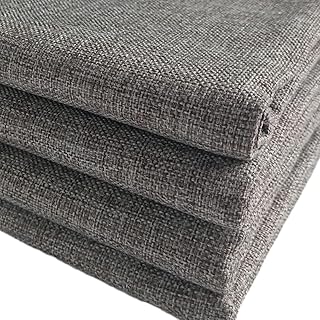
TinaKim’s flaxen faux-linen material is a good starting point for a coordinated DIY refresh. The neutral woven look brings more character than plain utility fabric, and the two-yard cut is manageable for recovering multiple chair seats, depending on their dimensions and how much pattern-free allowance you need.
Faux Linen Needlework Fabric
This grey-blue faux-linen cloth offers a cooler, more decorative direction for upholstery projects. Its generous length is helpful when covering several seats or matching chair fabric with a runner or other dining-room textile, though careful cutting is essential to avoid waste in a small-space makeover.
chairus Slipcovered Parsons Dining Chairs
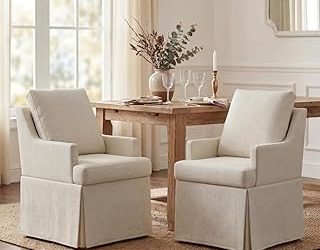
For a complete change rather than a fabric repair, this set of four Parsons chairs combines a high back with removable linen-look covers. The khaki stripe suits modern farmhouse and relaxed transitional rooms, while removable covers make the chairs easier to maintain than fixed upholstery.
Frequently Asked Questions
Are slipcovers better than reupholstering dining chairs?
Slipcovers are usually the better choice when you want a reversible update, straightforward cleaning, or a lower-effort project. Reupholstery creates a more tailored result and lets you replace worn padding, but it takes more time, tools, and accurate measurement.
What is the easiest dining chair upholstery to clean?
Water-resistant PU is generally the quickest to maintain because most fresh spills can be wiped away. For fabric, choose a removable, machine-washable cover and follow its care instructions; regular vacuuming also helps prevent crumbs and pet hair from settling into the weave.
How much fabric do I need to recover a dining chair seat?
Many standard seats can be covered with roughly half a yard each, but the exact amount depends on seat dimensions, fabric direction, and how much material must wrap underneath. Measure the seat, add enough depth to reach the underside, and include extra allowance for folding and stapling.
Can dining chair covers make a small room look crowded?
They can if the fabric is bulky, heavily patterned, or poorly fitted. Choose streamlined covers, quiet patterns, and lighter tones when visual space is limited; keeping all chairs in one consistent finish usually makes the dining area look more orderly.
Final Thoughts
For the simplest spill defense, the SearchI Waterproof PU covers are a strong practical pick. Choose the stretch washable covers for everyday fabric protection, or TinaKim’s faux-linen material if you want a more customized DIY finish. If the chairs themselves are past saving, the chairus Parsons set delivers the most complete room transformation.