Key takeaways
- Air delivery: Focus on CFM at 90 PSI rather than maximum PSI alone. Higher CFM supports demanding tools more consistently, while PSI mainly indicates the pressure ceiling.
- Tank capacity: A larger tank provides a useful reserve for short bursts and reduces cycling. Choose at least 20–30 gallons for repeated pneumatic-tool use, if your floor plan allows it.
- Noise level: Quiet operation is especially valuable in an attached garage or shared workspace. Sound cabinets and ultra-quiet pumps can make a compressor easier to live with.
- Footprint and mobility: Vertical tanks preserve valuable floor space. Wheels, handles, and a manageable center of gravity help you reposition the unit when the shop changes layout.
- Maintenance and power: Oil-free models simplify ownership, while oil-lube compressors may suit heavier duty cycles. Confirm voltage, outlet capacity, drainage needs, and ventilation before buying.
What's inside
Choosing an air compressor for an automotive shop is less about chasing the highest PSI number and more about matching performance to the work you actually do. A compact garage may need dependable tire inflation and occasional brad-nailing, while a busy home workshop may demand enough reserve air for impact wrenches, blow guns, sanders, or paint sprayers. Tank size, recovery speed, noise, power requirements, and available floor space all matter.
This guide compares practical compressor options for automotive work, from full-size vertical tanks to a cordless tire inflator. I’m looking at each through a small-space organization lens: how much room it occupies, how easy it is to move or store, and whether its output is sensible for a home furniture workshop, garage, or compact automotive bay.
As an Amazon Associate we earn from qualifying purchases.


How to Choose a/an Air Compressor For Automotive Shop (2026)
- Air delivery: Focus on CFM at 90 PSI rather than maximum PSI alone. Higher CFM supports demanding tools more consistently, while PSI mainly indicates the pressure ceiling.
- Tank capacity: A larger tank provides a useful reserve for short bursts and reduces cycling. Choose at least 20–30 gallons for repeated pneumatic-tool use, if your floor plan allows it.
- Noise level: Quiet operation is especially valuable in an attached garage or shared workspace. Sound cabinets and ultra-quiet pumps can make a compressor easier to live with.
- Footprint and mobility: Vertical tanks preserve valuable floor space. Wheels, handles, and a manageable center of gravity help you reposition the unit when the shop changes layout.
- Maintenance and power: Oil-free models simplify ownership, while oil-lube compressors may suit heavier duty cycles. Confirm voltage, outlet capacity, drainage needs, and ventilation before buying.
The Best Air Compressor For Automotive Shop (2026)s Reviewed
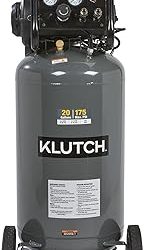
Klutch 29-Gallon Air Compressor
The Klutch 29-Gallon model is a well-balanced choice for a compact automotive shop that needs more than occasional inflation. Its vertical, oil-free design uses space efficiently, while 5.1 CFM at 90 PSI, 175 PSI maximum pressure, and quick recovery make it suitable for nailing, painting, and lighter pneumatic tasks. Large wheels and a maintenance-friendly tank drain are practical details when the compressor must be moved around stored furniture or vehicles.
California Air Tools 20040CAD
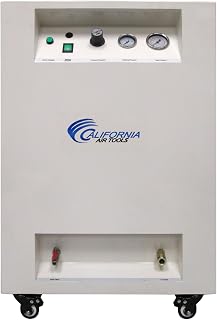
With a 20-gallon tank, 4.0 HP motor, automatic drain valve, and 75 dB operating level, the California Air Tools 20040CAD offers a strong blend of capacity and reduced maintenance. Its 220V requirement deserves careful planning, but that power setup can be worthwhile for a dedicated workshop that regularly uses air tools and has a suitable electrical circuit.
DEWALT 30-Gallon Portable Air Compressor
This vertical, oil-lube DEWALT gives an automotive shop generous tank capacity and a 175 PSI maximum rating. It is a sensible pick for users who expect frequent tool operation and prefer a robust, traditional compressor design. The oil-lube pump requires more upkeep than an oil-free alternative, but that trade-off can make sense in a demanding shop where durability and sustained use take priority.
California Air Tools 10020SPC
The 10020SPC is particularly appealing when noise and footprint are major concerns. Its 10-gallon tank, 2.0 HP oil-free pump, 58 dB noise level, and soundproof cabinet make it a considerate choice for a home workshop near living areas. It is better suited to inflation, fastening, trim work, and intermittent air-tool use than long-duration high-demand spraying or sanding.
DEWALT 20V MAX Tire Inflator
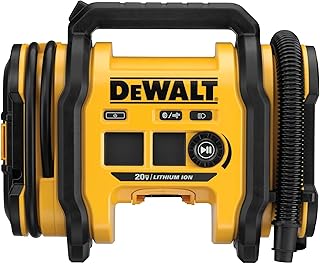
The DCC020IB is not a replacement for a shop compressor, but it is one of the easiest tools to store and deploy. Automatic shutoff, an LED light, and cordless portability make it excellent for topping off vehicle tires, bicycles, trailers, and small equipment without dedicating floor space to a tank. It is sold as a tool only, so a compatible DEWALT 20V MAX battery and charger are needed.
Frequently Asked Questions
What size air compressor is best for automotive work?
For occasional tire inflation and short bursts from an air gun, a small compressor can be adequate. For regular impact-wrench use or multiple pneumatic tools, a 20- to 30-gallon tank with at least about 4 CFM at 90 PSI is a more comfortable starting point.
Is an oil-free compressor good for an automotive shop?
Yes, especially in a home shop where simple maintenance and clean operation matter. Oil-free compressors are convenient and often lighter, although oil-lube models may be preferable for frequent, extended duty cycles.
Can a compressor run an impact wrench?
It depends on the wrench’s required CFM and the compressor’s delivered CFM at 90 PSI. A compressor may power short bursts even when it cannot sustain continuous use, so compare both figures before purchasing.
Does a vertical compressor save space?
Usually. A vertical tank uses height instead of a wide floor footprint, which helps preserve pathways and work surfaces in a crowded garage. Leave adequate clearance for ventilation, controls, hose routing, and draining.
Final Thoughts
The Klutch 29-Gallon is a strong all-around choice for balanced automotive-shop performance, while the California Air Tools 10020SPC is the better fit for noise-sensitive, space-conscious workshops. For heavier recurring use, consider the DEWALT 30-Gallon; for tire maintenance with virtually no storage burden, the DEWALT 20V MAX Tire Inflator is the convenient specialist.