Key takeaways
- Pipe material: HDPE tubing paired with aluminum outlet blocks offers a tidy alternative to improvised hose runs, while resisting the everyday wear common in home workshops.
- Inside diameter: A 3/4-inch line is a useful all-purpose size for many garage systems, especially when you want consistent airflow across multiple outlets.
- System length: Measure the longest route first, then account for vertical drops, bends, and a little extra tubing for repositioning outlets later.
- Outlet planning: Place drops near the workbench, vehicle parking area, and storage wall rather than letting one long hose cross the room. Multiple outlets make a small space easier to use.
- Fittings and pressure rating: Check that the kit includes the tees, elbows, manifolds, and connectors your layout requires, and compare its stated pressure rating with your compressor’s operating pressure.
What's inside
Choosing pipe for an air-compressor line is less straightforward than grabbing the cheapest hose on the shelf. A permanent shop-air system must handle pressure, limit leaks, route neatly around furniture and work zones, and leave enough room for future outlets. Oversized or poorly planned piping can also make a compact garage feel more crowded than it needs to be.
This guide focuses on practical HDPE-and-aluminum systems for garages, workshops, and multipurpose home spaces. We compare tubing length, outlet design, included fittings, installation convenience, and layout flexibility so you can build a cleaner compressed-air network without sacrificing valuable wall or floor space.
As an Amazon Associate we earn from qualifying purchases.




How to Choose a/an Pipe For Air Compressor Lines (2026)
- Pipe material: HDPE tubing paired with aluminum outlet blocks offers a tidy alternative to improvised hose runs, while resisting the everyday wear common in home workshops.
- Inside diameter: A 3/4-inch line is a useful all-purpose size for many garage systems, especially when you want consistent airflow across multiple outlets.
- System length: Measure the longest route first, then account for vertical drops, bends, and a little extra tubing for repositioning outlets later.
- Outlet planning: Place drops near the workbench, vehicle parking area, and storage wall rather than letting one long hose cross the room. Multiple outlets make a small space easier to use.
- Fittings and pressure rating: Check that the kit includes the tees, elbows, manifolds, and connectors your layout requires, and compare its stated pressure rating with your compressor’s operating pressure.
The Best Pipe For Air Compressor Lines (2026)s Reviewed
Compressed Air Piping System 3/4-Inch x 200-Foot
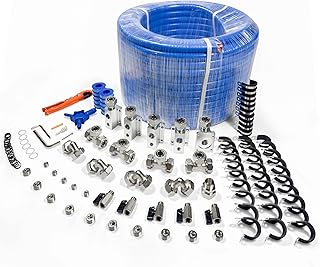
This 53-piece system combines 200 feet of 3/4-inch ID HDPE tubing with aluminum outlet blocks, making it a strong choice for a larger garage or a shop with several work areas. Its 200 PSI rating and generous tubing supply suit layouts that need long perimeter runs without relying on extension hoses.
3/4-Inch x 100-Foot Pressure Gauge Shop Air Line Kit
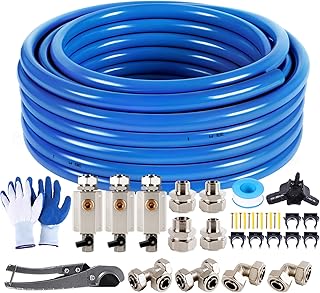
The 100-foot HDPE-and-aluminum kit is a practical fit for a compact workshop where a full 200-foot roll would create unnecessary leftovers. Included tee and elbow fittings support a straightforward route, while the pressure-gauge setup can make monitoring individual areas more convenient.
Compressed Air Piping System 3/4-Inch x 100-Foot, 37 Pieces
This 37-piece system keeps the layout relatively simple while still providing aluminum outlet blocks for a more organized installation. It is well suited to a home garage with one main bench and a small number of carefully placed air drops.
Shop Air Line Kit, 3/4-Inch x 100, 200, or 300 Feet
Available in several tubing lengths, this HDPE-aluminum rapid-air system is useful when you want to match the kit to the actual dimensions of your space. Right-angle and tee fittings help route piping around shelving, cabinets, and corners while keeping the installation visually controlled.
Compressed Air Piping System 3/4-Inch x 300-Foot with 5-Way Manifolds
For a larger workshop or a garage with multiple stations, this 300-foot system adds five-way aluminum manifolds with individual pressure gauges. The extra reach and multi-outlet design provide the most flexibility here, although the larger system benefits from careful planning before installation.
Frequently Asked Questions
Is 3/4-inch pipe a good size for garage air lines?
For many home garages, 3/4-inch tubing offers a useful balance between airflow capacity and manageable installation. The right size still depends on compressor output, line length, tool requirements, and the number of outlets used at once.
Is HDPE suitable for a permanent compressed-air system?
Purpose-built compressed-air HDPE systems can be convenient for permanent garage layouts when installed according to the manufacturer’s instructions. Confirm the tubing’s pressure rating, temperature limits, and compatibility with your compressor before committing to the installation.
How should air lines be arranged in a small space?
Run the main line along a wall or high on the perimeter, then use short vertical drops to reach outlets. Keep drops clear of doors, vehicle paths, and storage access, and position connection points where a coiled hose will not obstruct walkways.
Do I need a manifold or individual outlets?
A manifold is helpful when several workstations need dedicated connections or separate pressure monitoring. For a single bench and occasional vehicle work, a simpler tee-and-outlet arrangement may be easier to install and maintain.
Final Thoughts
The 3/4-inch x 200-foot system is a capable all-around pick for a spacious garage, while the 100-foot pressure-gauge kit is better suited to compact work areas. If you need extensive reach and several monitored connection points, the 300-foot system with five-way manifolds offers the most adaptable foundation.