Key takeaways
- Stain type: Choose an oil-focused formula for greasy driveway spots, while oxygen-based cleaners are better suited to general dirt, organic residue, and everyday outdoor buildup.
- Surface compatibility: Check whether the product is intended for concrete only or also for brick, stone, asphalt, vinyl, wood, and other nearby surfaces.
- Concentration: Concentrates can reduce storage clutter and stretch farther, but read the dilution directions carefully so the cleaner is strong enough without overusing it.
- Pressure-washer setup: Confirm that the formula works with your machine’s detergent system or plan to apply it manually with a pump sprayer and follow-up rinse.
- Space and control: In compact areas, use measured applications and work in sections to prevent runoff, overspray, and the need to move bulky equipment repeatedly.
What's inside
Concrete is unforgiving in a small outdoor space: grime collects along edges, oil marks darken quickly, and pressure washing can simply move dirty water from one area to another. The right cleaner helps loosen buildup before the spray wand does the heavy work, making patios, steps, driveways, and narrow side paths easier to refresh without wasting product.
This guide compares concentrated concrete cleaners and one useful surface-cleaning accessory for pressure-washer owners. The focus is practical: stain type, coverage, compatibility, cleanup effort, and how each option fits homes where storage, water use, and working room are limited.
As an Amazon Associate we earn from qualifying purchases.



How to Choose a Concrete Cleaner For Pressure Washer (2026)
- Stain type: Choose an oil-focused formula for greasy driveway spots, while oxygen-based cleaners are better suited to general dirt, organic residue, and everyday outdoor buildup.
- Surface compatibility: Check whether the product is intended for concrete only or also for brick, stone, asphalt, vinyl, wood, and other nearby surfaces.
- Concentration: Concentrates can reduce storage clutter and stretch farther, but read the dilution directions carefully so the cleaner is strong enough without overusing it.
- Pressure-washer setup: Confirm that the formula works with your machine’s detergent system or plan to apply it manually with a pump sprayer and follow-up rinse.
- Space and control: In compact areas, use measured applications and work in sections to prevent runoff, overspray, and the need to move bulky equipment repeatedly.
The Best Concrete Cleaner For Pressure Washers (2026) Reviewed
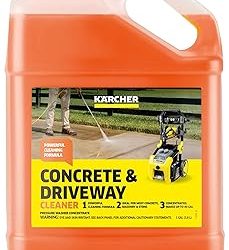
KÄRCHER Concrete & Driveway Cleaner
KÄRCHER’s concentrated cleaner is designed for concrete, brick, masonry, and stone, with enough diluted solution to make up to 40 gallons. That makes it appealing for homeowners cleaning several surfaces throughout the season, especially when a compact bottle is easier to store than multiple ready-to-use containers.
Krud Kutter Concrete & Driveway Cleaner
Krud Kutter is the most targeted choice here for stubborn oil and grease stains on concrete, asphalt, stone, brick, pavement, and similar surfaces. Its one-gallon format suits larger cleanup projects or households that regularly deal with vehicle-related marks, though buyers with limited storage should plan where the container will live between uses.
Simple Green Oxy Solve Concrete & Driveway Cleaner
Simple Green Oxy Solve offers a peroxide-based approach in a large 128-fluid-ounce container and is labeled for pressure-washer use. It is a sensible option for broad driveway and patio maintenance when you want a cleaner aimed at general outdoor grime rather than choosing a narrowly specialized degreaser.
Simple Green Oxy Solve Total Outdoor Cleaner
This versatile concentrate is made for pressure-washer or manual application and is EPA Safer Choice certified. Its wider surface range—including wood, concrete, vinyl, and more—can simplify storage in a small home because one product may cover several outdoor cleaning jobs instead of requiring a separate bottle for every material.
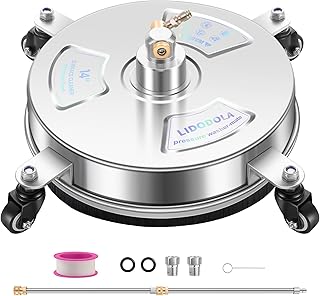
LidoDola 14-Inch Pressure Washer Surface Cleaner
LidoDola is an accessory rather than a detergent, but it can make concrete cleaning more controlled and efficient. The wheeled stainless-steel housing, quick connector, extension wands, and replacement nozzles are useful for keeping the spray pattern close to the surface while reducing the uneven striping common with a standard wand.
Frequently Asked Questions
Can I use any concrete cleaner in a pressure washer?
No. Use a product specifically labeled for pressure-washer application, and follow its dilution and equipment instructions. Some cleaners are intended only for manual use or require a separate sprayer.
Should I apply cleaner before pressure washing?
Usually, yes. Apply the cleaner to a manageable section, allow the recommended dwell time without letting it dry, then rinse thoroughly. Working in small sections is especially helpful on compact patios and narrow walkways.
What is best for oil stains on a driveway?
A product formulated to cut oil and grease, such as Krud Kutter Concrete & Driveway Cleaner, is the most direct match among these options. Very old stains may need repeated treatment and gentle agitation rather than one quick pass.
Do I need a surface cleaner attachment?
Not necessarily, but a wheeled surface cleaner can produce more even results across flat concrete and help contain spray. It is particularly useful when cleaning a patio, sidewalk, or driveway where wand passes would otherwise take longer and leave visible bands.
Final Thoughts
For concentrated, multi-surface cleaning, KÄRCHER Concrete & Driveway Cleaner is a strong all-around pick. Choose Krud Kutter when grease is the main problem, or Simple Green Oxy Solve Total Outdoor Cleaner when one stored product needs to cover several outdoor materials. For a more uniform finish, pair your chosen cleaner with the LidoDola surface cleaner.