Key takeaways
- Application: Match the compressor to its main job. Suspension leveling, tire inflation, air horns, and air lockers each place different demands on airflow and duty cycle.
- Airflow and pressure: Maximum PSI is only part of the picture. Higher airflow generally means faster inflation, while pressure capability must suit your suspension or accessories.
- Control method: Wireless remotes and mobile apps simplify suspension adjustments, while a wired switch or traditional gauge can be more straightforward for basic utility use.
- Installation footprint: Measure the intended mounting area before buying. Consider compressor dimensions, tank clearance, wiring, air lines, heat, and access for maintenance.
- System completeness: Check whether the kit includes a tank, gauge, fittings, hose, relay, and mounting hardware. A complete bundle can save both cabinet space and extra sourcing.
What's inside
Choosing an on-board air compressor is less about chasing the biggest pressure number and more about matching the system to your vehicle, suspension setup, and available mounting space. A poorly matched unit can create slow inflation, awkward hose routing, excessive noise, or an installation that turns a practical upgrade into a cramped weekend project.
This guide to the Best On Board Air Compressor (2026) focuses on useful differences for real-world owners: control style, tank capacity, inflation speed, installation flexibility, and whether a compressor makes sense for air suspension, air lockers, tires, or auxiliary equipment. The goal is a tidy, dependable setup that earns its space.
As an Amazon Associate we earn from qualifying purchases.


How to Choose a/an On Board Air Compressor (2026)
- Application: Match the compressor to its main job. Suspension leveling, tire inflation, air horns, and air lockers each place different demands on airflow and duty cycle.
- Airflow and pressure: Maximum PSI is only part of the picture. Higher airflow generally means faster inflation, while pressure capability must suit your suspension or accessories.
- Control method: Wireless remotes and mobile apps simplify suspension adjustments, while a wired switch or traditional gauge can be more straightforward for basic utility use.
- Installation footprint: Measure the intended mounting area before buying. Consider compressor dimensions, tank clearance, wiring, air lines, heat, and access for maintenance.
- System completeness: Check whether the kit includes a tank, gauge, fittings, hose, relay, and mounting hardware. A complete bundle can save both cabinet space and extra sourcing.
The Best On Board Air Compressor (2026)s Reviewed
Air Lift 25980EZ WirelessONE
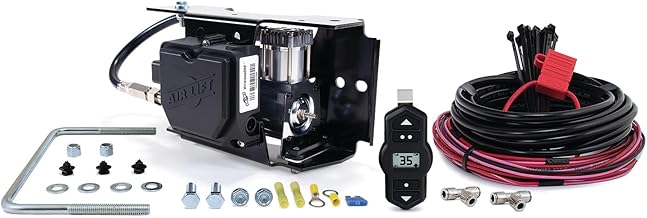
The Air Lift 25980EZ WirelessONE is a smart pick for single-path air suspension, especially where simple, centralized control matters. Its handheld remote and mobile-app operation make adjustments convenient, while the EZ Mount design can reduce installation time in a tight vehicle workspace.
Air Lift 74000EZ WirelessAIR
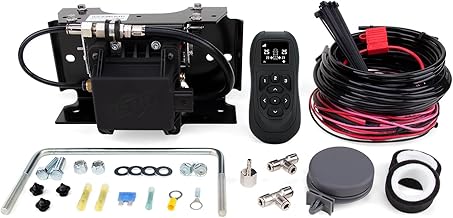
For owners who need separate control over two air springs, the Air Lift 74000EZ WirelessAIR offers a more capable dual-path layout. It is well suited to load balancing and side-to-side adjustment, and its EZ Mount approach helps keep a more involved installation organized.
VIAIR 150 PSI High-Flow Air Source Kit
The VIAIR 150 PSI High-Flow Air Source Kit stands out when versatility is more important than app-based controls. With a two-gallon tank, it is a practical foundation for truck tires, air horns, suspension accessories, and air lockers; plan carefully for tank placement because the added capacity needs room.
ARB Inflation Kit and Compressor Bundle
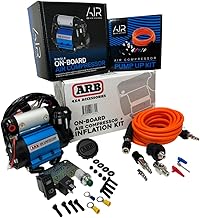
ARB’s CKMA12 compressor paired with the 171302 inflation kit is a sensible choice for off-roaders who want a familiar, purpose-built air source with an included orange air hose and quick fitting. It is particularly appealing for tire service after trail driving, though buyers should verify that its fittings and electrical requirements suit the existing setup.
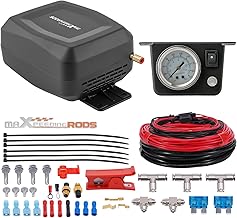
maXpeedingrods Universal Air Spring Kit
The maXpeedingrods universal kit is aimed at truck and van owners building a budget-conscious air-spring system from a broad collection of included components. Its gauge, air line, and T fittings can simplify initial planning, but carefully inspect the supplied connections and confirm compressor capacity before relying on it for frequent heavy-load adjustments.
Frequently Asked Questions
What does an on-board air compressor do?
It provides a permanently installed air source for tasks such as adjusting air suspension, inflating tires, powering air horns, or supplying air lockers. Depending on the design, it may feed air directly or fill a storage tank first.
Is a tank necessary for air suspension?
Not always. A tank can provide faster bursts of air and reduce compressor run time, but a direct-fill system may be smaller and simpler for occasional leveling. Choose based on adjustment frequency, available space, and the suspension manufacturer’s requirements.
Where should an on-board compressor be mounted?
Use a dry, ventilated location protected from road spray, mud, and excessive heat. Common areas include a frame rail, engine bay, cargo compartment, or underbody enclosure, provided there is adequate clearance and the mounting surface can handle vibration.
How should I maintain the system?
Inspect wiring, brackets, hoses, and fittings periodically for abrasion, looseness, or leaks. Keep the compressor’s intake clean, drain any tank as recommended, and avoid exceeding its duty cycle during extended inflation sessions.
Final Thoughts
The Air Lift 25980EZ WirelessONE is the most convenient choice for straightforward single-path suspension control, while the Air Lift 74000EZ WirelessAIR is the better fit for independent two-side adjustment. For broader utility, the VIAIR 150 PSI High-Flow Air Source Kit offers a strong tank-based foundation, provided you have room for a properly protected installation.