
Key takeaways
- When comparing resistance bands marketed for women, begin with the equipment required by your routine. The label does not establish a suitable...
What's inside
When comparing resistance bands marketed for women, begin with the equipment required by your routine. The label does not establish a suitable resistance, material or exercise for an individual. Choose the format and components first, then compare the exact package offered.
This guide provides practical selection and use considerations. It does not report hands-on product testing.
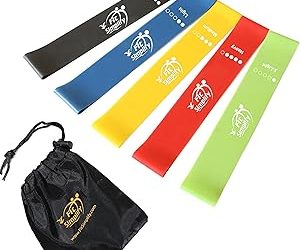
In a furnished home, the practical questions are where the band is used, whether any anchor is required and how the parts are stored. A compact pouch does not describe the complete operating setup.
Product listings to compare
As an Amazon Associate we earn from qualifying purchases at no extra cost to you. Product prices and availability are accurate as of the date shown and are subject to change. Compare the selected variant and its current description with the requirements above.
As an Amazon Associate we earn from qualifying purchases at no extra cost to you. Product prices and availability are accurate as of the date shown and are subject to change.


Read the package as an inventory
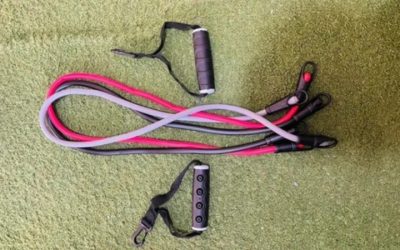
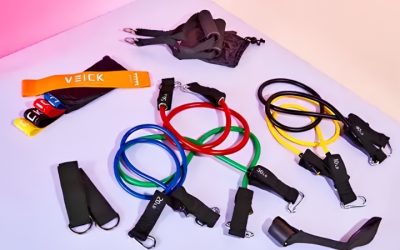
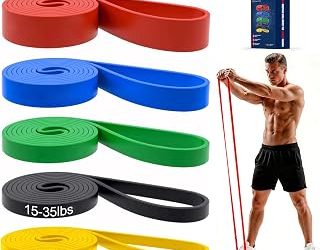
Separate bands, handles, anchors and other attachments in the product description. Confirm which pieces are supplied with the selected option. A photograph showing a complete collection may represent several packages or optional accessories.
Identify which components your established exercises actually require. A larger set can be useful when it supplies those needs, but unused attachments add organization rather than value. Keep optional extras separate from the essential comparison.
Compare formats rather than generic labels
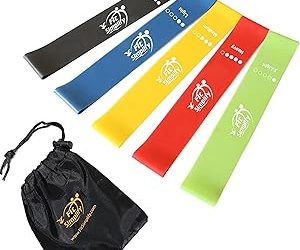
A loop and a tube with handles create different arrangements. Check the intended uses and restrictions for the exact design. Do not assume a band can perform every movement shown for a different product.
If the activity is unfamiliar, obtain suitable instruction before buying a specialized setup. The exercise should determine the equipment, rather than the included accessories encouraging an improvised routine.
Keep levels within their own scale
Read how the manufacturer describes resistance levels. Colors or terms such as light and heavy may differ between systems. A level recommended by another user is not an individual assessment of what you should use.
Check that the useful options are included rather than judging the set by its highest advertised level. Record the exact product information so later replacements are not chosen from color alone.
Check materials and attachment points
Find clear material information, particularly if a known sensitivity or preference affects the purchase. A surface appearance is not enough to establish composition. Ask the seller or manufacturer when the description leaves that question open.
For exercises requiring an anchor, follow the exact instructions and confirm compatibility. Household furniture or hardware should not be treated as suitable merely because an attachment can be fitted to it. Seek help with an unclear setup instead of improvising.
Plan the room during use
Allow space for the taught movement and the equipment’s path. Keep doors, drawers and nearby objects from intruding. A band may take little storage space while still needing a clear activity area.
If an attachment is used, consider the entire arrangement rather than only the point where it connects. Do not let the furnished room force an altered technique. Choose another suitable location when the required setup cannot be accommodated.
Organize checks and storage
Keep compatible components together and labels visible. Read the inspection, cleaning and storage directions for the exact material. An organized container is helpful when it protects the intended arrangement rather than compressing items beneath unrelated belongings.
If damage or an unexplained change appears, follow the manufacturer’s advice and support process. Do not repair or combine parts based on appearance. Keep purchase details available to identify the correct replacement.
Make the final comparison practical
For shared equipment, agree where each level and attachment belongs after use. A clear inventory makes missing components easier to identify and prevents the storage pouch becoming a mixture of unrelated systems.
- Correct format for the activity.
- Useful levels and clear package contents.
- Verified material information where needed.
- Documented compatible attachments.
- Suitable room, care and storage arrangement.
Include delivery and return conditions in the total purchase. A less expensive set may be suitable when it covers the actual requirements, while a larger package is worthwhile only when its additional pieces have a clear role.
Choose resistance bands through those concrete needs rather than a gender label or a promise of fast results. A useful set is one that can be identified, prepared and used as intended within a routine that suits you.

Additional product links
- Start 30-Day Prime Free Trial →
- See Today’s Amazon Deals
- ▸ Try Amazon Prime — free 30-day trial
- ▸ Start an Audible Premium Plus free trial
- ▸ Read free with Kindle Unlimited
Related reading
- Best resistance bands women
- Chris Parker
- Best Pedal Resistance Bands: 6 Seated Training Picks Rated
- Best Resistance Bands for Men: 5 Sets by Strength Level
- Best Resistance Bands Leggings: 6 Pairs for Home Training
- Best Resistance Bands Workout Gear for Full Body Strength
- Best Resistance Training Bands: Build a Set That Progresses
- Best Resistance Exercise Bands: 6 Types and When to Use Each
- Best Dumbbells Home Gyms Use: 6 Picks Ranked by Delivery
- Best Adjustable Bench for Home Gym: 5 Picks Ranked by Use
- The Best Resistance Bands for a Full-Body Workout in 2026

Write Your Review
No reviews yet. Be the first to share your experience!