Key takeaways
- Size: Measure the available wall, floor, and door clearance before choosing a 48- or 60-inch surface. In tight rooms, depth is often more important than length.
- Construction: Solid wood handles sanding, clamping, and refinishing well, while engineered tops can offer a lower-cost, consistent surface for general assembly.
- Load capacity: Match the rating to your tools and materials, not just the empty bench. A heavy vise or benchtop machine needs a rigid frame beneath the top.
- Workholding: Dog holes, a vise, T-tracks, and a thick front edge make it easier to secure boards and workpieces without improvising with clamps.
- Storage and mobility: Shelves, drawers, pegboards, and locking casters can be valuable in a small workshop, provided they do not compromise stability.
What's inside
A workbench top has to do more than fill an empty frame. In a compact garage, utility room, or spare-room workshop, it becomes a measuring surface, assembly station, repair bench, and often extra storage—all without swallowing the room. The wrong top can flex under pressure, shed rough fibers, or leave too little clearance for tools and knees.
This guide compares five practical workbench tops and workbench systems for 2026, focusing on durability, footprint, adjustability, workholding, and how well each option fits a small-space setup. Whether you need a complete station or a solid slab for a custom base, these picks make it easier to match the surface to your projects.
As an Amazon Associate we earn from qualifying purchases.




How to Choose a/an Workbench Tops (2026)
- Size: Measure the available wall, floor, and door clearance before choosing a 48- or 60-inch surface. In tight rooms, depth is often more important than length.
- Construction: Solid wood handles sanding, clamping, and refinishing well, while engineered tops can offer a lower-cost, consistent surface for general assembly.
- Load capacity: Match the rating to your tools and materials, not just the empty bench. A heavy vise or benchtop machine needs a rigid frame beneath the top.
- Workholding: Dog holes, a vise, T-tracks, and a thick front edge make it easier to secure boards and workpieces without improvising with clamps.
- Storage and mobility: Shelves, drawers, pegboards, and locking casters can be valuable in a small workshop, provided they do not compromise stability.
The Best Workbench Tops (2026)s Reviewed
CAMMOO 48-Inch Garage Workbench
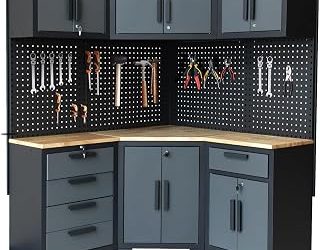
The CAMMOO combines a rubberwood top with a pegboard, storage, LED lighting, and an integrated power strip, making it a strong choice for a garage where every square foot needs to work harder. Its adjustable heavy-duty frame is designed for substantial loads, while the built-in organization reduces the need for separate cabinets and wall storage.
Unfinished Birch Butcher Block Countertop
This 60-by-25-inch birch slab is the most flexible option for a custom workbench project. The smooth, unfinished surface can be oiled, stained, sealed, or painted, so it works equally well as a woodworking bench, craft counter, desk, or laundry-room work surface; just pair it with a properly braced base.
BenchPro Adjustable Particle Board Workbench Top
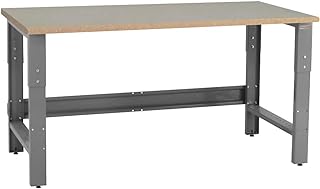
BenchPro’s 1-inch particle board top is a straightforward solution for general-purpose projects, packing a useful 48-by-24-inch footprint into a height-adjustable bench. It is best suited to light and medium-duty assembly, household repairs, and hobby work rather than repeated heavy hammering or moisture-prone environments.
BORA Centipede T-Track Workbench Top
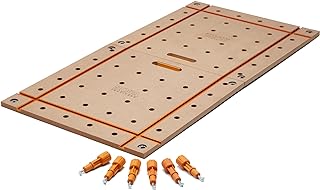
The BORA Centipede top is aimed at makers who value flexible workholding in a portable format. Its 3/4-inch dog-hole MFT-style surface and T-track layout support clamps and accessories, while the folding Centipede concept makes it especially appealing when a permanent bench would overcrowd the room.
Smart Workstation Pro Vise Top
For apartment workshops, job sites, and temporary work areas, the Smart Workstation Pro Vise Top offers a compact 20 7/8-by-14 3/8-inch platform with a built-in vise and jaw cushions. Its European beech construction gives it a more refined, furniture-like feel, though its small surface is better for parts, repairs, and detail work than large boards.
Frequently Asked Questions
What is the best thickness for a workbench top?
There is no single ideal thickness, but 1 to 1.5 inches is a practical range for many home workshops. A thicker top generally resists vibration and provides more material for mounting a vise, while a thinner top can work well when the supporting frame is rigid.
Is butcher block suitable for a workbench?
Yes. Birch butcher block provides a smooth, repairable surface and can be finished to suit the room. Seal every face and edge if the bench will be exposed to spills or humidity, and confirm that the base supports the slab evenly.
How deep should a small-space workbench be?
A depth of 20 to 24 inches is often enough for tools, small appliances, electronics, and household repairs without making the room feel cramped. Choose a deeper top only when you regularly work with large panels or need substantial rear storage.
Should a workbench be fixed or mobile?
A fixed bench is usually steadier for planing, chiseling, and heavy clamping. A mobile bench earns its keep when the workshop must share space with a car, laundry area, or other household function; locking casters are essential for safe use.
Final Thoughts
The CAMMOO is the most complete choice for a compact garage, while the unfinished birch butcher block is the best foundation for a customized, long-term setup. For portable workholding, the BORA Centipede and Smart Workstation Pro Vise Top offer useful flexibility without demanding permanent floor space.