Key takeaways
- Roof compatibility: Check the ladder’s hook design, ridge clearance, pitch range, and whether it suits your roof material. A roof hook should engage the ridge securely rather than simply rest on the surface.
- Load capacity: Confirm the published weight rating includes both you and your tools. Treat capacity as a limit, not a target, and account for uneven loading while climbing.
- Stability features: Wheels, rubber grips, standoff arms, and stabilizer bars can help positioning, but they do not replace firm footing, correct angle, and an independent fall-protection plan.
- Storage and handling: Compact or collapsible designs are useful in small garages and utility closets. Measure the stored length, not just the advertised working height, before ordering.
- Setup discipline: Choose a model you can assemble and position without rushing. Read the current manufacturer instructions, inspect every connection, and never use a roof ladder in high winds, rain, frost, or poor visibility.
What's inside
Choosing a roof ladder is less about finding the tallest model and more about creating a controlled route from the ground to the roof. A ladder that shifts at the gutter, lacks a dependable ridge connection, or is awkward to carry can turn a routine inspection into a serious fall hazard—especially on steep pitches, wet surfaces, or older roofs.
This guide focuses on the details that matter in compact homes and garages: storage footprint, roof-ridge stability, ladder compatibility, transport, and setup. The products below include stabilizers, steep-assist designs, and a telescoping option, so you can match the equipment to your roof access needs rather than buying on height alone.
As an Amazon Associate we earn from qualifying purchases.


How to Choose a Roof Ladder (2026)
- Roof compatibility: Check the ladder’s hook design, ridge clearance, pitch range, and whether it suits your roof material. A roof hook should engage the ridge securely rather than simply rest on the surface.
- Load capacity: Confirm the published weight rating includes both you and your tools. Treat capacity as a limit, not a target, and account for uneven loading while climbing.
- Stability features: Wheels, rubber grips, standoff arms, and stabilizer bars can help positioning, but they do not replace firm footing, correct angle, and an independent fall-protection plan.
- Storage and handling: Compact or collapsible designs are useful in small garages and utility closets. Measure the stored length, not just the advertised working height, before ordering.
- Setup discipline: Choose a model you can assemble and position without rushing. Read the current manufacturer instructions, inspect every connection, and never use a roof ladder in high winds, rain, frost, or poor visibility.
The Best Roof Ladder (2026)s Reviewed
Echo Ridge 18 Foot Steep Assist Roof Ladder
The Echo Ridge 18 Foot Steep Assist Roof Ladder is aimed at users who need a dedicated roof-access arrangement with a compact format, rope, and storage bag. Its steep-assist wedge concept may be appealing for pitched roofs, but buyers should verify the required setup space, roof compatibility, and whether the included rope is intended for positioning or actual fall protection—it should never be treated as a substitute for an approved harness system.
SINMEIRUN 12.5 FT Telescoping Roof Ladder
The SINMEIRUN telescoping ladder is a practical space-saving choice for homeowners who need one ladder for roof, RV, and general access tasks. Its detachable roof hooks and stated 330-pound capacity add versatility, while the collapsible format suits smaller storage areas. Before use, check that each locking section is fully engaged and confirm the hook configuration creates a secure connection for your specific roof.
The Goat Steep Assist Roof Ladder Compact
The Goat Compact is built around the steep-assist approach rather than a conventional straight-ladder setup. That can make it attractive for occasional roof work where carrying and storage are major concerns. It is best suited to careful, deliberate positioning: review the manufacturer’s instructions closely, confirm the roof pitch is within its intended range, and avoid using it as a casual shortcut to a difficult roof.
Ladder Stabilizer Roof Ladder Hook with Wheel
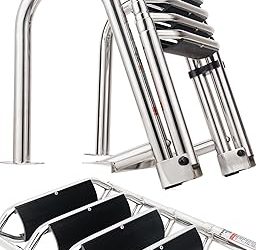
This ladder stabilizer combines a roof hook, wheel, and standoff-arm concept to help position an extension ladder at the gutter or roof edge. It may be a useful upgrade when your existing extension ladder is sound but lacks roof-access hardware. Compatibility is the key question: confirm rail dimensions, attachment points, roof-ridge clearance, and the stabilizer’s rating before relying on it above ground level.
Heavy-Duty Roof Ladder Hook, 2 Pack
This two-pack roof ladder hook uses heavy-duty steel construction and includes wheels and a rubber-grip T-bar intended to reduce movement and surface damage during positioning. A pair can be helpful for balanced support, but installation must be symmetrical and tight. Inspect the wheel hardware, contact surfaces, and ladder attachment before every climb, particularly if the accessory has been stored outdoors.
Frequently Asked Questions
Can I use a regular extension ladder on a roof?
A standard extension ladder may provide access to a roof edge, but it is not automatically suitable for walking or working on the roof surface. Roof hooks, stabilizers, correct ladder angle, secure ground footing, and suitable fall protection are all important. Follow the ladder and roofing-equipment instructions rather than improvising a ridge setup.
Are roof ladder hooks universal?
No. Hooks and stabilizers can vary by ladder rail shape, width, rung design, load rating, and attachment method. Compare the accessory specifications with your ladder before purchase, and do not modify either component to force a fit.
What is the safest weather for roof-ladder use?
Choose a dry, calm day with good visibility and a clean, stable surface. Avoid rain, frost, snow, strong wind, damp roofing, and extreme heat that can make materials slippery. If conditions change after setup, come down instead of trying to finish quickly.
How should a roof ladder be stored?
Store it dry, supported so it cannot bend, and away from corrosive chemicals or direct weather exposure. Keep hooks, wheels, ropes, and locking parts together, and inspect for cracks, bent hardware, worn rubber, loose fasteners, or damaged rungs before the next use.
Final Thoughts
For compact storage and multi-purpose access, the SINMEIRUN 12.5 FT Telescoping Roof Ladder is a strong starting point; the Echo Ridge 18 Foot and The Goat Compact are more specialized steep-assist choices. If you already own a suitable extension ladder, a compatible stabilizer such as the Ladder Stabilizer Roof Ladder Hook or the Heavy-Duty Roof Ladder Hook 2 Pack may be the more space-efficient upgrade—provided the complete setup matches your roof and safety plan.