Key takeaways
- Tooth count: Choose 24–40 teeth for efficient ripping, 50 teeth for a useful combination blade, and 80 teeth for especially clean crosscuts and finished edges.
- Kerf width: Thin-kerf blades remove less material and can require less power, which is helpful with compact or portable table saws. Confirm that the blade is suitable for your saw and riving knife.
- Tooth geometry: ATB teeth are well suited to crosscutting, while combination grinds balance ripping and crosscutting. A flatter tooth profile can help produce clean grooves and dado-like cuts when the blade is rated for that use.
- Carbide quality: Hardwood rewards durable carbide that stays sharp through repeated cuts. Look for teeth that can be sharpened rather than treating the blade as disposable.
- Blade purpose: A fine-finish blade is not automatically the best choice for ripping thick stock. Match the blade to the cut, and keep a general-purpose option available when storage space is limited.
What's inside
Hardwood exposes every weakness in a table saw blade. A dull edge can leave burn marks, chipped corners, and a rough surface that takes extra sanding to repair—especially frustrating when your workshop is a compact garage or multipurpose room. The right blade should match both the wood and the job, without creating unnecessary dust, noise, or setup changes.
This guide compares six practical blade options for furniture makers, DIYers, and small-space workshops. It focuses on tooth count, cut quality, kerf, versatility, and value so you can choose a blade for ripping boards, crosscutting panels, or producing clean joinery without filling your storage area with specialty accessories.
As an Amazon Associate we earn from qualifying purchases.




How to Choose a/an Table Saw Blade For Hardwood (2026)
- Tooth count: Choose 24–40 teeth for efficient ripping, 50 teeth for a useful combination blade, and 80 teeth for especially clean crosscuts and finished edges.
- Kerf width: Thin-kerf blades remove less material and can require less power, which is helpful with compact or portable table saws. Confirm that the blade is suitable for your saw and riving knife.
- Tooth geometry: ATB teeth are well suited to crosscutting, while combination grinds balance ripping and crosscutting. A flatter tooth profile can help produce clean grooves and dado-like cuts when the blade is rated for that use.
- Carbide quality: Hardwood rewards durable carbide that stays sharp through repeated cuts. Look for teeth that can be sharpened rather than treating the blade as disposable.
- Blade purpose: A fine-finish blade is not automatically the best choice for ripping thick stock. Match the blade to the cut, and keep a general-purpose option available when storage space is limited.
The Best Table Saw Blade For Hardwood (2026)s Reviewed
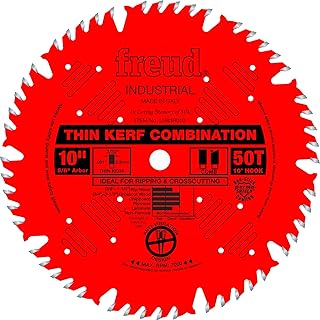
Freud LU83R010 50T Thin-Kerf Combination Blade
This Freud is a strong all-rounder for furniture work when changing blades repeatedly is inconvenient. Its 50-tooth combination design is intended to handle both ripping and crosscutting, while the thin kerf can be a practical fit for lower-powered saws. It is a particularly sensible choice for a small workshop that needs one dependable blade for everyday hardwood projects.
CMT Orange Tools 10-Inch 50T Combination Blade
CMT’s 50-tooth combination blade is built around versatility, with a tooth pattern intended to balance smooth crosscuts and efficient rips. The carbide-tipped teeth and 5/8-inch arbor suit many standard table saws, but buyers should verify arbor and kerf compatibility before ordering. It makes sense for makers who want a single blade for breaking down boards and preparing furniture parts.
Freud LU85R010 10-Inch Crosscut Blade
The LU85R010 is the focused option in this group, aimed at clean crosscutting rather than general-purpose ripping. It is well suited to trimming hardwood components, cutting rails and stiles, or preparing visible edges where tear-out would be costly. Keep a separate ripping or combination blade available if your projects involve frequent long cuts along the grain.
10-Inch 80T Premium Carbide Fine-Cut Blade
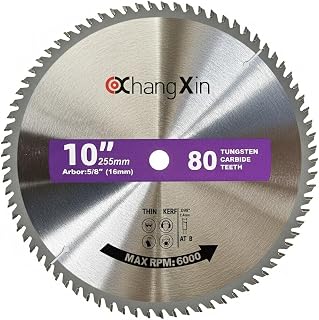
This 80-tooth blade is designed for smooth crosscuts in hardwood and softwood, making it useful when the cut edge will be visible or lightly sanded. Its fine tooth count favors finish quality over fast stock removal. For a compact workspace, it can serve as a dedicated finishing blade that complements a general-purpose blade without requiring a large collection.
WEN BL1080 80-Tooth Ultra-Fine Finish Blade
The WEN BL1080 targets clean, fine-finish cuts on both table and miter saws. Its 80-tooth layout is a good match for crosscutting furniture parts, trim, and veneered panels, though it is not the efficient choice for lengthy hardwood rips. It is appealing for budget-conscious woodworkers who want a separate finishing blade for detail work.
Frequently Asked Questions
What tooth count is best for cutting hardwood?
There is no single ideal count for every cut. A 40- or 50-tooth combination blade is the most practical starting point, while an 80-tooth blade is better for clean crosscuts and a lower-tooth blade is more efficient for ripping thick boards.
Can I use a table saw blade on a miter saw?
Some blades are rated for both tools, but the blade must be appropriate for the saw’s speed, arbor size, guard arrangement, and intended cutting direction. Always follow the manufacturer’s specifications instead of relying only on diameter and tooth count.
Is a thin-kerf blade better for hardwood?
A thin-kerf blade can reduce waste and place less demand on a compact saw, which is useful in a home workshop. It is not automatically smoother, however, and the blade must align properly with the saw’s riving knife or splitter.
How often should a hardwood blade be sharpened?
Sharpening depends on use, wood species, glue residue, and whether the blade encounters nails or other debris. When cuts become noticeably rough, burning appears, or feeding requires more force, professional sharpening is usually preferable to continuing with a dull blade.
Final Thoughts
For the most versatile choice, the Freud LU83R010 is a compelling fit for a space-conscious furniture workshop, while the CMT 50-tooth combination blade offers a similarly practical all-purpose approach. For exceptionally clean crosscuts, consider the WEN BL1080 or the 80-tooth premium blade, and reserve a dedicated crosscut blade such as the Freud LU85R010 for projects where edge quality matters most.