Key takeaways
- Home coverage: Match the humidifier’s rated capacity to your home’s size, ceiling height, insulation, and climate. Manufacturer coverage figures are useful starting points, not guarantees.
- HVAC compatibility: A true whole-house steam humidifier typically connects to ductwork and requires professional installation. Homes without central ducts may need a unit with a wall-mount fan or a large-room model.
- Steam versus ultrasonic mist: Steam models heat water and can provide consistent humidity without mineral-heavy cool mist. Ultrasonic models are often easier to place but may require distilled water to reduce white dust.
- Maintenance footprint: Consider drain access, replacement canisters or filters, descaling, and how often the tank must be refilled. A compact floor plan benefits from a setup that does not create a permanent maintenance obstacle.
- Controls and safety: Look for automatic humidity control, a reliable humidistat, shutoff protection, and a setting that prevents condensation on windows, walls, and furniture.
What's inside
Dry winter air can make a whole home feel uncomfortable, but choosing the right humidifier is not as simple as picking the largest tank. A steam unit may be ideal for a centrally ducted house, while a home without HVAC distribution may need a wall-mounted fan or a room-by-room solution. Capacity, installation, water quality, maintenance, and available floor space all affect the real-world result.
This guide compares leading whole-house and large-room options, with a small-space organization perspective. The goal is to match each humidifier’s output and installation demands to your home, while avoiding bulky equipment, awkward refills, and moisture in places where it does not belong.
As an Amazon Associate we earn from qualifying purchases.


How to Choose a Whole House Steam Humidifier (2026)
- Home coverage: Match the humidifier’s rated capacity to your home’s size, ceiling height, insulation, and climate. Manufacturer coverage figures are useful starting points, not guarantees.
- HVAC compatibility: A true whole-house steam humidifier typically connects to ductwork and requires professional installation. Homes without central ducts may need a unit with a wall-mount fan or a large-room model.
- Steam versus ultrasonic mist: Steam models heat water and can provide consistent humidity without mineral-heavy cool mist. Ultrasonic models are often easier to place but may require distilled water to reduce white dust.
- Maintenance footprint: Consider drain access, replacement canisters or filters, descaling, and how often the tank must be refilled. A compact floor plan benefits from a setup that does not create a permanent maintenance obstacle.
- Controls and safety: Look for automatic humidity control, a reliable humidistat, shutoff protection, and a setting that prevents condensation on windows, walls, and furniture.
The Best Whole House Steam Humidifiers (2026) Reviewed
AprilAire 800
The AprilAire 800 is the strongest fit for large homes with compatible forced-air HVAC systems. Its automatic operation is designed to maintain a target humidity level with minimal daily attention, making it a practical choice when you want the equipment tucked away rather than occupying valuable living-space storage.
AprilAire 865
The AprilAire 865 stands out for homes without an HVAC duct system, pairing steam humidification with a wall-mount fan. That design can be more flexible than a conventional ducted installation, though it still deserves careful placement and professional setup so warm, moist air does not collect near cabinetry, electronics, or windows.
Y&O 10L Steam Humidifier
This Y&O large-room steam humidifier uses a 10-liter tank and a stainless-steel heater, offering a filterless approach for users who want warm mist without adding an in-line filter system. It is better suited to a designated room or open living area than a fully distributed whole-house installation, and its footprint should be planned before purchase.
Y&O 10L Steam Humidifier with 1200ml/h Output
The higher-output Y&O version is worth considering when a large room dries out quickly and you want faster moisture delivery. Its generous output can be useful in open layouts, but measure carefully and use a hygrometer to prevent over-humidifying nearby walls, upholstery, or wood furniture.
Lacidoll 16L Cool Mist Humidifier
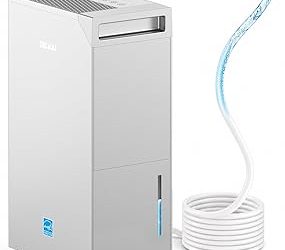
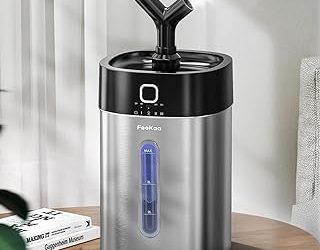
The Lacidoll 16L model is an accessible alternative for homes that need large-room coverage without HVAC installation. Its extension tube can help direct mist away from crowded surfaces, while the large reservoir reduces refill frequency; because it is ultrasonic, water quality and regular cleaning are especially important.
Frequently Asked Questions
Is a whole-house steam humidifier worth it?
It can be, especially in a dry climate or a large home with central HVAC. Steam systems offer integrated, automatic humidity control, but installation and ongoing maintenance usually cost more than using portable humidifiers.
Can I install a steam humidifier myself?
Most ducted steam systems involve water, electricity, drainage, and HVAC controls, so professional installation is the safer choice. A qualified installer can also confirm sizing and prevent condensation problems caused by poor placement or excessive output.
What humidity level is best for a home?
Many homes are comfortable around 30% to 50% relative humidity, with lower settings often preferable during very cold weather to reduce window condensation. Use a separate hygrometer to verify conditions in bedrooms and living areas rather than relying only on the unit’s display.
Do steam humidifiers leave white dust?
Steam humidifiers generally avoid the mineral dust associated with many ultrasonic units because the water is heated. However, they still need cleaning and may require replacement parts, while ultrasonic models benefit from low-mineral or distilled water.
Final Thoughts
For a professionally installed, ducted system, the AprilAire 800 is the most compelling all-home choice, while the AprilAire 865 is better suited to a house without HVAC ductwork. For flexible room-level coverage, the Y&O 10L steam model is a sensible warm-mist option, and the Lacidoll 16L offers generous capacity when installation simplicity matters most.