Key takeaways
- Durability: Choose a coating that tolerates abrasion, dropped tools, light moisture, and repeated cleaning without turning the top into a delicate display surface.
- Sheen: Satin and low-sheen finishes usually hide scuffs better than gloss and create less distracting glare in a small workshop or garage.
- Repairability: A workbench finish should be reasonably easy to refresh. Penetrating oils and compatible topcoats are often simpler to maintain than thick, difficult-to-match films.
- Cure time: Dry-to-touch is not the same as fully cured. Check the manufacturer’s instructions before clamping projects, placing heavy equipment, or exposing the top to solvents.
- Fit and function: If the bench itself is the weak point, start with a stable platform. Consider available wall clearance, storage, adjustability, and whether the top can handle your typical work.
What's inside
A workbench can be the hardest-working surface in a home workshop, yet many buyers focus only on size and load capacity. The top, coating, and sealing system matter just as much: an unfinished surface absorbs glue and spills, while the wrong finish can become slippery, brittle, or difficult to repair in a compact workspace.
This guide compares practical workbench finishes and a few complete benches that make sense for garages, utility rooms, and multipurpose home offices. The emphasis is on durability, maintenance, curing time, and how each option behaves when space is limited and the bench must earn its footprint.
As an Amazon Associate we earn from qualifying purchases.


How to Choose a Workbench Finish (2026)
- Durability: Choose a coating that tolerates abrasion, dropped tools, light moisture, and repeated cleaning without turning the top into a delicate display surface.
- Sheen: Satin and low-sheen finishes usually hide scuffs better than gloss and create less distracting glare in a small workshop or garage.
- Repairability: A workbench finish should be reasonably easy to refresh. Penetrating oils and compatible topcoats are often simpler to maintain than thick, difficult-to-match films.
- Cure time: Dry-to-touch is not the same as fully cured. Check the manufacturer’s instructions before clamping projects, placing heavy equipment, or exposing the top to solvents.
- Fit and function: If the bench itself is the weak point, start with a stable platform. Consider available wall clearance, storage, adjustability, and whether the top can handle your typical work.
The Best Workbench Finishes (2026) Reviewed
General Finishes Arm-R-Seal Satin
General Finishes Arm-R-Seal Oil Based Topcoat in Satin is a strong all-purpose choice for a wooden workbench that also serves as a craft table or assembly surface. It builds a protective film with a subdued sheen, making it more forgiving of fingerprints and everyday marks than a high-gloss coating. Apply thin coats and allow adequate ventilation and curing time; this is a refined furniture finish, not a substitute for a chemical-resistant industrial coating.
Tried & True Superior Varnish Oil
Tried & True Superior Varnish Oil combines varnish and natural oils for a warm, hand-rubbed appearance that suits solid wood tops particularly well. Its appeal is the straightforward, low-fuss maintenance: small worn areas can generally be refreshed without making the entire bench look mismatched. It is best for homeowners who value a natural feel and are willing to trade some instant hardness for easy upkeep and a pleasant, furniture-like surface.
Zinsser Bulls Eye SealCoat
Zinsser Bulls Eye SealCoat Universal Sanding Sealer is a useful preparation step when you need to even out absorption before applying another finish. Because it is dewaxed shellac, it works as a versatile base coat beneath many compatible products and dries quickly compared with many oil finishes. Use it to reduce blotching and improve consistency, but treat it as a sealer rather than the final protective layer for a heavily abused workbench.
Eastwood Heavy-Duty Adjustable Workbench
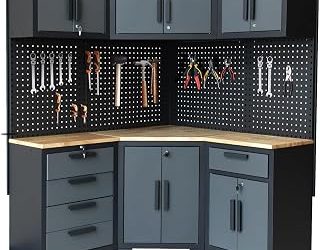
The Eastwood Heavy Duty Steel Construction Shop Fully Adjustable Work Bench is a sensible foundation when the priority is stability, height flexibility, and a substantial load rating. Its powder-coated steel construction is well suited to garage use and offers more confidence for dense tools than a lightweight folding table. In a small space, measure carefully around the legs and account for the working clearance needed to adjust or reposition the bench.
OLBRUS 68-Inch Adjustable Workbench
The OLBRUS 68” Adjustable Workbench pairs a rubber wood top with a built-in power outlet and a stated 1,500-pound load capacity. That combination is particularly useful when floor area is limited because the bench can consolidate a work surface and a convenient power point in one footprint. Its length provides room for assembly or a benchtop tool, though compact-room buyers should confirm that the 68-inch span will not block doors, drawers, or walkways.
Frequently Asked Questions
What is the best finish for a wooden workbench?
For most home users, a durable satin oil-based topcoat offers a balanced mix of protection, appearance, and manageable maintenance. If you expect heavy impacts, metalwork, or frequent solvent exposure, prioritize the bench’s construction and consider a replaceable hardboard or sacrificial top over the finished wood.
Should I sand between coats?
Usually, yes, once the previous coat has dried as directed. Use fine abrasive paper or a sanding pad to remove dust nibs and improve smoothness, then clean away residue before recoating. Avoid aggressive sanding that cuts through the sealer or exposes uneven patches.
How many coats does a workbench need?
Two or three thin coats is a common starting point, but the correct number depends on the product, wood porosity, and expected wear. Thin, even applications generally cure more reliably than one heavy coat and are less likely to remain soft or develop runs.
Can I finish a workbench indoors?
Only if the product permits indoor use and you can provide strong ventilation, temperature control, and protection from dust. Oil-based finishes and shellac can produce noticeable fumes, so a garage or dedicated ventilated area is usually safer and more practical than a living space.
Final Thoughts
For a polished wooden top, General Finishes Arm-R-Seal Satin is the most versatile pick, while Tried & True Superior Varnish Oil suits owners who want a natural look and simple touch-ups. If the real problem is an undersized or unstable setup, the Eastwood adjustable bench is the stronger foundation; for integrated power and generous workspace, the OLBRUS is worth considering.