Key takeaways
- Cut foam at room temperature. Cold foam is stiffer and tears; warm foam drags on the blade.
- Save your offcuts. Trimmed memory foam makes excellent drawer dividers, headboard padding, and shim material for uneven platform slats.
- Vacuum as you go with a brush attachment. Foam dust clings to everything and is miserable to chase later.
- Do a test cut on a scrap or on the underside corner first to learn how your specific foam behaves before you commit to the real line.
What's inside
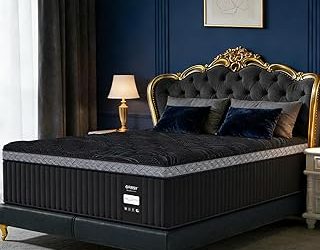
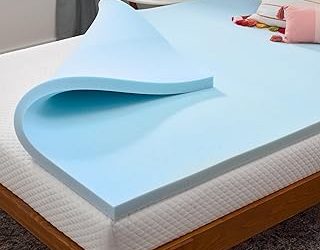
Anyone who has tried to slide a queen mattress into a 51-inch RV alcove, a Murphy bed cavity, or the odd trapezoid under a dormer window knows the problem: memory foam is sold in six sizes, and small spaces come in a thousand. The good news is that memory foam is one of the few mattress types genuinely built for modification. There are no springs to snap, no edge coils to expose, and no internal frame to compromise. What you have is a laminated stack of viscoelastic and support foam that will accept a clean cut and keep performing, provided you cut it correctly.
Doing it badly, though, is easy. Compressed foam springs back mid-slice, blades wander diagonally, and the result is a wavy edge that never sits flush against a wall or platform. This guide covers how to choose the right cutting tool for polyurethane foam specifically, how to measure and mark for a nook rather than a standard frame, the cutting technique that keeps your line square through all layers, and how to finish the raw edge so the mattress looks intentional instead of amputated. Below are the tools worth owning before you start.
As an Amazon Associate we earn from qualifying purchases.


Match the Tool to the Foam You Actually Have
This is the step most tutorials get wrong. Memory foam and its polyurethane support core are open-cell foams, and they should be cut mechanically, not thermally. A hot knife melts polyurethane rather than parting it, producing a gummy, tarry ridge and fumes you should not be breathing in a bedroom. Reach instead for a long-bladed mechanical cutter: a Sponge Cutting Knife with 8-inch replaceable blades designed for sofa cushions and mattress foam handles most 8–12 inch mattresses in a single pass depth, and the swap-in blades matter more than you’d think, since foam dulls steel fast. For thicker or denser builds, a powered option like the Foam Cutter for DIY, Upholstery & Mattress uses a reciprocating twin-blade action that feeds itself through the foam without you pushing, which is what keeps the cut straight.
Hot tools still earn their place in a small-space build, just not on the mattress. Closed-cell materials, EPS and XPS insulation board, EVA, pearl cotton, and EPP, cut beautifully with heat. If your project also involves shaping insulation for a van bed platform or building foam templates, the Preciva Hot Knife Foam Cutter with its digital temperature display and overheat protection, or the higher-output 200W Hot Knife Foam Cutter kit with its case and blade set, are the right instruments. For lighter craft and template work, the Cooltop 18W Hot Wire Foam Cutter or the 3-in-1 Electric Styrofoam Cutting Tool are more manageable and less aggressive.
Measure the Opening, Not the Mattress
In tight installations, measure the cavity at three heights: floor level, mid-height, and at the top of where the mattress will sit. Walls bow, trim protrudes, and hull curves in campers are rarely consistent. Take the smallest of the three measurements and subtract another half inch for expansion, since foam breathes and swells slightly in humid conditions and a mattress wedged under compression will develop a permanent ridge. For non-rectangular spaces, make a paper or cardboard template of the footprint first, then trace it onto the mattress. Never trust a diagram of the space over a physical template.
Mark a Line You Can Actually Follow
Strip the cover off first if it’s removable, and set it aside for later; you’ll be re-fitting it. Lay the bare foam on a flat surface with the cut area overhanging the edge slightly, then snap a chalk line or use a long straightedge and a permanent marker to draw your line on the top face. Carry that line down both side faces of the mattress as well. Those side marks are your depth guide, and they’re the difference between a square edge and an undercut bevel. If you’re working through multiple laminated layers, mark each layer individually where you can see the glue seams.
Cut in Passes, Not in One Heroic Stroke
Clamp or weight a straight board along the line as a fence and cut against it. With a mechanical foam knife, let the blade run at full stroke and guide the tool forward slowly, without leaning into it, pressure is what causes the foam to compress and the cut to wander. Take shallow passes, roughly two to three inches of depth per pass, and repeat along the same line until you’re through. Keep the foam relaxed and uncompressed ahead of the blade; pinching it closed to “help” guarantees a curved edge once it rebounds.
Finish the Edge So It Looks Deliberate
Raw foam edges shed and abrade. The cleanest fix is to re-fit the original cover: unzip, trim the fabric panels with a seam allowance of about an inch, and either hand-stitch the seam closed or have an upholsterer restitch the zipper. A well-made fitted sheet with deep pockets hides a lot, but it won’t stop foam crumbs. For a permanent bond between trimmed layers, use a spray adhesive rated for foam and let it flash off in a ventilated space before pressing the surfaces together.
Tips
- Cut foam at room temperature. Cold foam is stiffer and tears; warm foam drags on the blade.
- Save your offcuts. Trimmed memory foam makes excellent drawer dividers, headboard padding, and shim material for uneven platform slats.
- Vacuum as you go with a brush attachment. Foam dust clings to everything and is miserable to chase later.
- Do a test cut on a scrap or on the underside corner first to learn how your specific foam behaves before you commit to the real line.
Frequently Asked Questions
Will cutting a memory foam mattress void the warranty?
Almost always, yes. Any modification typically ends coverage, so it’s worth confirming the mattress is one you intend to keep as-is before you cut. Many people buy an inexpensive foam mattress specifically for custom fitting rather than modifying a premium one.
Can I use an electric carving knife or a bread knife?
A long serrated bread knife works for thinner toppers and light foam in a pinch, and an electric carving knife works surprisingly well because the reciprocating blades feed through foam. Neither holds a straight line through 10 inches of dense foam as reliably as a purpose-built foam cutter with a long, replaceable blade.
Should I use a hot knife on memory foam?
No. Heat melts polyurethane instead of cutting it, leaving a hardened, sticky ridge and releasing fumes. Save hot knives for closed-cell materials like EPS, XPS, EVA, and EPP, where they genuinely outperform blades.
How do I cut a mattress into an odd shape, like a rounded corner?
Template first, then cut in short overlapping straight segments along the curve and refine the shape with the blade held at a shallow angle. Curves need patience; the mistake is trying to sweep the tool around in one continuous motion.
Conclusion
Cutting memory foam is less about strength than about setup: the right mechanical blade, a template taken from the real space, a marked line carried down all three faces, and shallow passes against a fence. Handle those four things and you’ll turn a standard mattress into a piece that fits a nook, a loft, or a van build as though it was ordered that way, which is exactly what good small-space work should feel like.