Key takeaways
- One-hand footprint: Palm routers in the 800W range weigh three to four pounds and fit in a shoebox. That matters twice over: less fatigue during long edge passes, and a tool that lives in a bin instead of claiming permanent bench real estate.
- Variable speed control: Fixed-RPM models scorch hardwoods like maple and melt laminate edging. Six-speed dials let you drop to roughly 10,000 RPM for large-diameter bits and climb toward 30,000 for delicate trim work.
- Dust management: Routers throw more chips per minute than any tool short of a planer. A bundled dust hood that mates to a shop-vac hose is the difference between a ten-minute cleanup and sawdust in your rug for a week.
- Included accessories: An edge guide and roller guide turn a freehand tool into a repeatable one. Bit sets bundled in the box are usually entry-grade, but they let you practice on scrap without a second order.
- Base visibility and depth lock: Look for a clear sub-base and a depth adjustment that locks with a lever rather than friction alone. Beginners cut shallow passes; a slipping base ruins the workpiece and your confidence at the same time.
What's inside
Most people who want to build their own floating shelves, drawer dividers, or a wall-mounted fold-down desk hit the same wall: the tool that gives furniture its finished edge feels like it belongs in a workshop three times the size of the space they actually have. A full-size plunge router is heavy, loud, and demands a dedicated bench. If your “shop” is a balcony corner, a closet with a pegboard, or the kitchen table on Sunday afternoons, that math never works out. So the project stalls, and the shelf stays square-edged and obviously homemade.
A compact palm router solves that problem better than almost any other purchase under a hundred dollars. It rounds over edges, cuts dadoes for shelf pins, trims laminate flush, and carves inlays for organizers, all from a tool you can store in a drawer. Below are the beginner-friendly compact routers worth your money in 2026, plus the specs that actually matter when your storage is measured in inches rather than square feet.
As an Amazon Associate we earn from qualifying purchases.



How to Choose a Wood Router For Beginner (2026)
- One-hand footprint: Palm routers in the 800W range weigh three to four pounds and fit in a shoebox. That matters twice over: less fatigue during long edge passes, and a tool that lives in a bin instead of claiming permanent bench real estate.
- Variable speed control: Fixed-RPM models scorch hardwoods like maple and melt laminate edging. Six-speed dials let you drop to roughly 10,000 RPM for large-diameter bits and climb toward 30,000 for delicate trim work.
- Dust management: Routers throw more chips per minute than any tool short of a planer. A bundled dust hood that mates to a shop-vac hose is the difference between a ten-minute cleanup and sawdust in your rug for a week.
- Included accessories: An edge guide and roller guide turn a freehand tool into a repeatable one. Bit sets bundled in the box are usually entry-grade, but they let you practice on scrap without a second order.
- Base visibility and depth lock: Look for a clear sub-base and a depth adjustment that locks with a lever rather than friction alone. Beginners cut shallow passes; a slipping base ruins the workpiece and your confidence at the same time.
The Best Wood Router For Beginner (2026)s Reviewed
AVID POWER 6.5 Amp 1.25 HP Compact Router
This is the most complete starter package here, pairing six variable speeds with an edge guide, roller guide, dust hood, and a small bit selection. The 65mm body suits standard trim router accessories, so upgrading later doesn’t mean replacing the base.
TwoWin 800W Compact Wood Router
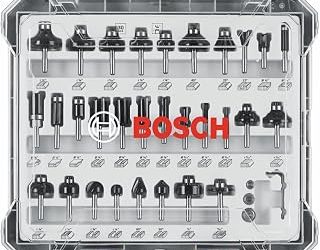
The 15-piece tungsten carbide bit set is the draw, covering roundovers, cove profiles, straight cuts, and flush trim in one box. Bit quality is entry-level rather than premium, but it’s enough to learn profile geometry on plywood offcuts before investing in better steel.
800W Palm Router with Edge & Roller Guide
A straightforward 32,000 RPM single-speed machine with both guides included, best suited to softwood grooving and edging where high speed is an advantage. Ideal for building drawer organizers and closet shelving where cuts are shallow and repetitive.
800W Electric Compact Wood Router with 15PC Bit Set
A budget-first pick that still ships with a 1/4-inch collet and a broad bit assortment, making it a low-risk way to test whether routing belongs in your workflow. Expect more vibration than the AVID POWER unit, so take lighter passes.
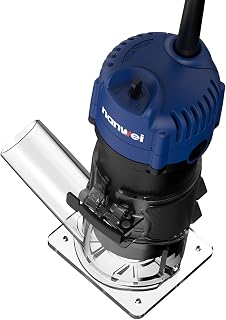
NANWEI 450W Compact Edge Trimmer
At 450W this is the lightest and quietest option, which matters in apartments and shared walls. It ships without bits, so pair it with a quality set; the tradeoff is real power limits in hardwood beyond about 1/4-inch depth per pass.
Frequently Asked Questions
Is a palm router powerful enough for real furniture?
For edge profiles, shelf dadoes, hinge mortises, and template work, yes. Heavy stock removal in thick hardwood is where a full-size router earns its keep, but that represents a small share of typical home furniture builds.
How much space do I need to use one safely?
A stable 24 by 36 inch work surface with clamping access on two edges is workable. Clamp your stock, never your router, and keep the cord path behind you.
Do I need 1/2-inch shank bits?
Not at this level. Every router on this list uses a 1/4-inch collet, which covers the vast majority of profiles a beginner will ever cut.
What should my first project be?
A roundover on scrap pine, then a shelf with rounded edges. Both teach feed direction and pass depth without expensive consequences.
Final Thoughts
If you want one tool that handles small-space furniture work without a second purchase, the AVID POWER 1.25 HP compact router is the strongest all-round buy thanks to its variable speed and dust hood. The TwoWin 800W kit makes more sense if you want maximum bit variety per dollar, while the NANWEI 450W trimmer is the pick for anyone routing in a quiet apartment where weight and noise matter most.