Key takeaways
- SCFM at 90 PSI: This single number decides whether your impact wrench works or sputters. A 3/8″ impact typically wants 3 SCFM sustained; a 1/2″ wants 4 or more. Tank size only buys you seconds — airflow buys you minutes.
- Stored footprint, not floor footprint: Measure the shelf or cabinet where the unit will actually live between projects. Pancake designs stack flat and slide onto low shelving; hot-dog and twin-stack shapes want vertical clearance you may not have.
- Decibel rating you can live beside: Anything above 80 dBA in a small room is genuinely unpleasant and often a neighbor complaint. Units in the 56 to 71 dBA range let you work evenings without headphones or guilt.
- Oil-free pump for tight quarters: No crankcase, no leveling, no oil changes, and no risk of a slow weep onto the closet floor. In a shared or indoor space, this is close to non-negotiable.
- Cord and hose management: Look for integrated wrap points or a flat top that accepts a coiled hose. A compressor that forces you to store cords separately quietly eats twice the space you budgeted.
What's inside
Impact tools are hungry. An impact wrench pulling a stubborn bolt off a bed frame or a caster plate off a workbench can draw more air in three seconds than a small tank holds in total — which is why so many apartment dwellers and closet-workshop builders end up frustrated with a compressor that looked perfectly capable on the box. The tank drains, the motor kicks in, and you stand there waiting while the pressure climbs back. Add the reality that most of us are working in a spare bedroom, a shared garage bay, or a hallway six feet from a sleeping neighbor, and the problem doubles: you need real air delivery from a machine that stores in a cabinet and doesn’t rattle the drywall.
This guide approaches air compressors the way a small-space organizer approaches any tool purchase — footprint first, noise second, performance third, and never sacrificing the third for the first two. Below are six compressors that earn their storage space, from job-site pancakes that slide under a workbench to whisper-quiet units you can run in a studio apartment without an apology. I’ve noted which ones genuinely feed impact tools and which are better suited to brad nailers, trim work, and tire top-offs, because the honest answer is that not every compact compressor belongs anywhere near a half-inch impact wrench.
As an Amazon Associate we earn from qualifying purchases.



How to Choose a/an Air Compressor For Impact Tools (2026)
- SCFM at 90 PSI: This single number decides whether your impact wrench works or sputters. A 3/8″ impact typically wants 3 SCFM sustained; a 1/2″ wants 4 or more. Tank size only buys you seconds — airflow buys you minutes.
- Stored footprint, not floor footprint: Measure the shelf or cabinet where the unit will actually live between projects. Pancake designs stack flat and slide onto low shelving; hot-dog and twin-stack shapes want vertical clearance you may not have.
- Decibel rating you can live beside: Anything above 80 dBA in a small room is genuinely unpleasant and often a neighbor complaint. Units in the 56 to 71 dBA range let you work evenings without headphones or guilt.
- Oil-free pump for tight quarters: No crankcase, no leveling, no oil changes, and no risk of a slow weep onto the closet floor. In a shared or indoor space, this is close to non-negotiable.
- Cord and hose management: Look for integrated wrap points or a flat top that accepts a coiled hose. A compressor that forces you to store cords separately quietly eats twice the space you budgeted.
The Best Air Compressor For Impact Tools (2026)s Reviewed
Metabo HPT EC914S 6-Gallon Pancake
At 4 CFM and 200 PSI in a pancake body, this is the strongest genuine impact-tool performer here — enough sustained airflow to run a 1/2″ impact wrench through lug nuts or seized furniture hardware without constant recovery pauses. The flat profile slides onto a low shelf or under a bench, which is exactly what you want from something this capable.
DEWALT DWFP55126 6-Gallon Pancake
The 2.6 SCFM at 90 PSI figure makes this a strong choice for nailers and light impact drivers rather than heavy wrench work, and the oil-free pump means zero maintenance ritual in a space where you can’t spread out. It’s the most broadly useful compressor on this list for someone assembling furniture, trimming, and occasionally reaching for an impact tool.
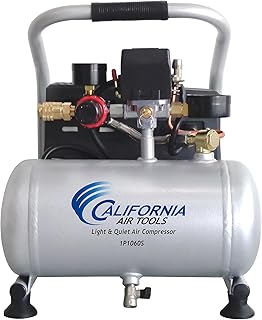
California Air Tools CAT-1P1060S 1-Gallon
At 56 dBA, this is quieter than most dishwashers and light enough to carry one-handed to a closet shelf — genuinely apartment-friendly. Be clear-eyed about the limits: it’s built for brad nailers, inflation, and blow-off work, not for feeding an impact wrench.
DEWALT DWFP55130 Trim Compressor
A quiet 200-PSI unit sized for finish work, which makes it a smart pick if your projects lean toward furniture assembly, cabinet installs, and trim rather than automotive-grade fastening. The compact form and reduced noise make it one of the easier compressors to justify indoors.
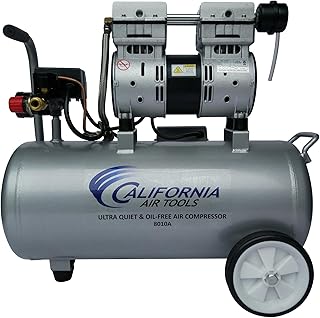
California Air Tools 8010A 8-Gallon
Eight gallons of aluminum tank at 60 dBA with wheels underneath is a rare combination — reservoir capacity for longer tool runs plus noise levels that won’t get you a text from upstairs. Roll it out, work, roll it back to the wall.
Frequently Asked Questions
Can a 6-gallon pancake compressor really run an impact wrench?
Yes, in intermittent bursts, provided the SCFM rating matches your tool. The Metabo HPT at 4 CFM handles a 1/2″ impact for typical fastening work; a 2.6 SCFM unit will keep up with a 3/8″ impact only in short cycles.
Is a 1-gallon tank ever enough for impact tools?
Realistically, no. A 1-gallon tank empties almost instantly under impact-tool demand and the motor never catches up. Choose those units for nailing, inflation, and cleaning instead.
How quiet does a compressor need to be for apartment use?
Aim for 60 dBA or below if you share walls. That range lets you hold a conversation nearby and avoids the sharp, penetrating tone that carries through floors.
Where should a compressor live in a small home?
A low, ventilated shelf or a rolling cart in a closet works well — keep the intake unobstructed, avoid sealed cabinets, and store the hose coiled on top so the whole kit stays a single grab-and-go unit.
Final Thoughts
For actual impact-tool duty in a tight space, the Metabo HPT EC914S is the clear pick — 4 CFM in a stackable pancake body is the best airflow-per-square-inch on this list. If noise matters more than raw output, the California Air Tools 8010A delivers eight gallons at 60 dBA with wheels, and the DEWALT DWFP55126 remains the most versatile all-rounder for furniture builds where impact work is occasional rather than constant.