Key takeaways
- Blot spills immediately with a dry cloth, pressing straight down rather than wiping, which spreads the stain into the grain.
- Store your entire kit in one shallow bin under the sofa or inside an ottoman. If supplies live in three places, the weekly pass stops happening.
- Keep the sofa four inches off the wall so air circulates and the back panel doesn’t trap humidity or scuff the paint.
- Rotate and flip loose cushions monthly so wear and light exposure distribute evenly across all faces.
What's inside
A white leather sofa is one of the few pieces that can make a 500-square-foot apartment read as intentional rather than cramped. It bounces daylight into dim corners, it reads visually lighter than upholstered fabric, and its legs let the floor keep running underneath, which tricks the eye into seeing more room. The tradeoff is obvious the first time someone sets a takeout bag on the arm: in a small home, the sofa is also the dining chair, the desk, the guest bed, and the place the dog lands. Contact per square inch is simply higher than it would be in a house with three seating areas.
That means white leather in a compact space needs a maintenance rhythm, not an annual rescue mission. Below is the approach I give clients after we’ve measured, purged, and committed to a light-colored anchor piece: how to identify your finish, what a realistic weekly pass looks like, how to deep clean without waterlogging the panels, when to condition, and how to walk back the grey wear lines that show up on armrests first. Everything here is designed around one caddy that fits on a single shelf.
As an Amazon Associate we earn from qualifying purchases.





Step One: Find Out What Finish You’re Working With
Nearly all white sofas sold today use finished (also called protected or pigmented) leather, which carries a thin topcoat over the hide. Unfinished aniline and semi-aniline leathers are rarer in white because they absorb everything. Test before you touch anything wet: place a single drop of water on a hidden section near the back rail. If it beads and sits, you have a topcoat and can use standard water-based leather cleaners confidently. If it darkens and sinks in within thirty seconds, the hide is absorbent, and you should stay with a pH-balanced product and the lightest possible moisture. Leather Honey’s cleaner is explicitly formulated for any color including white, which matters because some conditioners carry oils or tints that yellow a pale hide over time.
The Weekly Two-Minute Pass Beats Any Deep Clean
Small rooms concentrate dust, cooking aerosols, and skin oils, and all three settle into the grain and seam lines. Left alone, that film oxidizes into the dull beige cast people mistake for permanent aging. Once a week, run a soft brush vacuum attachment along the seams, seat deck, and back crease, then wipe the whole surface with a dry or barely damp microfiber cloth. That’s it. This single habit does more for long-term whiteness than any product, because it removes the abrasive grit that grinds into the topcoat every time someone sits down.
Deep Cleaning: Work Panel by Panel, Never Wall to Wall
Every four to six months, or after a visible spill, clean in sections: one cushion face, one arm, one back panel at a time. Apply cleaner to the cloth rather than the leather, work in small overlapping circles, then immediately follow with a second clean damp cloth to lift the residue, and a dry cloth to finish. Weiman’s cleaner and conditioner handles both jobs in one pass, which is genuinely useful when you’re leaning over a sofa wedged between a wall and a coffee table. If you’d rather separate the steps, the Leather Honey Complete Leather Care Kit bundles cleaner, conditioner, and cloths together so nothing wanders off to another drawer. Never saturate the leather, never use a magic eraser (it abrades the topcoat and leaves a permanently shiny patch), and skip baby wipes, which contain surfactants that strip finish.
Conditioning Is About Light and Heat, Not Softness
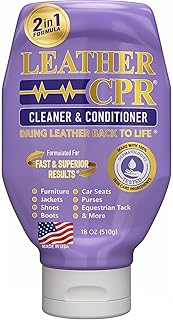
Studio apartments concentrate sun. A sofa parked under the only large window takes concentrated UV exposure that a house-bound piece never sees, and radiators are usually within a few feet of the seating in older buildings. Both dry the hide and cause hairline cracking along flex points. Condition two to four times a year, more if the sofa sits in direct light. Weiman’s formula includes UV protection specifically for this, and the 2-pack of 22 oz bottles is the sensible buy if you have a sectional. Leather CPR is another solid option when the leather already feels stiff and needs pliability restored along with cleaning.
When Grey Wear Lines and Dye Transfer Appear
Armrests and the front seat edge go first, and denim indigo is the usual culprit. Cleaning lifts surface transfer; it will not restore color that has actually worn off. For that, a white leather recoloring balm with mink oil rebuilds pigment and fills fine scratches without a full reupholstery quote. Test on the underside, build thin coats, and let each dry fully. Two light applications look natural; one heavy one looks painted.
Tips
- Blot spills immediately with a dry cloth, pressing straight down rather than wiping, which spreads the stain into the grain.
- Store your entire kit in one shallow bin under the sofa or inside an ottoman. If supplies live in three places, the weekly pass stops happening.
- Keep the sofa four inches off the wall so air circulates and the back panel doesn’t trap humidity or scuff the paint.
- Rotate and flip loose cushions monthly so wear and light exposure distribute evenly across all faces.
Frequently Asked Questions
Can I use dish soap and water on white leather?
You can, sparingly, on a fresh spill, but soap raises the pH and gradually degrades the topcoat, which shows up as chalkiness and uneven absorption later. A dedicated leather cleaner is a small cost against a sofa you plan to keep.
How do I remove ink or a pen mark?
Act fast and stay gentle. A leather cleaner on a cotton swab, dabbed rather than rubbed, lifts recent ink from finished leather. Set ink often needs recoloring balm to cover what remains. Alcohol and hairspray can dissolve the finish along with the ink.
Will conditioner make my white sofa look yellow?
Only if it’s oil-heavy or tinted. Choose products labeled safe for white and light leather, apply thin, and buff off the excess rather than letting it sit and cure on the surface.
How often should a heavily used sofa be deep cleaned?
In a small home where the sofa doubles as a workspace or dining spot, every three to four months is realistic. Pair each deep clean with conditioning so you’re only pulling out the kit a handful of times a year.
Conclusion
White leather earns its place in a small room by making the space feel larger and brighter, and it keeps earning it as long as the upkeep stays small and frequent rather than rare and heroic. A weekly dry pass, a quarterly clean-and-condition with a product formulated for light leather, and a tube of recoloring balm for the armrests will carry a good sofa well past a decade — and cost far less than the reupholstery you’ll otherwise be pricing out in year three.