Key takeaways
- Tooth count: Stay in the 20 to 30 range for dedicated ripping. Fewer teeth means bigger gullets, and bigger gullets evacuate the coarse chips that ripping produces. A 24-tooth flat-top blade will out-rip an 80-tooth blade every time, even though it looks less impressive on the shelf.
- Kerf width: Thin kerf (roughly .098″) removes less material and asks less of the motor, which matters enormously on 15-amp jobsite and contractor saws. Full kerf is stiffer and better suited to cabinet saws with 3 HP or more. If you’re ripping on a portable saw, thin kerf is the practical choice.
- Grind geometry: Flat-top (FTG) teeth leave a flat-bottomed kerf and rip fast and cheap. Triple-chip grind (TCG) costs more but survives abrasive material and produces a cleaner edge, which is why glue-line blades use it.
- Blade diameter and arbor: Match your saw. Most benchtop and jobsite saws take 8-1/4″, while full-size contractor and cabinet saws take 10″. Nearly all use a 5/8″ arbor. An oversized blade won’t fit under the guard and won’t retract into the throat plate.
- Single blade or a set: If bench space is tight, a two- or three-blade set stores in one sleeve and covers framing, ripping, and finish work without buying four separate blades. If you rip hardwood weekly, spend the money on one excellent dedicated rip blade instead.
What's inside
When your shop is a corner of the garage or a fold-down bench in a spare bedroom, every cut has to count. Ripping stock down to width is where a table saw earns its footprint, and it’s also where the wrong blade shows up loudest: burn marks on maple, a motor that bogs halfway through a rip, tearout that eats into a board you can’t easily replace because the lumber run is a 40-minute drive. In a compact setup you’re often working with a 15-amp contractor saw or a jobsite model on a folding stand, and those machines simply don’t have the muscle to push a 60-tooth combination blade through 1-1/2 inches of hardwood without complaint.
A dedicated rip blade fixes most of that. Fewer teeth, deeper gullets, and a flat-top or triple-chip grind mean the blade clears chips instead of packing them, which keeps heat down and lets a modest motor do honest work. This guide covers the rip blades worth owning in 2026, including thin-kerf options that reduce load on smaller saws, a glue-line blade for anyone edge-jointing without a jointer, and multi-packs that cover ripping and crosscutting when you don’t have the storage for a wall of specialty blades.
As an Amazon Associate we earn from qualifying purchases.

How to Choose a Table Saw Rip Blade (2026)
- Tooth count: Stay in the 20 to 30 range for dedicated ripping. Fewer teeth means bigger gullets, and bigger gullets evacuate the coarse chips that ripping produces. A 24-tooth flat-top blade will out-rip an 80-tooth blade every time, even though it looks less impressive on the shelf.
- Kerf width: Thin kerf (roughly .098″) removes less material and asks less of the motor, which matters enormously on 15-amp jobsite and contractor saws. Full kerf is stiffer and better suited to cabinet saws with 3 HP or more. If you’re ripping on a portable saw, thin kerf is the practical choice.
- Grind geometry: Flat-top (FTG) teeth leave a flat-bottomed kerf and rip fast and cheap. Triple-chip grind (TCG) costs more but survives abrasive material and produces a cleaner edge, which is why glue-line blades use it.
- Blade diameter and arbor: Match your saw. Most benchtop and jobsite saws take 8-1/4″, while full-size contractor and cabinet saws take 10″. Nearly all use a 5/8″ arbor. An oversized blade won’t fit under the guard and won’t retract into the throat plate.
- Single blade or a set: If bench space is tight, a two- or three-blade set stores in one sleeve and covers framing, ripping, and finish work without buying four separate blades. If you rip hardwood weekly, spend the money on one excellent dedicated rip blade instead.
The Best Table Saw Rip Blade (2026)s Reviewed
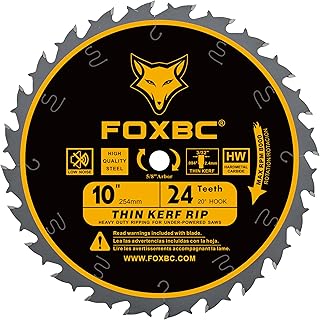
FOXBC 10-Inch 24-Tooth Flat Tooth Rip Blade
This is the textbook rip blade: 24 flat-top teeth, generous gullets, and a thin kerf that lets a contractor saw pull through thick hardwood without stalling. For the price it’s the most sensible upgrade a small-shop woodworker can make over the stock blade that came in the box.
Amana Tool 610301 Glue Line Rip Blade
Thirty triple-chip teeth at a 22-degree hook leave an edge clean enough to glue straight off the saw, which effectively replaces a jointer you don’t have room for. It’s the priciest blade here and worth it if you build panels; skip it if you’re mostly breaking down sheet goods.
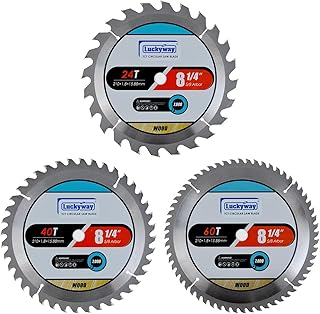
Luckyway 8-1/4″ 3-Pack (24T / 40T / 60T)
Built for compact jobsite saws, this trio covers rough framing, general ripping, and finish cuts in one small package. The 24-tooth blade is the one you’ll reach for when ripping, and the set’s value makes it easy to keep a fresh blade in reserve.
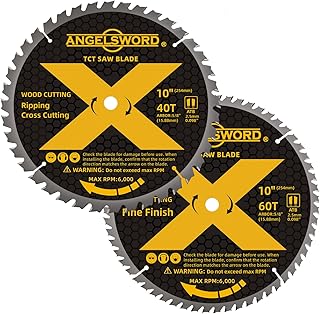
ANGELSWORD 10-Inch 2-Pack (40T / 60T)
A practical pairing for anyone who rips softwood and plywood more often than thick hardwood. The 40-tooth blade handles ripping and crosscutting acceptably in one setup, which means fewer blade changes on a saw that’s awkward to reach around.
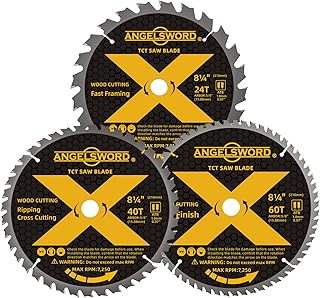
ANGELSWORD 8-1/4″ 3-Pack (24T / 40T / 60T)
The same logic scaled to portable saws, with a proper 24-tooth blade for dedicated ripping duty. A tidy solution if your saw lives on a shelf between projects and you want one sleeve that covers everything.
Frequently Asked Questions
Can I just use a combination blade for ripping?
You can, but it will cut slower, run hotter, and burn hardwood more readily because the smaller gullets can’t clear chips fast enough. On an underpowered saw the difference is immediately obvious.
Is thin kerf worth it on a small saw?
Yes. Less material removed means less load on the motor, faster feed rates, and slightly better yield from expensive stock. The tradeoff is a thinner plate that can deflect if you feed too aggressively.
How do I know when a rip blade needs sharpening?
Watch for increased feed resistance, burn marks on cuts that used to be clean, and a rougher kerf face. Carbide-tipped rip blades can typically be resharpened several times before replacement.
Where do I store blades in a tiny shop?
Keep them in their original sleeves or in a slotted plywood holder mounted to the underside of a shelf. Stacking bare blades dulls the carbide and is the fastest way to ruin a good blade.
Final Thoughts
For most small-shop woodworkers, the FOXBC 24-tooth thin-kerf blade is the right first purchase: it transforms how a modest saw handles hardwood for very little money. If you build glued-up panels and don’t have room for a jointer, the Amana Tool 610301 glue-line blade pays for itself in saved setup time, while the Luckyway 8-1/4″ three-pack is the smart pick for anyone working off a portable saw with limited storage.