Key takeaways
- Tooth count: Blades with 60 to 80 teeth are versatile for furniture, trim, plywood, and general crosscuts. A 100- or 120-tooth blade favors very clean cuts, while 40 teeth are better suited to faster ripping.
- Tooth design: Alternate-top-bevel, or ATB, teeth are a strong all-purpose choice for wood. Specialized profiles may improve performance on laminates, plastics, or non-ferrous metals.
- Kerf: A thin-kerf blade removes less material and can make a compact saw feel more efficient. Confirm that the blade remains compatible with your saw’s guard and cutting capacity.
- Arbor fit: Most 10-inch miter saws use a 5/8-inch arbor, but verify your owner’s manual before ordering. The correct diameter alone does not guarantee a safe fit.
- Material match: Use a wood blade for wood, and select a blade specifically rated for aluminum or another non-ferrous metal when needed. Never treat a general-purpose wood blade as a metal-cutting substitute.
What's inside
Choosing a 10-inch miter saw blade can feel surprisingly complicated. Tooth count, kerf width, arbor size, tooth geometry, and the material you plan to cut all affect the result. A blade that excels at ripping framing lumber may leave rough edges on cabinet trim, while an ultra-fine blade can be slow or unnecessarily delicate for everyday construction work.
This guide focuses on practical blade choices for home workshops, furniture projects, cabinetry, trim, plywood, and occasional specialty cuts. The recommendations below balance finish quality, versatility, and value, with special attention to the space-conscious DIYer who wants one dependable blade—or a small set that covers several jobs.
As an Amazon Associate we earn from qualifying purchases.


How to Choose a 10 Inch Miter Saw Blade (2026)
- Tooth count: Blades with 60 to 80 teeth are versatile for furniture, trim, plywood, and general crosscuts. A 100- or 120-tooth blade favors very clean cuts, while 40 teeth are better suited to faster ripping.
- Tooth design: Alternate-top-bevel, or ATB, teeth are a strong all-purpose choice for wood. Specialized profiles may improve performance on laminates, plastics, or non-ferrous metals.
- Kerf: A thin-kerf blade removes less material and can make a compact saw feel more efficient. Confirm that the blade remains compatible with your saw’s guard and cutting capacity.
- Arbor fit: Most 10-inch miter saws use a 5/8-inch arbor, but verify your owner’s manual before ordering. The correct diameter alone does not guarantee a safe fit.
- Material match: Use a wood blade for wood, and select a blade specifically rated for aluminum or another non-ferrous metal when needed. Never treat a general-purpose wood blade as a metal-cutting substitute.
The Best 10 Inch Miter Saw Blades (2026) Reviewed
WEN BL1080 80-Tooth Ultra-Fine Finish Blade
The WEN BL1080 is a sensible centerpiece for a compact furniture workshop. Its 80-tooth carbide-tipped design is aimed at smooth, detailed cuts in wood, making it well suited to trim, plywood, shelving components, and visible joinery where minimizing tear-out matters.
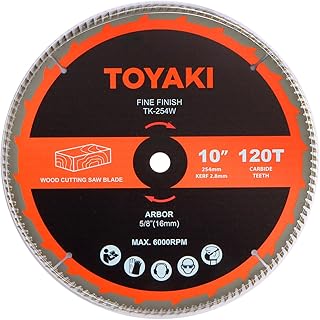
10-Inch 120-Tooth Fine-Finish Professional Blade
For the cleanest-looking wood cuts in this roundup, this 120-tooth blade is the precision-focused option. It is a particularly good fit for delicate trim, veneer-faced panels, and small furniture parts, although its dense tooth pattern is better for controlled finishing work than fast stock removal.
KENDO 10-Inch 40T/60T Two-Pack
The KENDO set is useful when storage space and budget both matter. The 40-tooth blade handles quicker ripping, while the 60-tooth blade is better suited to plywood, MDF, and laminate finish cuts, giving one saw two practical personalities without requiring a crowded blade drawer.
WORKPRO 10-Inch 80-Tooth Thin-Kerf Blade
WORKPRO’s 80-tooth blade is designed around smooth wood cuts with a thin kerf, a useful combination for cabinetry, plywood, and trim. It is a strong choice for DIYers who want a refined finish while keeping the cut relatively efficient on a smaller or portable saw.
Benchmark Abrasives 10-Inch 100-Tooth TCT Blade
This Benchmark Abrasives blade stands apart because it is designed for aluminum and other non-ferrous metals rather than ordinary wood cutting. Its 100-tooth configuration favors controlled, clean results on suitable metal stock, but buyers should confirm their saw and follow the manufacturer’s safety requirements before use.
Frequently Asked Questions
Is a 10-inch blade compatible with every 10-inch miter saw?
No. The diameter is only one part of the fit. Check the arbor size, maximum blade thickness, guard clearance, and the saw manufacturer’s approved blade specifications before installing a replacement.
How many teeth should a miter saw blade have for furniture?
For most furniture work, 60 to 80 teeth is a practical range. Choose closer to 60 teeth for a balance of speed and finish, or move toward 80 to 120 teeth when working on visible edges, thin trim, veneer, or materials prone to tear-out.
Can a miter saw blade cut plywood and MDF?
Yes, provided the blade is rated for the material and the saw is used correctly. A higher-tooth-count carbide blade generally produces cleaner edges, while supporting the sheet and using a steady feed can further reduce chipping.
When should a miter saw blade be replaced?
Replace or professionally sharpen a blade when cuts become noticeably rough, the saw requires excessive force, burning appears despite proper technique, or teeth are chipped or missing. Disconnect power before inspecting the blade, and never use one with visible structural damage.
Final Thoughts
The WEN BL1080 is the best all-around finish choice for many furniture makers, while the KENDO two-pack offers the most useful range in a small workshop. For especially delicate woodwork, the 120-tooth fine-finish blade is worth considering; choose the Benchmark Abrasives option only when your projects specifically include compatible non-ferrous metal.