Key takeaways
- Tooth count: Higher tooth counts generally deliver smoother crosscuts in trim and hardwood, while lower counts remove material faster and suit framing or rough sizing.
- Kerf: A thin-kerf blade wastes less wood and can place less demand on a compact saw, but it may be less suitable for aggressive cuts through thick stock.
- Tooth geometry: ATB designs are versatile for wood crosscuts; TCG-style teeth are useful when you want a durable, controlled cut across tougher or laminated materials.
- Compatibility: Confirm the blade diameter, arbor hole, maximum RPM, and saw manufacturer’s recommendations before installation. A 10-inch blade is not automatically compatible with every 10-inch saw.
- Workspace needs: In a small shop, one versatile blade may be more practical than several specialty blades. Choose a general-purpose option unless your projects regularly demand ultra-clean finish cuts.
What's inside
Choosing a miter saw blade can be surprisingly difficult when nearly every package promises cleaner cuts, longer life, and professional results. Tooth count, kerf width, tooth geometry, arbor size, and the material being cut all affect whether a blade produces crisp furniture joints or leaves tear-out, vibration, and rough edges.
This guide focuses on blades that suit home furniture projects, trim work, shelving, cabinetry, and general workshop use. The recommendations cover fine-finish specialists, thin-kerf options, multipacks, and blades designed for demanding crosscuts, so you can match the blade to your saw, stock, and available workspace rather than buying by tooth count alone.
As an Amazon Associate we earn from qualifying purchases.



How to Choose a 10 Miter Saw Blade (2026)
- Tooth count: Higher tooth counts generally deliver smoother crosscuts in trim and hardwood, while lower counts remove material faster and suit framing or rough sizing.
- Kerf: A thin-kerf blade wastes less wood and can place less demand on a compact saw, but it may be less suitable for aggressive cuts through thick stock.
- Tooth geometry: ATB designs are versatile for wood crosscuts; TCG-style teeth are useful when you want a durable, controlled cut across tougher or laminated materials.
- Compatibility: Confirm the blade diameter, arbor hole, maximum RPM, and saw manufacturer’s recommendations before installation. A 10-inch blade is not automatically compatible with every 10-inch saw.
- Workspace needs: In a small shop, one versatile blade may be more practical than several specialty blades. Choose a general-purpose option unless your projects regularly demand ultra-clean finish cuts.
The Best 10 Miter Saw Blade (2026)s Reviewed
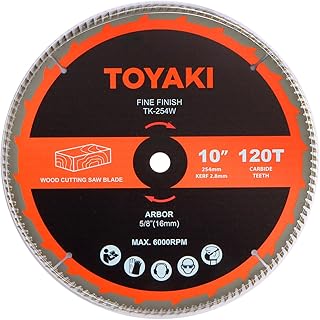
10-Inch 120-Tooth Fine-Finish Woodworking Saw Blade
This 120-tooth blade is aimed at detail-focused work where minimizing splintering matters more than cutting speed. Its 5/8-inch arbor fits many common 10-inch miter saws, table saws, and circular saw setups, making it a useful choice for a furniture maker who wants a polished edge on trim, plywood, and smaller hardwood components.
WEN BL1080 10-Inch 80-Tooth Carbide-Tipped Blade
The WEN BL1080 offers a practical middle ground for home workshops: its 80 teeth are well suited to clean crosscuts without making the blade as specialized as a very high-tooth-count model. The carbide-tipped construction and broad compatibility with miter and table saws make it a sensible everyday option for shelves, face frames, molding, and occasional cabinet work.
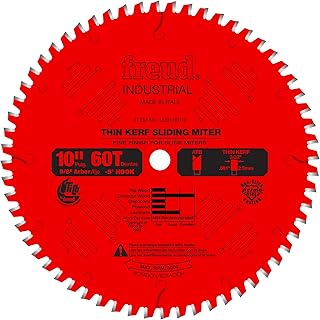
Freud LU91R010 10-Inch Thin Kerf Sliding Compound Miter Saw Blade
Freud’s LU91R010 is especially appealing when saw capacity and motor power are limited, because its thin-kerf design can reduce the amount of material removed per cut. It is a strong fit for sliding compound miter saw users working in a compact shop, though thin-kerf blades should be used with the correct riving or anti-kickback setup specified for the saw.
US1080-MTR 10-Inch 80-Tooth Miter Saw Blade
The US1080-MTR uses an 80-tooth layout optimized for crosscuts and miters, the two operations most furniture builders perform on a miter saw. Its 1/8-inch kerf offers a conventional balance of stability and material removal, while the USA-made construction may appeal to buyers prioritizing a dedicated, purpose-built blade for finish carpentry.
10-Inch 120-Tooth TCG Aluminum Working Saw Blade
This 120-tooth TCG blade is designed for ultra-fine results and includes geometry intended for aluminum work, giving it a more specialized profile than a standard wood crosscut blade. It can be attractive for makers who work with both furniture components and occasional nonferrous material, but check the manufacturer’s recommendations carefully and never cut materials the blade is not rated for.
Frequently Asked Questions
Is a higher tooth count always better?
No. A high tooth count can improve edge quality on crosscuts, but it usually cuts more slowly and may require a steadier feed rate. Lower-tooth blades are often more efficient for rough sizing, thick lumber, or framing tasks.
What blade should I use for plywood and veneered panels?
An 80-tooth or higher fine-finish blade is usually a good starting point for plywood and veneer because it helps limit breakout. Support the panel properly, keep the saw aligned, and avoid forcing the blade through the material.
Can one blade handle every furniture project?
One versatile 60-tooth or 80-tooth blade can cover many home projects, especially in a small workshop. However, a dedicated high-tooth-count blade will generally produce cleaner trim and joinery cuts than an all-purpose blade.
How often should I replace or sharpen a miter saw blade?
Replace or professionally sharpen a blade when cuts become rough, burning appears despite proper feed speed, or the saw begins to vibrate unusually. Cleaning pitch and resin from the teeth can restore performance, but damaged or missing carbide tips require replacement.
Final Thoughts
For most home furniture projects, the WEN BL1080 is a balanced everyday pick, while the Freud LU91R010 is compelling for compact saws that benefit from a thin kerf. Choose the 120-tooth fine-finish blade when edge quality takes priority, especially for visible trim, miters, and carefully assembled furniture parts.