Key takeaways
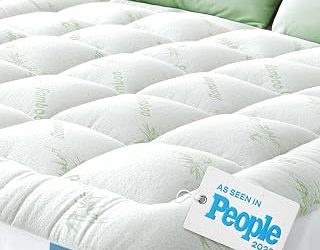
- Add a washable, waterproof mattress protector. It’s the single highest-return purchase here, and it converts most future accidents into a laundry task rather than a cleaning project.
- Sift a thin layer of baking soda over the surface, leave it two to four hours, then vacuum it out. It pulls residual moisture and odor without adding any liquid.
- Rotate the mattress head-to-foot every three months. Nearly all memory foam is single-sided, so rotation is your only wear-distribution option.
- Test any new cleaner on a hidden corner near the foot of the mattress and let it dry fully before treating a visible area.
What's inside
In a compact home, the mattress isn’t furniture — it’s infrastructure. It’s the single largest soft surface in the room, it often sits inches from a wall or a window, and in studios it frequently doubles as a sofa, a desk chair, and a laundry-folding station. That means it collects more than sleep residue: skin cells, humidity from cooking a few feet away, pet dander, spilled coffee, and whatever the radiator kicks up all winter. And unlike a coil mattress, memory foam can’t be dragged outside, hosed down, or flipped over to buy yourself another year.
This guide covers the method that actually works on viscoelastic foam: dry extraction first, targeted enzyme treatment second, and controlled drying third. You’ll learn why moisture is the real enemy, how to treat urine and sweat stains without turning the core into a sponge, how long drying genuinely takes in a room with limited airflow, and which tools justify the shelf space they’ll occupy in a closet you already fight with.
As an Amazon Associate we earn from qualifying purchases.




Why Memory Foam Breaks the Usual Rules
Memory foam is a dense, open-cell polyurethane structure that holds liquid deep in its matrix and releases it slowly. Saturate it and you’ve created a humid interior layer that can support mildew for weeks while the surface feels dry to the touch. Water also softens the polymer over time, which is how a supportive mattress turns into a hammock. Three rules follow from this: never put water on foam faster than you can pull it back out, never scrub (you’ll tear cell walls and fuzz the cover), and never use a steam cleaner or carpet extractor on the foam itself. Blotting, misting, and airflow are your entire toolkit.
Start Dry: Extraction Before Anything Wet
Strip the bed completely and vacuum the top, all four sides, and the seams. Most of what makes a mattress smell stale is dry particulate, and removing it first prevents you from turning dust into mud with your cleaner. A dedicated bed vacuum is meaningfully better than a household upholstery tool here because the tapping motor loosens debris from below the surface while the sealed head lifts it out. The Teant MV-Blue runs 16 kPa suction with a 33,000 RPM tapping head, UV-C, and a HEPA filter, and its two-speed setting is useful on thinner mattress covers. The CFBF and FEPPO handhelds cover similar ground at 500W with 16.4 ft cords, which matters when your only outlet is behind the nightstand. Work in slow overlapping passes; speed is what people get wrong, not suction.
Spot-Treat Stains Without Soaking the Core
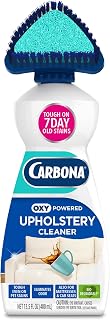
Match the product to the stain. Protein-based marks — sweat, urine, the yellowing that develops along the shoulder and hip lines — need enzymes to break down the residue rather than just bleaching the color out. The GEODE enzyme cleaner and deodorizer is a sensible general-purpose choice for this, and its 32 oz size makes it economical if you’re treating a whole mattress rather than a single spot. For fresh accidents where you cannot afford drying time, a no-rinse dry-cleaning foam spray applies as foam rather than liquid, so far less moisture reaches the core. For set-in coffee, wine, or makeup on the cover, an oxygen-based upholstery cleaner like Carbona’s, which includes a brush and sponge, lifts pigment without leaving a sticky film. Whatever you use, mist lightly, wait the stated dwell time, then blot with a dry white towel using downward pressure.
Drying Is the Step Small Spaces Get Wrong
Plan on four to eight hours before you remake the bed, longer in a humid room. Keep the mattress flat — standing memory foam on its side to “air out” invites permanent creasing at the fold. Instead, point a box fan across the surface at bed height, crack a window, and run a dehumidifier if you own one. Press a dry towel firmly into treated areas every 30 minutes to pull moisture upward. This is the argument for cleaning on a weekend morning: in a one-room apartment, you can’t hide a damp mattress, and remaking a bed early is the most common cause of mildew smell weeks later.
Choose Gear That Earns Its Storage Space
In tight quarters, a corded handheld bed vacuum plus one enzyme spray covers roughly 90% of realistic mattress cleaning. Corded models like the FEPPO or CFBF avoid the battery decline that kills cordless units stored in a closet for months, and they store flat under a bed frame. Skip anything that requires a bucket, a hose, or a dedicated drying rack. UV-C and heat features are genuinely useful for surface sanitizing between deep cleans, but treat them as a supplement to suction, not a substitute — light only reaches what it touches.
Tips
- Add a washable, waterproof mattress protector. It’s the single highest-return purchase here, and it converts most future accidents into a laundry task rather than a cleaning project.
- Sift a thin layer of baking soda over the surface, leave it two to four hours, then vacuum it out. It pulls residual moisture and odor without adding any liquid.
- Rotate the mattress head-to-foot every three months. Nearly all memory foam is single-sided, so rotation is your only wear-distribution option.
- Test any new cleaner on a hidden corner near the foot of the mattress and let it dry fully before treating a visible area.
Frequently Asked Questions
Can I use a steam cleaner on memory foam?
No. Steam forces hot moisture deep into the foam where it can’t evaporate quickly, which risks both mildew and permanent softening of the material. Use dry extraction and light misting instead.
How often should I deep clean?
Vacuum monthly, deep clean with an enzyme treatment every four to six months, and spot-treat spills immediately. Homes with pets, allergies, or high humidity should move toward the shorter end of that range.
Will old yellow stains come out completely?
Often not entirely. Set-in oxidation can be lightened significantly by enzyme and oxygen-based cleaners, but a faint shadow may remain. The odor is the part that genuinely matters for sleep quality, and that does resolve.
Is baking soda enough on its own?
For general freshening between cleanings, yes. For biological stains, it can’t break down the residue causing the smell — you need an enzyme formula for that.
Conclusion
Cleaning memory foam well is less about products than restraint: pull out as much as you can dry, apply as little liquid as possible, and give the mattress real time to dry before you sleep on it again. A capable bed vacuum, one enzyme cleaner, a no-rinse foam for emergencies, and a washable protector will keep a mattress fresh for years — and the whole kit fits in a single bin, which in a small home is the requirement that decides everything.