Key takeaways
- Rinse the mesh filter monthly during heavy use — it takes two minutes and prevents most coil buildup before it starts.
- Lay an old bath towel along the windowsill and down the wall below the unit, even with a catch bag. Overspray travels farther than you’d expect.
- Photograph the grille and screw layout before disassembly. Window unit clips are unintuitive and rarely documented.
- Store your coil cleaner and fin comb together in a single zip pouch on a closet shelf, not scattered under the sink. You’ll actually do this next season if the kit is one grab.
What's inside
In a studio apartment or a rented bedroom, a window air conditioner isn’t just an appliance — it’s furniture. It occupies prime wall space, sits at eye level, and pushes air across every square foot you own. Which means when it gets dirty, you notice it faster than someone in a four-bedroom house ever would. That faint sock-drawer smell on startup, the dust film settling on the dresser two feet away, the way the room takes forty minutes to cool instead of fifteen — those are all the same problem wearing different clothes.
The good news is that a proper cleaning takes about ninety minutes once a season, and it’s almost entirely a matter of sequence rather than skill. Below, I’ll walk through how to clean a window unit properly in a space where you can’t just haul it into a garage: what to pull apart, what to leave alone, which chemicals actually belong on aluminum fins, and how to keep the water off your floor. I’ll also flag the tools that earn their storage space, because in a small home, every purchase has to justify its footprint.
As an Amazon Associate we earn from qualifying purchases.




Our recommended picks for this job:
Cut Power First, Then Plan Your Water Route
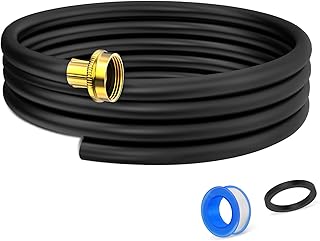
Unplug the unit at the wall — not just the remote’s off button, and not the breaker alone if you can reach the cord. Then, before you touch a screwdriver, decide where the water is going. This is the step most guides skip and the one that ruins hardwood. If your unit can stay in the window, a catch bag is the answer: something like the Oiktylr Mini Split Cleaning Kit includes a waterproof PVC bag with a drain hose that channels runoff into a bucket instead of your baseboard. It’s sized for larger 18,000–24,000 BTU systems and mini-splits, so on a compact window unit you’ll be working with slack fabric, but slack fabric still beats towels. For smaller units, lifting the whole thing into a bathtub is genuinely the cleanest path if two people can manage the weight.
Filter, Grille, Then Coils — In That Order
Work front to back so you’re never dropping dust onto something you’ve already cleaned. Pop the front grille off (usually two clips and a screw or two), pull the reusable mesh filter, and wash it in the sink with dish soap and lukewarm water. Let it dry completely before it goes back in — a damp filter is how mildew gets a foothold. The grille itself can go in the same sink. Only then should you look at the evaporator coils behind it, which is where the real grime lives.
Use a No-Rinse Foam on the Coils, Not a Scrub Brush
Aluminum fins bend if you look at them wrong, so pressure and bristles are the wrong instinct here. Self-rinsing foam coil cleaner is the correct tool: you spray it on, it expands into the fin pack, lifts debris outward, and then drains away with the condensate. The Arm & Hammer Biodegradable HVAC Coil Cleaner is a reliable 19 oz aerosol and a sensible pick if you’re cleaning one unit and don’t want a large bottle taking up cabinet space. If you’re maintaining a couple of units or a window AC plus a fridge condenser, the 38 oz foaming coil cleaner offers better value per ounce, and the 57 oz version is the one to reach for if you’re doing full seasonal maintenance across a whole home. All three are no-rinse, which is exactly what you want when the unit stays in the window.
Straighten Fins and Reach the Gaps You Can’t See
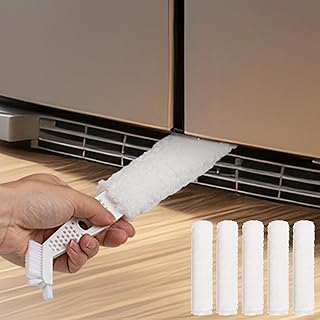
Bent fins restrict airflow in a way that’s invisible but measurable on your electric bill. A fin comb walks the bends back into alignment in a few passes. The 3-Piece Air Conditioner Fin Comb Cleaning Tools set pairs a comb with a flexible coil brush, which handles the fins and the dust between them without you needing to disassemble anything. For the dust that collects behind and beneath the unit — plus the same problem under your fridge and sofa — the Air Conditioner Cleaner Set with five replaceable brush cloths is a slim, jointed reaching tool. It’s the kind of thing that quietly does four jobs in a small apartment, which is the only reason I’d tell anyone to buy another cleaning tool.
Clear the Drain Pan and Let It Dry Fully
The drain pan and drain hole at the base of the unit are where standing water breeds the smell you’ve been chasing. Wipe the pan out, then clear the drain port with a pipe cleaner or a thin flexible brush until water runs through freely. After everything’s clean, leave the front cover off and run the unit on fan-only for twenty to thirty minutes. Reassembling a damp interior undoes the whole afternoon.
Tips
- Rinse the mesh filter monthly during heavy use — it takes two minutes and prevents most coil buildup before it starts.
- Lay an old bath towel along the windowsill and down the wall below the unit, even with a catch bag. Overspray travels farther than you’d expect.
- Photograph the grille and screw layout before disassembly. Window unit clips are unintuitive and rarely documented.
- Store your coil cleaner and fin comb together in a single zip pouch on a closet shelf, not scattered under the sink. You’ll actually do this next season if the kit is one grab.
Frequently Asked Questions
How often does a window AC need a deep clean?
Once at the start of cooling season, and a second time mid-season if you run it daily, live on a busy street, or have pets. The filter is a separate, more frequent job — monthly during use.
Can I use household cleaners like vinegar or bleach on the coils?
Vinegar is mildly acidic and can corrode aluminum fins over time; bleach is worse and can damage the drain pan and gaskets. Purpose-made no-rinse coil foams are formulated for aluminum and copper and don’t need to be flushed out, which matters when the unit is mounted in a window.
Do I have to remove the unit from the window to clean it?
No. With a catch bag and a no-rinse foam, an in-place cleaning gets you most of the way there. Removal is worth it every two or three years for a full interior wipe-down, or immediately if you smell active mold.
Will cleaning actually lower my energy use?
Meaningfully, yes. Restricted airflow forces longer run times to hit the same temperature. A clogged filter and matted coils together can cost you a noticeable share of the unit’s efficiency, and both are free to fix beyond the cost of a can of foam.
Conclusion
A window air conditioner rewards maintenance more visibly than almost anything else in a small home, because you live inside its output. Set aside one afternoon at the start of the season, work in order — power, water route, filter, grille, coils, fins, drain pan, dry — and keep a compact kit with a no-rinse foam and a fin comb stashed where you’ll find it again. That’s the whole discipline, and it’s the difference between an appliance that quietly cools a room and one you resent looking at.