Key takeaways
- Tooth count over everything: For moulding, target 80T minimum on a 10-inch saw and 100T on a 12-inch. Higher counts take a smaller bite per tooth, which is exactly what keeps thin painted profiles from chipping at the exit. Below 60T you are cutting framing lumber, not trim.
- Grind geometry: Look for ATB (alternate top bevel) or Hi-ATB on finish blades. The beveled tips slice fibers cleanly instead of chiseling them. A triple-chip grind is better suited to MDF and composite trim, where abrasion dulls standard carbide fast.
- Negative or low hook angle: A hook near zero or slightly negative pulls the workpiece into the fence rather than climbing it. On a sliding miter saw cutting tall crown, this is the difference between a controlled cut and a grabbed piece.
- Kerf and arbor fit: Thin kerf reduces load on smaller saws but flexes more on 12-inch arbors. Confirm your bore before buying — most consumer saws take 5/8 inch, while some industrial blades use a 1-inch bore that will not seat without a reducer.
- Carbide quality and tip thickness: Thicker C4 micrograin carbide survives more sharpenings and holds an edge through primed pine and hardwood alike. Thin-tipped budget blades cut beautifully for two rooms, then start burning.
What's inside
Moulding punishes the wrong blade. Crown, base cap, chair rail, and shoe are all thin, often pre-primed, and cut at compound angles — which means the blade exits the stock across a narrow, unsupported edge. A framing blade with aggressive hook and few teeth will lift fibers on that exit, blow out the primer, and leave you filling a joint you should have been able to glue and pin. In a small apartment or a tight built-in, that fuzzed edge is not hidden by furniture placement. It sits at eye level along a wall you look at every day.
This guide focuses on what actually matters for trim work: tooth count, tooth geometry, kerf, and how much sanding you inherit after the cut. I’ve grouped the picks into three practical categories — high-count finish blades for painted profiles, mid-count multipacks for people who also break down plywood for shelving, and dedicated miter-joint blades for anyone chasing tight, glue-ready returns. Read the selection criteria first; it will tell you which of the reviewed blades belongs on your saw.
As an Amazon Associate we earn from qualifying purchases.


How to Choose a Miter Saw Blade For Moulding (2026)
- Tooth count over everything: For moulding, target 80T minimum on a 10-inch saw and 100T on a 12-inch. Higher counts take a smaller bite per tooth, which is exactly what keeps thin painted profiles from chipping at the exit. Below 60T you are cutting framing lumber, not trim.
- Grind geometry: Look for ATB (alternate top bevel) or Hi-ATB on finish blades. The beveled tips slice fibers cleanly instead of chiseling them. A triple-chip grind is better suited to MDF and composite trim, where abrasion dulls standard carbide fast.
- Negative or low hook angle: A hook near zero or slightly negative pulls the workpiece into the fence rather than climbing it. On a sliding miter saw cutting tall crown, this is the difference between a controlled cut and a grabbed piece.
- Kerf and arbor fit: Thin kerf reduces load on smaller saws but flexes more on 12-inch arbors. Confirm your bore before buying — most consumer saws take 5/8 inch, while some industrial blades use a 1-inch bore that will not seat without a reducer.
- Carbide quality and tip thickness: Thicker C4 micrograin carbide survives more sharpenings and holds an edge through primed pine and hardwood alike. Thin-tipped budget blades cut beautifully for two rooms, then start burning.
The Best Miter Saw Blade For Moulding (2026)s Reviewed
DEWALT 12-Inch 100-Tooth Fine Finish (DWA112100)
This is the default recommendation for anyone running a 12-inch saw on trim: 100 teeth of tough carbide with a grind that leaves crown returns clean enough to glue without sanding. It handles primed MDF and poplar equally well, and the body stays flat under heat during long install days.
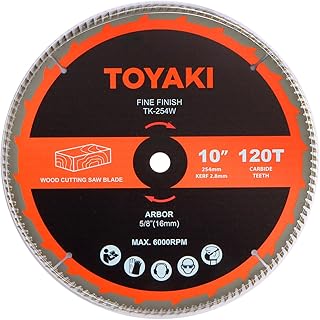
10-Inch 120-Tooth Fine-Finish Woodworking Blade
The highest tooth count here, and it shows on narrow painted profiles where any tearout is visible under a topcoat. Feed slowly — 120 teeth clear chips less aggressively, so rushing causes burning rather than blowout. Confirm the 5/8-inch arbor matches your saw.
LM6300 12-Inch 100T Miter Joint Blade
Purpose-built for miter joints, with geometry tuned for closed, gap-free corners rather than general crosscutting. Note the 1-inch bore, which limits it to saws built for industrial arbors, but the joint quality justifies the specificity.
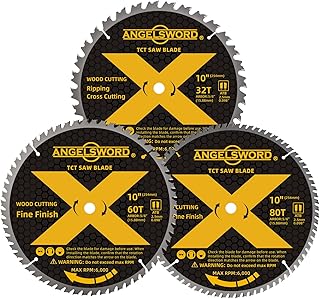
ANGELSWORD 10-Inch 3-Pack (32T / 60T / 80T)
The most sensible entry point if you own one 10-inch saw and use it for everything. The 80T handles moulding, the 60T covers general crosscuts, and the 32T rips framing stock without bogging — a genuinely practical spread for a single-saw shop.
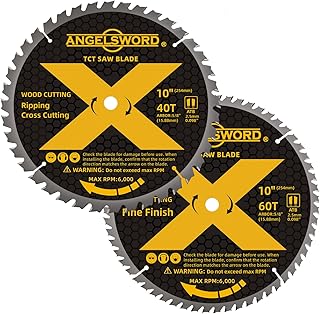
ANGELSWORD 12-Inch 2-Pack (40T / 60T)
A capable general-purpose pairing for 12-inch saws, though 60T is the ceiling here rather than true finish territory. Good value if your trim is stain-grade hardwood at moderate widths; step up to a 100T blade for painted crown.
Frequently Asked Questions
Does more teeth always mean a better moulding cut?
Up to a point. Past roughly 100 teeth on a 10-inch blade, chip clearance becomes the limiting factor, and pushing too fast produces burn marks instead of tearout. Match feed rate to tooth count.
Should I use a backer board for thin trim?
Yes. A sacrificial fence or a scrap piece behind the workpiece supports the fibers at the exit point and dramatically reduces splintering on shoe, base cap, and small coves.
Can one blade handle both plywood and moulding?
An 80T ATB blade is a reasonable compromise for both. If you cut a lot of veneered plywood for shelving, a dedicated high-count blade will preserve the face veneer better than a mid-count crosscut blade.
When should I replace rather than sharpen?
Sharpen quality carbide blades two to three times, then replace. If tips are chipped, the plate is warped, or cuts wander despite a clean arbor, a resharpen will not restore accuracy.
Final Thoughts
For most 12-inch saws cutting painted trim, the DEWALT 100-tooth DWA112100 is the safest buy and the one I’d install first. If you’re on a 10-inch saw and want maximum surface quality, the 120-tooth fine-finish blade delivers it with a slower feed. And for anyone equipping a single saw to do everything from shelf stock to crown, the ANGELSWORD 10-inch 3-pack covers the range without forcing compromises on the finish cuts.