Key takeaways
- Measure the leg, not the bed: Metal frames use everything from 1.5″ round tubing to flat 2″ x 2″ plates. Note the outside dimension and shape of each foot, then confirm the riser’s socket accommodates it — a leg that only sits halfway in is a tipping hazard, not a fit.
- Flat platform vs. cupped socket: Frames with wide, flat glides do better on rectangular block-style risers that spread load across the whole surface. Round tubing needs a recessed cup deep enough to grip the leg laterally.
- Count your contact points: Many metal frames have six or nine legs, including center supports. Buying a single 4-pack leaves the middle of your bed unsupported, which is how mattresses develop a sag right where you sleep.
- Match height to your bins, not your mood: Measure the storage container you actually own, add an inch of clearance, and buy that height. Lifting higher than you need makes the bed harder to get into and reduces stability for no gain.
- Check the base footprint and grip: Steel legs transmit every shift straight down. Look for a wide base with rubber or TPR contact and, on hard floors, verify the material won’t scuff laminate or scratch hardwood over time.
What's inside
Metal bed frames present a riser problem that wooden platform beds simply don’t. Most are built from hollow tubing, stamped corner brackets, or thin steel plates with plastic glides — narrow contact points that concentrate hundreds of pounds onto an area smaller than a coffee mug. Drop that onto a generic plastic cup riser designed for a chunky wooden post and you get one of three outcomes: the leg won’t seat, the riser splits at the seam, or the frame walks across the floor every time someone turns over. Add a center support rail, which nearly every queen and king metal frame relies on, and the fit question gets even trickier.
Getting it right is worth the effort, because a metal frame is the easiest bed in the world to convert into serious vertical storage. Six inches of lift under a queen adds roughly nine cubic feet of usable space — enough for off-season clothing, luggage nested inside luggage, or a rolling drawer system that keeps a studio apartment from feeling like a storage unit. Below, I’ve broken down what actually matters when matching risers to steel legs, then reviewed the options I recommend most often for tube frames, dorm setups, and center-rail support.
As an Amazon Associate we earn from qualifying purchases.


How to Choose a Bed Risers For Metal Frame (2026)
- Measure the leg, not the bed: Metal frames use everything from 1.5″ round tubing to flat 2″ x 2″ plates. Note the outside dimension and shape of each foot, then confirm the riser’s socket accommodates it — a leg that only sits halfway in is a tipping hazard, not a fit.
- Flat platform vs. cupped socket: Frames with wide, flat glides do better on rectangular block-style risers that spread load across the whole surface. Round tubing needs a recessed cup deep enough to grip the leg laterally.
- Count your contact points: Many metal frames have six or nine legs, including center supports. Buying a single 4-pack leaves the middle of your bed unsupported, which is how mattresses develop a sag right where you sleep.
- Match height to your bins, not your mood: Measure the storage container you actually own, add an inch of clearance, and buy that height. Lifting higher than you need makes the bed harder to get into and reduces stability for no gain.
- Check the base footprint and grip: Steel legs transmit every shift straight down. Look for a wide base with rubber or TPR contact and, on hard floors, verify the material won’t scuff laminate or scratch hardwood over time.
The Best Bed Risers For Metal Frame (2026)s Reviewed
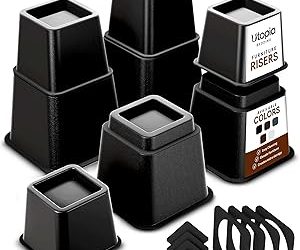
Utopia Bedding Adjustable Bed Risers, 3 & 5 Inch
The most sensible default for a standard metal frame: stackable design gives you 3″ or 5″ without buying twice, and the 1,300 lb rating covers a queen with two adults and a heavy hybrid mattress. The anti-slip base is the real selling point here, since low-profile lifts on tube legs are where most wobble complaints originate.
Oversized 6-Inch Heavy Duty Bed Risers, 4-Pack
These are the ones I point people toward when the frame has broad, flat feet that overhang smaller risers. The extra-wide platform and 6,500 lb capacity make them equally at home under a sofa or desk, and 6″ is the sweet spot for standard 5.5″ underbed storage totes.
IRONWALLS Adjustable Dorm Bed Risers, up to 11″
Four configurable heights — 3″, 5″, 8″, and 11″ — inside one 2.3″ square steel socket, sized specifically for legs between 1.5″ and 2.2″ in diameter. This is the pick for dorm twin XLs and small bedrooms where you want a full drawer unit or bike underneath rather than just flat bins.
Heavy-Duty Rectangular Adjustable Block Risers, 3″ / 4.3″
Rectangular rather than cupped, which makes them uniquely well-suited to flat metal glides and appliance feet that round risers can’t grip. At 4,000 lb capacity with two height settings, they’re the versatile option if you’re also lifting a washer, fridge, or sofa in the same project.
NESAPTO Adjustable Bed Support Legs, 7.3″–11″
Technically replacement legs rather than risers, and that’s exactly why they solve the center-rail problem so cleanly — they thread up and down to meet the support bar precisely instead of hoping a stacked riser lands flush. Ideal for king and queen frames where the middle needs as much attention as the corners.
Frequently Asked Questions
Will risers work with hollow metal legs?
Yes, provided the leg seats fully into the riser’s socket or sits entirely within a flat platform’s footprint. Hollow tubing is stronger in compression than most people assume, but it needs full lateral containment to stay put.
Do I need to lift the center support too?
Absolutely. Any leg touching the floor before the lift must touch the riser after it. Skipping the center rail transfers that load to the perimeter and leads to mattress sag and frame flex.
How high is too high?
Practically, 8″ is the comfortable ceiling for a standard-height metal frame before getting in and out becomes awkward. Beyond that, expect to add a step stool and accept slightly more sway.
Will risers damage my floors?
Quality risers with rubber or TPR bases won’t, but they do concentrate weight. On hardwood or vinyl plank, add felt pads or a thin rug underneath as cheap insurance.
Final Thoughts
For most metal frames, the Utopia adjustable risers deliver the best balance of grip, capacity, and flexibility at 3″ or 5″. If you’re chasing maximum storage volume, the IRONWALLS set climbs to 11″ without sacrificing steel-socket security, while the NESAPTO adjustable support legs remain the cleanest fix for center-rail height on queens and kings.