Key takeaways
- Blade diameter vs. bench reality: A 10-inch saw handles most furniture stock — 1x boards, trim, table aprons — in a chassis you can carry one-handed. Reach for 12-inch only if you’re regularly crosscutting wide panels or 4x posts, and accept the extra weight and depth that comes with it.
- Slide mechanism clearance: Sliding saws need rear rail travel, which pushes the machine forward off the wall. If your work surface backs against a wall, measure the rail extension before you commit, or look at non-sliding compound models that sit flush.
- Single vs. dual bevel: Dual bevel tilts both directions, so you flip the saw head instead of flipping the workpiece — a genuine advantage when you’re cutting crown or long trim in a corridor with no room to maneuver stock.
- Cut-line indication: Shadow-line LED systems project the blade’s actual silhouette and never need calibration. Lasers are fine but drift and require occasional adjustment. Either beats squinting, and both cut down on scrap.
- Dust management and portability: Look at bag or port design honestly, and weigh the saw before buying. Anything over 50 pounds becomes a permanent installation whether you intended that or not.
What's inside
Anyone who has built a picture frame in a one-bedroom apartment knows the real challenge isn’t the cut — it’s the footprint. A miter saw wants a dedicated bench, a clear runway on both sides for long stock, and somewhere to send the dust. Most of us are working on a balcony, in a hallway, or on a folding table that lives behind the couch between projects. So the question shifts from “which saw is most powerful” to “which saw gives me tight 45s without colonizing my living space.”
This guide looks at miter saws through that lens. I’ve weighed cut capacity against physical bulk, judged how well each machine handles being lifted and stowed, and paid attention to the features that actually reduce trial-and-error when you can’t afford to waste material or floor area. Whether you’re mitering trim for built-in shelving or joining frame corners for a small dining table, here’s what earns its keep.
As an Amazon Associate we earn from qualifying purchases.



How to Choose a/an The Best Saw For Cutting Miter Joints Is The (2026)
- Blade diameter vs. bench reality: A 10-inch saw handles most furniture stock — 1x boards, trim, table aprons — in a chassis you can carry one-handed. Reach for 12-inch only if you’re regularly crosscutting wide panels or 4x posts, and accept the extra weight and depth that comes with it.
- Slide mechanism clearance: Sliding saws need rear rail travel, which pushes the machine forward off the wall. If your work surface backs against a wall, measure the rail extension before you commit, or look at non-sliding compound models that sit flush.
- Single vs. dual bevel: Dual bevel tilts both directions, so you flip the saw head instead of flipping the workpiece — a genuine advantage when you’re cutting crown or long trim in a corridor with no room to maneuver stock.
- Cut-line indication: Shadow-line LED systems project the blade’s actual silhouette and never need calibration. Lasers are fine but drift and require occasional adjustment. Either beats squinting, and both cut down on scrap.
- Dust management and portability: Look at bag or port design honestly, and weigh the saw before buying. Anything over 50 pounds becomes a permanent installation whether you intended that or not.
The Best The Best Saw For Cutting Miter Joints Is The (2026)s Reviewed
DEWALT DWS780 12-Inch Double Bevel Sliding Compound
The XPS LED shadow system is the standout here — it casts a true blade outline that stays accurate without adjustment, which makes repeat miters far less fussy. It’s the most capable saw on this list and the least apartment-friendly, so plan a stationary spot for it.
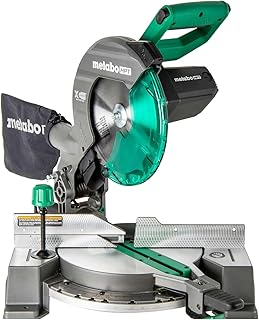
Metabo HPT C10FCG2 10-Inch Single Bevel Compound
My pick for tight quarters. It’s genuinely light, the Xact Cut shadow line gives you a real cut reference at a modest price, and because it doesn’t slide, it sits close to the wall on a narrow bench.
DOVAMAN 10-Inch Sliding Miter Saw
A well-considered package: three TCT blades cover wood, metal, and plastic, dual speeds match the material, and ambidextrous controls help when your workspace forces you to stand on the wrong side. The 13.4-inch crosscut is generous for a 10-inch machine.
DEWALT DWS715 12-Inch Single Bevel Compound
Full 12-inch blade capacity without slide rails means a shallower footprint and less weight than the DWS780. If you cut wide boards but don’t need dual bevel, this is the sensible middle ground.
DOVAMAN 12-Inch Dual-Bevel Sliding Miter Saw
Dual bevel and sliding capacity at an accessible price, with nine positive stops and a laser guide for quick setup. The 4.2 x 13-inch capacity handles furniture-scale stock comfortably.
Frequently Asked Questions
Do I need a sliding saw for furniture miters?
Not usually. Frame corners, table aprons, and trim are narrow enough for a non-sliding compound saw. Sliding capacity matters when you’re crosscutting shelf boards or wide panels.
Why are my miter joints still gapping?
Check the fence for square and the detent plate for accuracy before blaming technique. Most gaps trace back to a stop that reads 45° but sits slightly off, or a workpiece lifting off the fence mid-cut.
Can I use a miter saw indoors?
With a shop vacuum on the dust port and a mat underneath, yes — but expect fine dust to travel. Cut near an open window and clean up promptly if you share the space.
How many teeth should the blade have?
For clean miters in hardwood or plywood, move up to 60–80 teeth. The 36T and 40T blades included with most saws are framing-oriented and will leave visible tearout on visible joinery.
Final Thoughts
If your workspace is tight, the Metabo HPT C10FCG2 delivers accurate miters in the smallest practical package. The DOVAMAN 10-Inch Sliding Miter Saw offers more versatility for mixed materials without a huge jump in size, and if you have a dedicated bench and cut wide stock regularly, the DEWALT DWS780 remains the accuracy benchmark.