Key takeaways
- Pre-filter: Choose a washable or reusable pre-filter to catch larger fur before it loads up the finer HEPA filter. This can reduce maintenance costs and preserve airflow.
- Filtration: Look for a true or H13 HEPA filter for airborne dander and fine particles. Activated carbon is useful when pet odors are a priority.
- Room coverage: Treat advertised square footage as a guide, not a guarantee. A purifier is more useful when its airflow suits the room where your pets spend the most time.
- Placement: Leave clearance around the intake and outlet, and avoid hiding the unit behind a chair or curtain. A narrow console, open shelf area, or floor corner may work better.
- Controls: Auto modes, air-quality displays, app control, and sleep settings are helpful, but they should support—not replace—regular vacuuming and filter checks.
What's inside
Best Air Purifier Pet Hair (2026) starts with a deceptively difficult problem: fur lands on furniture, but the smaller particles—dander, fine dust, tracked-in grit, and odor molecules—stay suspended in the air. In a compact home, one purifier also has to work around sofas, shelves, litter areas, and the constant traffic of people and pets.
This guide focuses on practical performance in real rooms rather than headline coverage alone. We look at washable pre-filters, HEPA filtration, odor control, noise, monitoring features, and how easily each machine can fit into a small-space cleaning routine. The best choice depends on your room size, pet’s shedding level, and where the purifier can sit without becoming another obstacle.
As an Amazon Associate we earn from qualifying purchases.


How to Choose a/an Air Purifier Pet Hair (2026)
- Pre-filter: Choose a washable or reusable pre-filter to catch larger fur before it loads up the finer HEPA filter. This can reduce maintenance costs and preserve airflow.
- Filtration: Look for a true or H13 HEPA filter for airborne dander and fine particles. Activated carbon is useful when pet odors are a priority.
- Room coverage: Treat advertised square footage as a guide, not a guarantee. A purifier is more useful when its airflow suits the room where your pets spend the most time.
- Placement: Leave clearance around the intake and outlet, and avoid hiding the unit behind a chair or curtain. A narrow console, open shelf area, or floor corner may work better.
- Controls: Auto modes, air-quality displays, app control, and sleep settings are helpful, but they should support—not replace—regular vacuuming and filter checks.
The Best Air Purifier Pet Hair (2026)s Reviewed
uahpet Pet Air Purifier
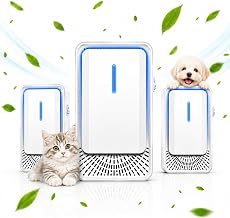
The uahpet model is designed for larger spaces, with a stated coverage area of up to 2,100 square feet, an H13 HEPA filter, washable pre-filter, and air-quality monitor. It is a strong fit for open-plan homes where pet activity spreads between living, dining, and kitchen zones, although its larger footprint deserves deliberate placement.
LEVOIT Vital 100S-P
The LEVOIT Vital 100S-P is a well-rounded option for bedrooms, dorms, and living rooms, combining a washable pre-filter with quiet sleep operation and a smart monitor. Its pet-oriented design makes sense for homes where the purifier needs to run frequently without competing with conversation, television, or nighttime rest.
KNKA APH4000
KNKA’s APH4000 emphasizes broad coverage, an AQI display, pet mode, and a washable pre-filter. The clear status display is particularly useful in a small home because it gives you a quick read on changing air conditions without requiring an app, while sleep mode helps keep the machine unobtrusive.
Pet Air Purifier P339
The P339 is aimed at large homes and combines a seven-stage H13 HEPA and activated-carbon system with app control and a stated zero-ozone design. Its emphasis on floating hair, dander, smoke, and odors makes it appealing for heavier-duty use, but measure carefully before committing: a high-capacity purifier can be visually dominant in a compact room.
MOOKA B-D02L
The MOOKA B-D02L is a straightforward large-room purifier with H13 True HEPA filtration, odor reduction, a washable filter component, and a night light. It suits buyers who want a simple machine for a bedroom or living area, though the night light may be better switched off if you prefer a completely dark sleeping space.
Frequently Asked Questions
Do air purifiers remove pet hair from floors and furniture?
They can capture some lightweight hair as it becomes airborne, but they are not a substitute for a vacuum, upholstery tool, or lint brush. Their main advantage is reducing airborne dander and fine particles that ordinary cleaning may disturb.
Where should I place a pet air purifier?
Place it near the room where your pet spends the most time, with open space around the air intake and outlet. Keep it away from blocked corners, thick curtains, and areas where water bowls or litter can spill into the unit.
How often should I clean the pre-filter?
Check it every one to four weeks, depending on shedding and household dust. A visibly coated pre-filter restricts airflow, so homes with multiple pets may need cleaning more often than the manufacturer’s standard schedule.
Is a purifier with an ionizer necessary?
No. HEPA filtration and activated carbon can address airborne particles and odors without requiring an ionizing feature. If a model includes an ionizer, confirm how it operates and whether it can be disabled; zero-ozone designs are a sensible preference.
Final Thoughts
For broad coverage, the uahpet Pet Air Purifier is a compelling choice; the LEVOIT Vital 100S-P is especially practical for quieter everyday use, while the KNKA APH4000 offers useful at-a-glance monitoring. Whichever you choose, pair it with consistent vacuuming and sensible placement for the most noticeable improvement.