Key takeaways
- Measure your vertical budget first: Add mattress height to your frame or platform height, then check that the top surface lands between 24 and 27 inches off the floor. A 14-inch mattress on a 12-inch frame puts you at chest height and makes under-bed storage bins impossible to reach.
- Zoned support over uniform firmness: Seven-zone constructions vary coil tension across the mattress so your hips sink slightly while your lumbar region stays lifted. That’s what separates genuine orthopedic support from a mattress that simply feels hard.
- Check motion isolation if the bed does double duty: In small spaces the bed becomes a couch, a desk, and a reading chair. Pocketed coils with individual encasement keep one person’s movement from broadcasting across the whole surface.
- Confirm the box dimensions, not just the mattress: A compressed queen typically ships in a carton around 20 inches square by 45 inches tall. Measure your narrowest turn — landing, doorway, elevator — before you order.
- Prioritize certifications and trial length: CertiPUR-US certification and fiberglass-free construction matter more in a small room where you’re sharing air with the mattress all night. A 365-night trial gives you a full seasonal cycle to judge it.
What's inside
In a studio apartment or a compact bedroom, a mattress isn’t just a mattress — it’s the largest object you own, and it dictates how the rest of the room breathes. Firm models add a wrinkle most buyers don’t anticipate: they tend to be built taller, with thicker coil units and denser support layers, which means a 14-inch profile can swallow the visual clearance under a window or leave your nightstand sitting awkwardly below the mattress line. Add a bed-in-a-box delivery to a fourth-floor walkup and the logistics get real fast.
This guide looks at firm queen mattresses through that lens. Alongside the usual support and pressure-relief criteria, I’ve weighed profile height, how each model handles motion transfer in rooms where the bed doubles as seating, and whether the compressed shipping box can actually round a tight stairwell. Every pick below is a firm or medium-firm hybrid built for back and lumbar support, and each one has been assessed for how it lives in a room that doesn’t have square footage to spare.
As an Amazon Associate we earn from qualifying purchases.


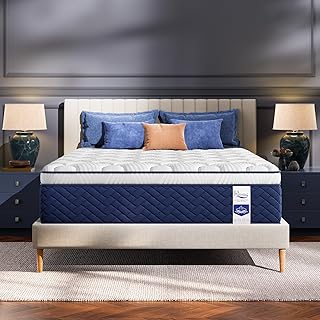
How to Choose a Firm Mattress Ratings (2026)
- Measure your vertical budget first: Add mattress height to your frame or platform height, then check that the top surface lands between 24 and 27 inches off the floor. A 14-inch mattress on a 12-inch frame puts you at chest height and makes under-bed storage bins impossible to reach.
- Zoned support over uniform firmness: Seven-zone constructions vary coil tension across the mattress so your hips sink slightly while your lumbar region stays lifted. That’s what separates genuine orthopedic support from a mattress that simply feels hard.
- Check motion isolation if the bed does double duty: In small spaces the bed becomes a couch, a desk, and a reading chair. Pocketed coils with individual encasement keep one person’s movement from broadcasting across the whole surface.
- Confirm the box dimensions, not just the mattress: A compressed queen typically ships in a carton around 20 inches square by 45 inches tall. Measure your narrowest turn — landing, doorway, elevator — before you order.
- Prioritize certifications and trial length: CertiPUR-US certification and fiberglass-free construction matter more in a small room where you’re sharing air with the mattress all night. A 365-night trial gives you a full seasonal cycle to judge it.
The Best Firm Mattress Ratings (2026)s Reviewed
Firm Queen Mattress 12 Inch Hybrid
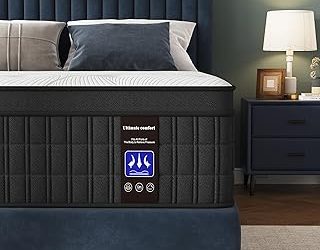
At 12 inches, this is the most space-conscious pick here — it pairs cleanly with a low platform frame without pushing your sightline above the windowsill. The extra lumbar and hip reinforcement delivers the pressure relief you’d expect from a taller build, which makes it a genuinely rare combination.
BedStory Firm Queen 14 Inch Hybrid
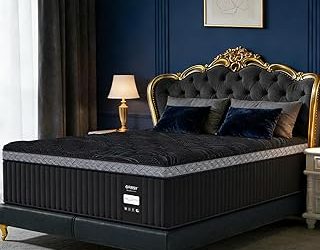
The seven-zone coil system here is the standout: support tension shifts along the length of the mattress rather than presenting one flat plane of resistance. Budget for the height, though — on anything but a low-profile foundation, 14 inches will read as tall in a small room.
BedStory 14 Inch Firm Queen, Made in USA
Zoned lumbar support plus domestic manufacturing and CertiPUR-US certification make this the reassurance pick for anyone sensitive to off-gassing in a closed, compact bedroom. The 365-night trial and ten-year warranty back it up properly.
BedStory Firm Queen 12 Inch Orthopedic
Low motion transfer is the headline feature, and it earns that billing — this is the one I’d recommend for couples in a room where the bed is only a few feet from the door. The orthopedic lumbar structure keeps the spine neutral without the bulk of a taller profile.
BedStory Firm 13 Inch Hybrid
A sensible middle path: hotel-collection surface comfort layered over zoned lumbar support, at a height that splits the difference between the 12- and 14-inch options. Good choice if you want a plush top feel without losing firm underlying support.
Frequently Asked Questions
Does a thicker mattress mean better support?
No. Support comes from coil gauge, zoning, and the density of the transition layers, not total height. A well-engineered 12-inch hybrid can outperform a 14-inch model built with thicker but softer comfort foam.
How long should I wait before judging a new firm mattress?
Give it three to four weeks. Your body needs time to adjust, and the mattress needs time to fully decompress and settle. This is exactly why a 365-night trial is worth having.
Can I use a firm mattress in a bunk or loft bed?
Check the manufacturer’s maximum mattress thickness first — most loft and bunk frames cap out at 6 to 8 inches for safety-rail clearance. Most models here are too thick for that application.
Do firm mattresses work with under-bed storage?
They can, but total height is the constraint. A 12-inch mattress on a 14-inch storage platform gives you usable clearance while keeping the sleep surface at a reasonable height; go taller on both and getting in becomes a climb.
Final Thoughts
For tight rooms, the 12-inch Firm Queen Hybrid is the smartest overall fit — full lumbar support without the vertical bulk. Couples sharing a compact space should look at the BedStory 12-inch Orthopedic for its motion isolation, while the BedStory 14-inch Made in USA model is the one to choose if certification, warranty coverage, and zoned support outweigh a couple of extra inches of height.