Key takeaways
- Footprint over tank size: Measure the surface you can actually spare on a dresser or nightstand, then subtract two inches on every side for airflow. A tall, narrow 3L tank fits a nursery better than a wide 6L unit, and it holds nearly as much water.
- Top-fill design: Bottom-fill tanks have to be unplugged, flipped, and carried to a sink. Top-fill models let you pour from a pitcher in place, which matters when the unit is wedged between a lamp and a baby monitor.
- Verified noise floor: Look for a published decibel rating in the low-to-mid 20s. Anything louder competes with a white noise machine, and in a small room you are sitting much closer to the source than the spec sheet assumes.
- Clearance above and below: Cool mist needs vertical room to disperse. Keep at least a foot of open air above the nozzle, set the unit on a hard tray rather than fabric or wood, and angle a 360-degree nozzle away from walls and crib bedding.
- Cleanable geometry: Wide tank openings and few internal crevices are the difference between a two-minute rinse and a chore you skip. Skip units that need a specialized brush you will lose by February.
What's inside
A nursery is usually the smallest room in the house, and it is already carrying a crib, a dresser, a diaper station, and a rocking chair that nobody wants to give up. Then dry winter air shows up, the pediatrician mentions a cool mist humidifier, and suddenly you are hunting for square footage that does not exist. The instinct is to grab the biggest tank you can find, but in a room this tight, a bulky unit ends up on the floor where it soaks the rug, or crammed onto a shelf where the mist plume hits the underside of a cabinet instead of the air your baby is breathing.
This guide approaches infant-room humidifiers the way I approach any small-space problem: footprint first, then access, then upkeep. Below you will find the models worth considering in 2026, evaluated on how little surface area they claim, whether you can refill them without hauling the whole unit to the bathroom, and how easily they come apart for the weekly cleaning that actually keeps them safe to run near a sleeping infant.
As an Amazon Associate we earn from qualifying purchases.



How to Choose a Humidifier For Infants Room (2026)
- Footprint over tank size: Measure the surface you can actually spare on a dresser or nightstand, then subtract two inches on every side for airflow. A tall, narrow 3L tank fits a nursery better than a wide 6L unit, and it holds nearly as much water.
- Top-fill design: Bottom-fill tanks have to be unplugged, flipped, and carried to a sink. Top-fill models let you pour from a pitcher in place, which matters when the unit is wedged between a lamp and a baby monitor.
- Verified noise floor: Look for a published decibel rating in the low-to-mid 20s. Anything louder competes with a white noise machine, and in a small room you are sitting much closer to the source than the spec sheet assumes.
- Clearance above and below: Cool mist needs vertical room to disperse. Keep at least a foot of open air above the nozzle, set the unit on a hard tray rather than fabric or wood, and angle a 360-degree nozzle away from walls and crib bedding.
- Cleanable geometry: Wide tank openings and few internal crevices are the difference between a two-minute rinse and a chore you skip. Skip units that need a specialized brush you will lose by February.
The Best Humidifier For Infants Room (2026) Reviewed
Clarston 2L Cool Mist Humidifier
At 2L with a 25-hour runtime and a 24dB rating, this is the pick for genuinely cramped nurseries where a dresser corner is all you have. The 360-degree nozzle lets you redirect mist away from a nearby wall, and the built-in nightlight replaces a second device you would otherwise need to find room for.
Homvana 3.6L Top-Fill Cool Mist Humidifier
The 3.6L tank stretches to roughly four nights between refills, which cuts down on trips into the room during a sleep-training stretch. Its 23dB output is the quietest here, and the 2-in-1 diffuser function is best left unused while an infant is in the room.
Levoit 2.5L Top Fill Humidifier
Levoit’s 2.5L unit strikes the most sensible balance of capacity and countertop real estate, and the auto shut-off is a meaningful safeguard when the tank empties at 4 a.m. Refilling and cleaning both happen from the top, so it can stay parked where you set it.
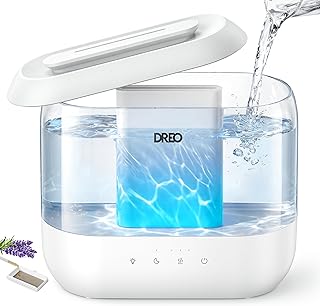
DREO 3L Humidifier, New Edition
Precise humidity control is the standout feature: you set a target percentage and the unit holds it rather than running until dry, which prevents the over-humidified, clammy feeling small rooms are prone to. Thirty hours of runtime at 26dB makes it a strong all-around nursery choice.
DREO 4L HM311 Humidifier
If your nursery is on the larger end or you want to refill only every other day, the 36-hour HM311 delivers the longest runtime on this list at a still-quiet 28dB. It does claim more surface area, so confirm your dresser can spare it before committing.
Frequently Asked Questions
Where should the humidifier go in a small nursery?
On a stable, hard surface two to three feet off the floor, at least three feet from the crib, with the nozzle pointed toward open space. Keep the cord run behind furniture and out of reach.
Cool mist or warm mist for an infant?
Cool mist, consistently. Warm mist units heat water and pose a burn risk in a room where a toddler will eventually be pulling up on furniture.
How often does it need cleaning?
Rinse and dry the tank daily, and descale with white vinegar weekly. Mineral buildup in a small enclosed room becomes a respiratory issue faster than in an open living space.
Do I need a hygrometer?
Yes, unless your unit has built-in humidity control. Aim for 40 to 50 percent; small rooms swing past that quickly.
Final Thoughts
For most infant rooms, the Levoit 2.5L is the easiest recommendation, pairing a modest footprint with auto shut-off and painless top-fill maintenance. Choose the DREO 3L New Edition if you want set-and-forget humidity control, or the Clarston 2L if every square inch of your nursery is already committed.