Key takeaways
- Wood character: Decide whether you want a uniform farmhouse finish, visible grain, a live edge, or a dramatic burl pattern. Natural variation can be the centerpiece of a small room, but it also attracts more visual attention.
- Tabletop thickness: A thick top looks substantial and works well with deep sofas, while a slimmer profile keeps a compact room feeling open. Check the listed dimensions rather than judging scale from product photos.
- Footprint: Leave a comfortable route between the table and surrounding seating. Rectangular tables suit sofas well, but rounded corners and narrower depths are especially useful in apartments and busy walkways.
- Storage needs: A lower shelf can hold books, baskets, and remotes without requiring another storage unit. Keep the shelf visually tidy, since open storage becomes part of the room’s decor.
- Surface care: Wood tables generally benefit from coasters, prompt spill cleanup, and protection from excessive heat or moisture. Live-edge and highly figured surfaces may need more attentive care than a consistent finished top.
What's inside
Choosing a coffee table is rarely just a matter of liking the finish. In a small living room, the wrong table can crowd walking paths, overwhelm a sofa, or add storage you cannot realistically use. Wood also varies widely in character, durability, edge shape, and visual weight, so a beautiful photo does not always translate into a practical everyday piece.
This guide focuses on the details that matter most in compact homes: tabletop thickness, footprint, storage, leg clearance, surface character, and how each design works around a sofa. The recommendations below include affiliate-linked products, but the advice is based on fit, function, and material appeal rather than appearance alone.
As an Amazon Associate we earn from qualifying purchases.


How to Choose a/an Wood For A Coffee Table (2026)
- Wood character: Decide whether you want a uniform farmhouse finish, visible grain, a live edge, or a dramatic burl pattern. Natural variation can be the centerpiece of a small room, but it also attracts more visual attention.
- Tabletop thickness: A thick top looks substantial and works well with deep sofas, while a slimmer profile keeps a compact room feeling open. Check the listed dimensions rather than judging scale from product photos.
- Footprint: Leave a comfortable route between the table and surrounding seating. Rectangular tables suit sofas well, but rounded corners and narrower depths are especially useful in apartments and busy walkways.
- Storage needs: A lower shelf can hold books, baskets, and remotes without requiring another storage unit. Keep the shelf visually tidy, since open storage becomes part of the room’s decor.
- Surface care: Wood tables generally benefit from coasters, prompt spill cleanup, and protection from excessive heat or moisture. Live-edge and highly figured surfaces may need more attentive care than a consistent finished top.
The Best Wood For A Coffee Table (2026)s Reviewed
47-Inch Farmhouse Wooden Coffee Table
This dark-brown, solid-wood farmhouse table offers a generous rectangular surface without adding another bulky cabinet to the room. Its two-tier design is particularly useful in small spaces because the lower shelf creates a home for books and baskets while keeping the tabletop available for daily use.
Natural Live Edge Coffee Table
A live-edge design brings organic shape and natural variation to a living room, making it a strong choice when you want one distinctive piece rather than several decorative accents. Measure carefully around the irregular edge, since its usable depth may vary from one section of the table to another.
WELLAND Live Edge Cedar Coffee Table
The WELLAND table pairs a live-edge cedar tabletop with black hairpin legs for a lighter, more contemporary silhouette. Its relatively compact dimensions make it appealing beside a smaller sofa or in a conversation area where a full-size center table would restrict movement.
Rustic Live-Edge Solid Wood Coffee Table
With a notably thick tabletop and farmhouse styling, this design has the visual weight to anchor a large sofa or a room with rustic furnishings. It is best suited to shoppers who want the table to feel substantial; in a tight room, confirm that the deeper profile will not narrow the main walkway.
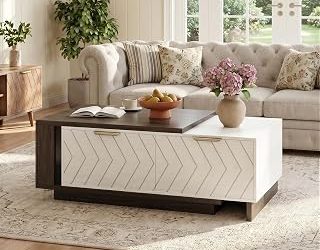
47.24-Inch Rounded-Corner Wood Coffee Table
This rectangular table combines a natural-wood look with rounded corners, a practical detail for apartments and homes where people move around furniture frequently. The thick top gives it a sturdy, grounded appearance, while the metal legs add contrast and leave the floor area relatively open.
Frequently Asked Questions
What is the best wood for a coffee table?
The best choice depends on how you use the table and the look you want. A consistent finished wood style is easy to coordinate, while cedar, live-edge, and burl-inspired designs offer more visible character and become stronger focal points.
Is a live-edge coffee table practical for a small living room?
Yes, provided you measure the widest points and account for the uneven edge. Live-edge tables can make a small room feel more individual, but their irregular outline may provide less predictable space for trays, laptops, or children’s activities.
How much space should be left around a coffee table?
Aim for roughly 14 to 18 inches between the table and sofa when possible, while preserving a clear route around the furniture. In a very small room, prioritize an unobstructed walking path over maximizing tabletop size.
Are thick wood coffee tables better?
Not automatically. A thick top can look durable and substantial, but it may feel visually heavy or reduce legroom in a compact space. Balance thickness with the table’s length, depth, leg design, and the scale of your sofa.
Final Thoughts
For flexible apartment storage, the 47-Inch Farmhouse Wooden Coffee Table is a practical starting point. The WELLAND Live Edge Cedar Coffee Table suits smaller rooms that need an airy, handcrafted accent, while the 47.24-Inch Rounded-Corner Wood Coffee Table offers a useful middle ground between substantial styling and safer, easier circulation.