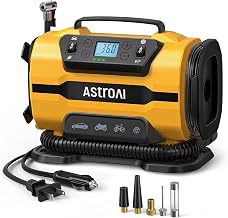
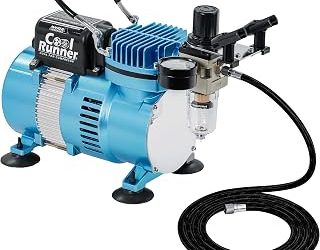
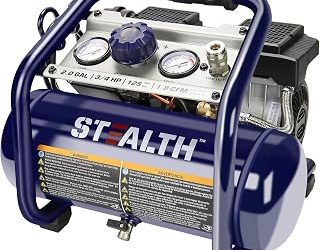
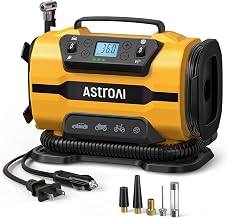
Key takeaways
- Tank size: A 1.6- to 2.4-gallon tank suits brad nailers, staplers, inflation, and short bursts of light-duty work. Choose roughly 9.5 to 20 gallons for spray tools, impact tools, or longer sessions.
- Air delivery: Compare SCFM at 90 PSI rather than peak PSI alone. Higher SCFM generally means quicker recovery and a better chance of keeping air-hungry tools running.
- Noise: Ultra-quiet models around 60 to 70 dB are far more comfortable in a garage attached to the house. Even so, hearing protection remains sensible during extended use.
- Footprint: A vertical tank and built-in wheels make better use of floor space than a wide horizontal design. Check doorway clearance and storage height before ordering.
- Power and maintenance: Oil-free pumps simplify ownership and avoid oil contamination near furniture finishes. Confirm that your outlet and extension-cord setup can support the compressor without voltage drop.
What's inside
Choosing an air compressor for a home workshop is less straightforward than it looks. Tank size, noise, recovery speed, outlet requirements, and storage footprint all affect whether a machine feels like a useful tool or an awkward obstacle. For furniture projects, the wrong compressor can crowd a small garage, interrupt conversations, or struggle with a nailer when you need consistent pressure.
This guide focuses on practical 110-volt models that can plug into a typical household outlet. I’ve compared compact compressors for trim work and inflation with larger vertical units for spray finishing and repeated tool use, giving special attention to noise, portability, duty cycle, and how easily each model can live in a limited workspace.
As an Amazon Associate we earn from qualifying purchases.



How to Choose a/an 110 Volt Air Compressor (2026)
- Tank size: A 1.6- to 2.4-gallon tank suits brad nailers, staplers, inflation, and short bursts of light-duty work. Choose roughly 9.5 to 20 gallons for spray tools, impact tools, or longer sessions.
- Air delivery: Compare SCFM at 90 PSI rather than peak PSI alone. Higher SCFM generally means quicker recovery and a better chance of keeping air-hungry tools running.
- Noise: Ultra-quiet models around 60 to 70 dB are far more comfortable in a garage attached to the house. Even so, hearing protection remains sensible during extended use.
- Footprint: A vertical tank and built-in wheels make better use of floor space than a wide horizontal design. Check doorway clearance and storage height before ordering.
- Power and maintenance: Oil-free pumps simplify ownership and avoid oil contamination near furniture finishes. Confirm that your outlet and extension-cord setup can support the compressor without voltage drop.
The Best 110 Volt Air Compressor (2026)s Reviewed
MZB 2.4-Gallon Ultra-Quiet Compressor
This compact MZB model is a sensible match for small furniture shops, apartment garages, and occasional repair work. Its 2.4-gallon steel tank, oil-free pump, 115 PSI maximum, and reported 65 dB noise level provide a useful balance of capacity and livability, while the relatively small footprint makes it easy to park beneath a bench.
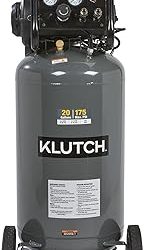
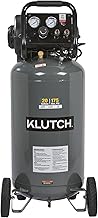
Klutch 20-Gallon Vertical Air Compressor
The Klutch is the strongest choice here for a dedicated workshop that has room for a taller machine. Its 20-gallon vertical tank, 175 PSI maximum, 4.2 SCFM at 90 PSI, wheels, and 75% duty cycle are better suited to repeated shop-air tasks than the compact options. It is still 120-volt compatible, but plan a permanent storage spot because the tank is much less convenient to lift or shelve.
Ultra-Quiet 2.4-Gallon 1.5 HP Compressor
With a claimed 60 dB operating level and 6.71 CFM at 115 PSI, this 2.4-gallon model is appealing when low noise and quick bursts of air matter most. It fits inflation, nailing, light spray work, and trim projects, though its small tank means users may hear the motor cycle more often during continuous spraying.
California Air Tools 20020AD
The California Air Tools 20020AD is a polished option for makers who need more reserve air without stepping up to a commercial-size installation. Its 20-gallon tank, 2 HP oil-free design, wheels, and automatic drain valve reduce routine fuss, while the 70 dB rating is comparatively considerate for a larger compressor. It is particularly attractive for furniture finishing and pneumatic tools that demand steadier output.
MZB 1.6-Gallon Ultra-Quiet Compressor
This smaller MZB is the space-saving pick for quick jobs rather than all-day production. The 1.6-gallon tank and 115 PSI maximum are appropriate for brad nailing, upholstery work, tire inflation, and occasional cleaning, and its oil-free construction keeps maintenance simple. Choose it when cabinet space matters more than long recovery intervals.
Frequently Asked Questions
Can a 110-volt compressor run from a normal household outlet?
Most models designed for 110 or 120 volts are intended for a standard household circuit, but confirm the manufacturer’s electrical requirements before plugging in. Avoid sharing a heavily loaded circuit, and use a properly rated cord if one is necessary.
What tank size is best for furniture making?
A small 1.6- to 2.4-gallon tank is generally enough for brad nailers, pin nailers, and staplers. If you plan to spray finishes or operate tools continuously, a 9.5- or 20-gallon tank will reduce cycling and provide a smoother workflow.
Are quiet air compressors worth the extra cost?
Often, yes. A quieter compressor is easier to use in a home workshop and less disruptive when the space shares walls with living areas. Noise ratings are useful for comparison, but placement, room acoustics, and surface vibration also affect the experience.
Does an oil-free compressor need maintenance?
Oil-free pumps do not require oil changes, but they still need care. Drain moisture from the tank as directed, keep intake filters clean, inspect hoses and fittings, and follow the manual’s guidance for automatic drains and storage.
Final Thoughts
For most compact furniture workshops, the MZB 2.4-Gallon model is a well-rounded starting point, while the ultra-quiet 2.4-gallon compressor is compelling when noise and faster recovery are priorities. If your projects involve extended spray work or multiple pneumatic tools, the California Air Tools 20020AD or Klutch 20-Gallon compressor offers the reserve capacity a smaller machine cannot.