Key takeaways
- Tooth count: Blades with 80 to 100 teeth generally produce cleaner crosscuts in trim, plywood, and furniture panels, while lower tooth counts remove material faster.
- Blade purpose: Choose a crosscut or fine-finish blade for short cuts across the grain, and a general-purpose or ripping blade when cutting along the grain is also part of the job.
- Kerf: Thin-kerf blades require less power and waste less material, which is useful for compact saws, smaller workspaces, and careful stock planning.
- Arbor compatibility: Confirm that the blade’s arbor matches your miter saw—many 12-inch models use a 1-inch arbor, but checking the manual prevents a frustrating return.
- Material and finish: Carbide teeth are well suited to repeated furniture work. For painted, veneered, or highly visible edges, prioritize a blade designed for a clean finish.
What's inside
Choosing a 12-inch miter saw blade can feel surprisingly complicated. Tooth count, kerf, arbor size, cutting direction, and finish quality all affect the result—and the wrong blade can leave furniture parts splintered, rough, or difficult to fit together. For small-space workshops, where one saw often handles every project, versatility matters just as much as precision.
This guide to the Best 12 Blade For Miter Saw (2026) focuses on practical choices for home furniture work. It compares fine-finish, general-purpose, ripping, and crosscutting options so you can match a blade to your materials, workspace, and preferred level of surface quality without overbuying.
As an Amazon Associate we earn from qualifying purchases.



How to Choose a/an 12 Blade For Miter Saw (2026)
- Tooth count: Blades with 80 to 100 teeth generally produce cleaner crosscuts in trim, plywood, and furniture panels, while lower tooth counts remove material faster.
- Blade purpose: Choose a crosscut or fine-finish blade for short cuts across the grain, and a general-purpose or ripping blade when cutting along the grain is also part of the job.
- Kerf: Thin-kerf blades require less power and waste less material, which is useful for compact saws, smaller workspaces, and careful stock planning.
- Arbor compatibility: Confirm that the blade’s arbor matches your miter saw—many 12-inch models use a 1-inch arbor, but checking the manual prevents a frustrating return.
- Material and finish: Carbide teeth are well suited to repeated furniture work. For painted, veneered, or highly visible edges, prioritize a blade designed for a clean finish.
The Best 12 Blade For Miter Saw (2026)s Reviewed
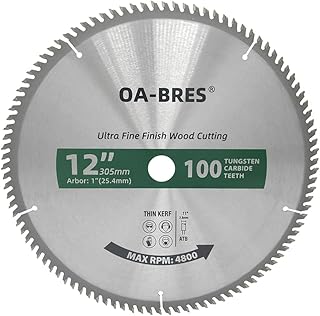
12-Inch 100-Tooth ATB TCT Ultra Fine Finish Blade
This 100-tooth blade is aimed at highly controlled cuts in wood, making it a sensible option for furniture components where tear-out would be especially noticeable. Its 1-inch arbor suits many 12-inch miter saws, but verify compatibility before ordering.
FOXBC 12-Inch 100-Tooth Ultimate Finish Blade
The FOXBC 100-tooth blade is designed for polished-looking wood cuts and is particularly appealing for trim, face frames, and finished panels. It favors edge quality over fast stock removal, so it is best used when a neat cut matters more than speed.
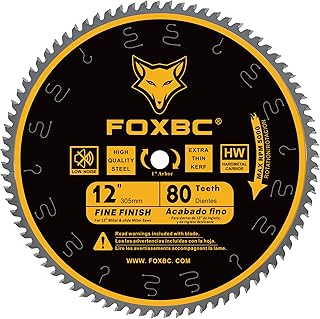
FOXBC 12-Inch 80-Tooth Fine Finish Blade
With fewer teeth than the 100-tooth version, this FOXBC blade offers a useful middle ground between cutting efficiency and finish quality. It is a practical choice for makers who want one dedicated crosscut blade for everyday furniture projects.
DEWALT 12-Inch 100-Tooth Fine Finish Blade
The DEWALT DWA112100 uses 100 carbide teeth and is built around clean, fine-finish cuts in wood. Its ultra-sharp tooth design makes it a strong candidate for visible workpieces, especially when your miter saw doubles as the primary cutting tool in a compact shop.
ANGELSWORD 12-Inch 40T/60T Two-Pack
This two-blade set covers more tasks than a single-purpose finish blade: the 40-tooth option is suited to faster ripping and crosscutting, while the 60-tooth blade targets cleaner wood cuts. It is a space-conscious way to keep two cutting profiles available without storing a large blade collection.
Frequently Asked Questions
Is a 100-tooth blade best for every miter saw project?
No. A 100-tooth blade can provide a very clean finish, but it removes material more slowly and may not be the best choice for long rip cuts or rough construction lumber. Keep a more general-purpose blade available for faster work.
Can I use a miter saw blade for ripping?
Some blades are designed for both ripping and crosscutting, but a miter saw is primarily intended for crosscuts and angled cuts. For frequent ripping, use a blade specifically labeled for that purpose and follow your saw manufacturer’s instructions.
What does ATB mean on a saw blade?
ATB stands for alternate top bevel, a tooth arrangement commonly used for cutting wood across the grain. It helps create clean shearing action and is widely used on fine-finish miter saw blades.
When should I replace a miter saw blade?
Replace or sharpen the blade when cuts become rough despite correct setup, burning appears repeatedly, the saw requires unusual force, or teeth are chipped or missing. Cleaning built-up resin can restore performance, but damaged carbide teeth should not be ignored.
Final Thoughts
For the cleanest furniture cuts, the DEWALT DWA112100 and the FOXBC 100-tooth blade are compelling fine-finish choices. If you want more flexibility in a small workshop, the ANGELSWORD two-pack provides separate profiles for faster cutting and cleaner finishing without filling your storage area with extra blades.