Key takeaways
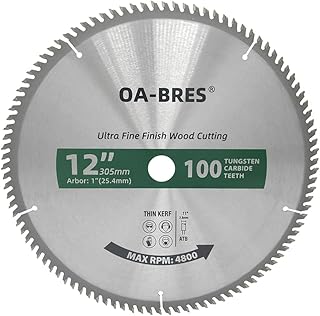
- Tooth count: Blades with 80 to 100 teeth generally produce smoother crosscuts in trim, plywood, and furniture parts, while lower counts remove material faster.
- Tooth geometry: An alternating-top-bevel, or ATB, pattern is a versatile choice for clean cuts across wood grain and works well on most miter saws.
- Kerf width: Thin-kerf blades waste less material and can reduce strain on the saw, but they may flex more if pushed aggressively through dense stock.
- Arbor fit: Confirm that the blade has the correct 1-inch arbor for your saw and that its diameter and maximum RPM meet the manufacturer’s specifications.
- Project material: Choose a fine-finish blade for hardwood, veneer, and painted trim; a general-purpose blade is more suitable when speed matters as much as appearance.
What's inside
A 12-inch miter saw can make remarkably clean cuts, but the wrong blade can leave tear-out, burn marks, noisy operation, or a stack of boards that no longer fits neatly in a small workshop. Tooth count, kerf width, carbide quality, and the type of wood being cut all affect the result, so choosing by diameter alone is a costly shortcut.
This guide compares leading 12-inch blades for furniture projects, trim work, shelving, and general home improvement. The focus is practical: finish quality, cutting control, material compatibility, and how easily each blade earns its place in a compact tool setup.
As an Amazon Associate we earn from qualifying purchases.


How to Choose a 12in Miter Saw Blade (2026)
- Tooth count: Blades with 80 to 100 teeth generally produce smoother crosscuts in trim, plywood, and furniture parts, while lower counts remove material faster.
- Tooth geometry: An alternating-top-bevel, or ATB, pattern is a versatile choice for clean cuts across wood grain and works well on most miter saws.
- Kerf width: Thin-kerf blades waste less material and can reduce strain on the saw, but they may flex more if pushed aggressively through dense stock.
- Arbor fit: Confirm that the blade has the correct 1-inch arbor for your saw and that its diameter and maximum RPM meet the manufacturer’s specifications.
- Project material: Choose a fine-finish blade for hardwood, veneer, and painted trim; a general-purpose blade is more suitable when speed matters as much as appearance.
The Best 12in Miter Saw Blades (2026) Reviewed
DEWALT DWA112100 100-Tooth Fine-Finish Blade
The DEWALT DWA112100 is a strong choice when cut quality takes priority, especially for molding, cabinet components, and furniture joinery. Its 100-tooth layout is designed for smooth crosscuts, though the dense tooth pattern rewards a steady feed rate rather than hurried cutting.
Diablo D1280X 80-Tooth Fine-Finish Blade
The Diablo D1280X balances a refined finish with a little more cutting speed than many 100-tooth options. Its high-density carbide construction makes it a dependable everyday blade for hardwoods, softwoods, plywood, and carefully sized trim.
WEN BL1280 80-Tooth Fine-Finish Blade
The WEN BL1280 is an appealing option for home workshops that need clean results without reserving a blade for only occasional detail work. Its 80-tooth design suits both miter and table saw use, making it practical when storage space is limited and one blade must serve several roles.
FOXBC 100-Tooth Ultimate Polished-Finish Blade
FOXBC’s 100-tooth blade is aimed at highly polished cuts in wood, making it a sensible match for visible furniture edges and delicate trim. It is best used with controlled, moderate passes; the fine tooth spacing favors finish quality over rapid stock removal.
Freud LU86R012 48-Tooth Thin-Kerf Blade
The Freud LU86R012 takes a different approach from the finer blades here, using 48 teeth and a thin kerf for efficient general-purpose cutting. It is the better fit for users who process wider boards or framing stock and want less resistance, while still needing respectable crosscut performance.
Frequently Asked Questions
Is a 100-tooth blade better for every project?
No. A 100-tooth blade can leave an exceptionally clean crosscut, but it cuts more slowly and may struggle with thick stock if the feed rate is too aggressive. For routine construction cuts, an 80-tooth or 48-tooth blade can be more efficient.
Can a 12-inch miter saw blade cut plywood?
Yes, provided the blade is rated for wood and installed on a compatible saw. A high-tooth-count ATB blade usually minimizes splintering, while supporting the sheet and cutting with the finished face positioned correctly can further improve the edge.
How often should a miter saw blade be replaced?
Replace or sharpen it when cuts become noticeably rough, the saw requires unusual pressure, burning appears on the workpiece, or the blade shows damaged teeth. Occasional hobby use may allow a quality carbide blade to last for years, while production work wears blades faster.
What is the advantage of a thin-kerf blade?
A thin-kerf blade removes less material, which can reduce waste and make cutting easier for a lower-powered saw. The tradeoff is that some thin blades are more susceptible to deflection, so keep the blade sharp and avoid forcing it through the work.
Final Thoughts
For the cleanest furniture and trim work, the DEWALT DWA112100 and FOXBC 100-tooth blade are compelling picks. The Diablo D1280X is the strongest all-around compromise, while the Freud LU86R012 makes more sense when efficient, general-purpose cutting matters more than a glass-smooth finish.