
Key takeaways
- Wall width: Allow at least 84-90 inches of uninterrupted wall width to leave 4-6 inches of breathing room on each side for ventilation and visual balance. In a 10×12 ft living room, an 85-inch TV will dominate the 10-foot wall and leave little room for side shelving.
- Height from floor: Center of screen should sit at eye level from your sofa, typically 42-48 inches from the floor. With a standard sofa seat height of 17-19 inches and eye height around 38-44 inches when seated, the bottom edge of an 85-inch TV should be 22-28 inches off the floor.
- Stand or console width: If not wall-mounting, your media console should be at least as wide as the TV, ideally 80-90 inches wide for an 85-inch set. A 60-inch console will look undersized and can be unstable if the TV’s feet sit at the edges.
- Viewing distance: For 4K resolution, THX and SMPTE guidelines recommend a 10 to 14 foot viewing distance for an 85-inch screen to get immersion without seeing pixels. Closer than 8 feet will feel overwhelming for most viewers.
The best 85 inch TV for living room viewing is one that fits your viewing distance of 10 to 14 feet and your wall width, with panel choice driven by room brightness: QLED / Mini-LED for bright, window-heavy living rooms and OLED for dark, cinema-style rooms. For most families, a Mini-LED QLED like the Samsung QN90 series, TCL QM8 series, or Hisense U8 series offers the best balance of brightness, price, and burn-in resistance at this size, while an LG OLED evo or Sony Bravia OLED is the pick if you control light and prioritize contrast.
Will an 85-Inch TV Actually Fit Your Wall and Furniture?
An 85-inch TV is not 85 inches wide. The screen itself measures about 74.5 inches wide x 42 inches tall, and with thin bezels the overall chassis is typically 75 to 76 inches wide x 43 to 44 inches tall x 1.5 to 2 inches deep. You need to measure your wall, not just your old TV alcove.
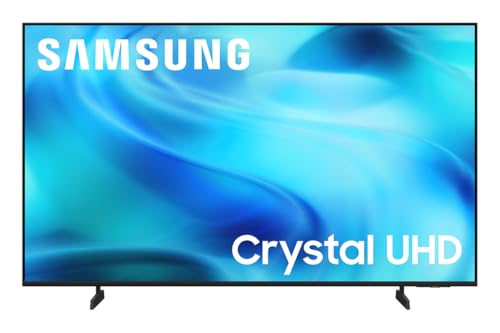
Samsung 85-Inch Class U8000H Series Crystal UHD, 4K, Smart TV, 2026 Model
Included for 'Best 85 Inch TV for Living Room Viewing' because the listing specifies Smart TV and 2026 Model, details this guide uses to compare options.
View on Amazon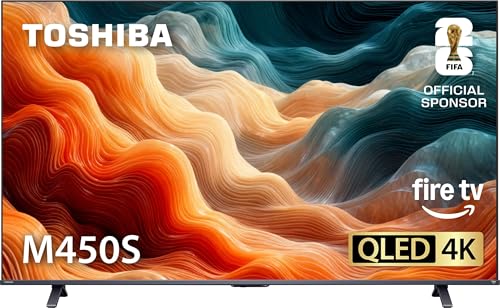
TOSHIBA 85" Class M450 Series QLED 4K UHD Smart Fire TV, Voice Remote with Alexa, Stream Live TV Without Cable
Included for 'Best 85 Inch TV for Living Room Viewing' because the listing specifies Voice Remote with Alexa and Stream Live TV Without Cable, details this guide uses to compare options.
View on Amazon
TCL 85 Inch T7 Series 4K 144Hz QLED Smart Google TV, 85T7 (Latest Model)
Included for 'Best 85 Inch TV for Living Room Viewing' because the listing specifies 85T7 (Latest Model), details this guide uses to compare options.
View on Amazon
INSIGNIA 75" Class F50 Series LED 4K UHD Smart Fire TV, Voice Remote with Alexa, Stream Live TV Without Cable
Included for 'Best 85 Inch TV for Living Room Viewing' because the listing specifies Voice Remote with Alexa and Stream Live TV Without Cable, details this guide uses to compare options.
View on AmazonUse these minimum clearances before you buy:
- Wall width: Allow at least 84-90 inches of uninterrupted wall width to leave 4-6 inches of breathing room on each side for ventilation and visual balance. In a 10×12 ft living room, an 85-inch TV will dominate the 10-foot wall and leave little room for side shelving.
- Height from floor: Center of screen should sit at eye level from your sofa, typically 42-48 inches from the floor. With a standard sofa seat height of 17-19 inches and eye height around 38-44 inches when seated, the bottom edge of an 85-inch TV should be 22-28 inches off the floor.
- Stand or console width: If not wall-mounting, your media console should be at least as wide as the TV, ideally 80-90 inches wide for an 85-inch set. A 60-inch console will look undersized and can be unstable if the TV’s feet sit at the edges.
- Viewing distance: For 4K resolution, THX and SMPTE guidelines recommend a 10 to 14 foot viewing distance for an 85-inch screen to get immersion without seeing pixels. Closer than 8 feet will feel overwhelming for most viewers.
| Room Setup | Ideal Viewing Distance for 85-Inch | Minimum Wall Width Needed | Recommended Console Height |
|---|---|---|---|
| Small living room (10×12 ft) | 8-9 ft (tight, consider 75-inch instead) | 84 inches | 20-22 inches low profile |
| Medium living room (12×16 ft) | 10-12 ft (sweet spot for 85-inch) | 90 inches | 22-24 inches |
| Large open-plan (16×20 ft+) | 12-14 ft (85-inch feels balanced) | 96+ inches | 24-26 inches |
| Wall-mount over fireplace | 10-13 ft | 84 inches + mantle clearance | N/A – mount 6-10 in. above mantle |
Panel Types at 85 Inches: Brightness vs. Black Levels
At 75 inches and above, panel technology matters more than brand badges. All major 2026 models are 4K, 120Hz native, with HDMI 2.1, but they handle light very differently.
QLED and Mini-LED QLED (Samsung, TCL, Hisense, Sony Bravia 7/9)
This is the best 85 inch TV type for bright living rooms with windows opposite the screen. A full-array local dimming Mini-LED backlight can hit 1,500-3,000 nits peak brightness, so daytime sports and HDR highlights stay punchy even with curtains open. No risk of permanent burn-in from static news tickers or game HUDs. Trade-off: Black levels are very good but not perfect; you may see slight blooming around bright objects on dark backgrounds, and viewing angles are narrower than OLED.
OLED (LG C4/G4, Sony Bravia 8)
OLED is self-emissive, so each pixel turns off completely for infinite contrast and perfect viewing angles. Best for dedicated movie viewing in dimmed rooms. At 85 inches (LG offers 83-inch OLEDs, Sony offers 85-inch Mini-LED as equivalent), OLEDs are typically 500-800 nits less bright than flagship Mini-LEDs, so glare is more visible in sunlit rooms. Modern OLEDs have burn-in mitigation, but static logos for many hours daily still carry higher long-term risk at this size than QLED.
Choosing by Your Living Room Light
- Choose Mini-LED QLED if: You have large windows, watch with lights on, watch a lot of news/sports/games with static elements, or want the highest brightness usually $1,600–$3,500 for 85-inch.
- Choose OLED if: You have light control (curtains, dimmers), watch movies in the evening, sit wide off-center, and want the most cinematic contrast, usually $2,500–$4,500 for 83/85-inch.
Stand vs. Wall-Mount: Real Measurements and Weight
An 85-inch TV is heavy and awkward. Box weight is often 110-140 lbs, and the panel alone is 90-115 lbs. You will need two people to lift it and doorways at least 32 inches wide to maneuver the box. Never plan to mount or move it alone.
If You Use the Included Feet
Most 85-inch TVs come with two wide-set feet spaced 48-60 inches apart. Your console top must be flat and deep enough to support them. Measure the foot depth, typically 12-16 inches deep, and ensure your console is at least 16-18 inches deep. Standard TV consoles are 15-20 inches deep, so check before buying. Glass-top consoles should be rated for at least 150 lbs static load.
If You Wall-Mount
Wall-mounting frees floor space and is often safer for kids and pets, but requires structural support. An 85-inch TV must be anchored into wood studs or concrete, not drywall alone. Use a VESA 600×400 mount rated for at least 130 lbs. The mount and lag bolts need to hit at least two studs 16 inches on center.
For viewing comfort, mount so the center of the screen is 42-48 inches from the floor. In a living room with a 17-19 inch sofa, that puts the bottom edge around 24 inches up. If mounting above a fireplace mantle (typically 48-54 inches high), the screen will sit too high for comfortable neck angle and will expose the TV to heat. If you must mount over a fireplace, keep at least 6-10 inches between mantle and TV and use a tilting mount to angle it down 5-10 degrees.
Leave 2-4 inches of clearance behind the TV for cables and airflow, and plan for cord management inside the wall or with a raceway. An 85-inch screen blocks a lot of wall, so measure outlet placement before you drill.
What Your TV Stand Material Means for Durability
The TV itself dominates the budget, but the stand determines whether it stays stable for years. At 85 inches, wobble and sag matter.
| Stand Material / Construction | Weight Capacity (Typical 70-90 in. console) | Pros | Cons / What Wears First |
|---|---|---|---|
| Solid Wood (oak, walnut, ash) | 200-300 lbs | Strongest, resists sagging, can be refinished, holds screws for mounts | Heaviest, most expensive, can expand/contract with humidity; usually $700–$1,500 |
| Engineered Wood (MDF/particleboard with veneer/laminate) | 100-175 lbs | Affordable, consistent finish, lighter to move | Sags under heavy 85-inch + soundbar over time, veneer chips at corners, swells if moisture gets in; usually $300–$600 |
| Metal Frame + Wood Shelves | 180-250 lbs | Very stable, excellent ventilation, modern look | Metal can show fingerprints, cheaper welds can loosen; shelves may still be engineered wood |
| Tempered Glass Top | 100-150 lbs (check rating) | Sleek, easy to clean | Shows dust, lowest weight tolerance, can crack if overtightened; not ideal for wide feet |
For finish durability with kids, pets, and sunlight: Powder-coated metal and catalyzed lacquer on solid wood resist scratches best. Matte laminate on engineered wood is more forgiving than high-gloss, which shows swirls. Direct sunlight will fade dark wood stains and warm veneers within 1-2 years if the console sits in front of a window. Add felt pads under the TV feet to prevent finish scratches.
Decision Matrix: Which 85-Inch Setup Fits Your Situation
| Your Situation | Best 85 Inch TV Type | Best Furniture Setup |
|---|---|---|
| Bright apartment, large windows, renters (no wall drilling) | Mini-LED QLED (e.g., TCL QM8, Hisense U8, Samsung QN90) | Low 80-90 inch solid wood or metal-frame console, 16-18 in. deep, with cable management back |
| Dark living room, movie-first household | OLED (LG G4/C4 83-inch or Sony OLED) | Wall-mount at eye level + low console for soundbar, light-controlled curtains |
| Family with kids and pets, high traffic | Mini-LED QLED for burn-in resistance + anti-glare screen | Wall-mount into studs or heavy, wide solid wood console, anchor console to wall, rounded corners |
| Small 10×12 ft room or viewing under 8 ft | Downsize to 75-inch Mini-LED for comfort | 70-75 inch console to keep walkways clear (need 30-36 in. path) |
| Open-plan great room, viewing from kitchen/dining | Bright QLED with wide viewing angle filter (Samsung QN90, Sony Bravia 9) | Swivel wall mount or center-room console rated 200+ lbs |
Assembly, Moving, and Long-Term Care Realities
Plan for delivery day. The carton for an 85-inch TV is roughly 80 x 50 x 10 inches and will not fit in most sedans or up narrow stairwells with tight turns. Measure elevators, hallways, and doorways before ordering. Keep the box for 30 days in case of return.
Assembly is usually attaching two feet with 4-8 screws and takes 15-25 minutes with two people. Wall-mounting takes 60-90 minutes including stud finding, leveling, and cable routing. Do not use the drywall anchors included for smaller TVs.
What wears first is not the panel but the surroundings: Dust in vents causes overheating, direct sun fades consoles, and overtightened feet strip particleboard. Leave 4-6 inches of ventilation around the console’s back panel for consoles with enclosed backs. Vacuum vents monthly, clean the screen only with a dry microfiber cloth, and use a surge protector rated for at least 2,000 joules.
Picks by Living Room, Not by Hype
For the brightest living rooms and best value, a 2025-2026 Mini-LED QLED 85-inch from TCL QM8 series, Hisense U8N/U8 series, or Samsung QN90D/QN90F offers the highest brightness and strong gaming features, usually $1,600–$2,800. For balanced premium performance and excellent processing, the Sony Bravia 9 (Mini-LED, 85-inch) is a top living room choice if budget allows, usually $2,800–$3,800.
For cinema contrast in a light-controlled room, an 83-inch LG OLED evo G4 or C4 is the living room favorite for film fans who sit wide and want perfect blacks, usually $2,600–$4,200. If you cannot control light or have long hours of static content, choose the QLED side instead.
Final check before you order: Measure wall width, measure viewing distance from where your eyes actually sit, and confirm your console depth and weight rating. An 85-inch TV looks best when the furniture beneath it is at least as wide as the screen and 22-26 inches tall, leaving your eye line naturally centered without neck strain.
