Key takeaways
- Airflow: Compare the spray gun’s required CFM with the compressor’s CFM at 90 PSI, not just its advertised maximum pressure. A little extra capacity helps prevent pressure drops.
- Tank size: Larger tanks provide a buffer for short painting sessions, while smaller tanks save floor space. For panels and occasional touch-ups, a compact tank can be sufficient if recovery is reasonably quick.
- Noise: Quiet operation is valuable in a residential garage or attached workshop. Look for low-decibel designs, but remember that every compressor still produces vibration and startup noise.
- Moisture control: Compressed air can carry water and oil contamination into paint. Use a quality separator, regulator, and appropriate hose setup, and drain the tank regularly.
- Workspace fit: Check the compressor’s height, wheel placement, outlet location, and power requirements before buying. An upright model may offer useful capacity while taking less floor area.
What's inside
Choosing an air compressor for auto painting is less about chasing the highest PSI and more about delivering steady airflow without overwhelming your workspace. A compressor that looks capable on paper may still cause sputtering, uneven coverage, or frustrating pauses if its usable CFM falls below the spray gun’s needs. For a home garage, noise, footprint, portability, and electrical demands matter just as much as raw power.
This guide compares five practical options for automotive touch-ups, panels, and hobby-level refinishing. The focus is on airflow at working pressure, tank capacity, oil-free convenience, recovery behavior, and small-space usability—so you can match the machine to your spray gun and painting plans rather than simply buying the largest tank.
As an Amazon Associate we earn from qualifying purchases.


How to Choose a Air Compressor For Auto Painting (2026)
- Airflow: Compare the spray gun’s required CFM with the compressor’s CFM at 90 PSI, not just its advertised maximum pressure. A little extra capacity helps prevent pressure drops.
- Tank size: Larger tanks provide a buffer for short painting sessions, while smaller tanks save floor space. For panels and occasional touch-ups, a compact tank can be sufficient if recovery is reasonably quick.
- Noise: Quiet operation is valuable in a residential garage or attached workshop. Look for low-decibel designs, but remember that every compressor still produces vibration and startup noise.
- Moisture control: Compressed air can carry water and oil contamination into paint. Use a quality separator, regulator, and appropriate hose setup, and drain the tank regularly.
- Workspace fit: Check the compressor’s height, wheel placement, outlet location, and power requirements before buying. An upright model may offer useful capacity while taking less floor area.
The Best Air Compressor For Auto Painting (2026)s Reviewed
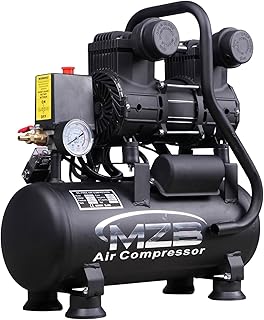
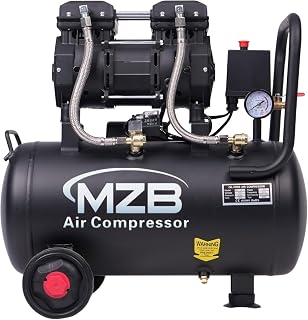
MZB 2.4-Gallon Ultra Quiet Air Compressor
The MZB 2.4-gallon model is a sensible choice for compact garages, detail work, and occasional spot repairs. Its oil-free design and relatively quiet 70dB operation reduce routine maintenance and disruption, while the listed 5.65 CFM and 115 PSI maximum give it useful versatility. The small tank is its main limitation: it is better suited to short passes and intermittent spraying than continuous full-panel work.
MAX 18.5-Gallon Upright Air Compressor
This MAX upright unit is appealing when floor space is limited but a small portable compressor feels underpowered. Its tall configuration keeps the tank footprint modest, and the 18.5-gallon capacity should provide a more comfortable air reserve for automotive projects. Before committing, verify the precise CFM rating and electrical requirements against your spray gun, because tank size alone does not guarantee sustained painting performance.
VEVOR 13-Gallon Quiet Air Compressor
The VEVOR 13-gallon compressor balances a manageable footprint with a useful 4.6 SCFM at 90 PSI and a 125 PSI maximum. At a listed 66dB, it is one of the more workshop-friendly choices for attached garages and shared home spaces. Its wheels and thickened steel body make repositioning easier, although the airflow may be best matched with a modest HVLP or detail spray gun rather than a demanding continuous-use setup.
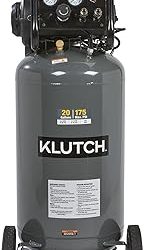
Klutch 29-Gallon Air Compressor
For larger panels and longer painting sessions, the Klutch 29-gallon model offers the strongest tank capacity in this group. Its 2.5 HP motor, 175 PSI maximum, and 5.1 CFM at 90 PSI provide a useful combination for nailing and painting tasks, while the vertical design helps conserve floor area. It is still important to check your gun’s consumption: the tank can smooth brief demand spikes, but sustained spraying is governed by compressor output.
AAIN 6.3-Gallon Ultra Quiet Air Compressor
The AAIN 6.3-gallon compressor is a practical middle ground for homeowners who want more reserve than a compact pancake-style unit without moving to a bulky commercial machine. Its listed 6 CFM, 116 PSI maximum, wheels, and 70dB noise rating suit small automotive repairs and general workshop use. It should be paired with a moisture separator and regulator for paint work, and its recovery time should be watched during longer, uninterrupted passes.
Frequently Asked Questions
What CFM is best for auto painting?
There is no single ideal number because spray guns vary widely. Check the gun manufacturer’s CFM requirement at its recommended pressure, then choose a compressor with a margin above that figure. Higher-demand HVLP guns generally need more continuous airflow than detail or touch-up guns.
Is a 6-gallon compressor enough for painting a car?
A 6-gallon compressor can handle small repairs, trim pieces, and intermittent touch-up work when matched with a low-consumption gun. It is usually less comfortable for painting an entire vehicle, where frequent pauses and pressure recovery can affect consistency.
Does a larger PSI rating mean better painting performance?
Not necessarily. Most spray guns operate within a specific pressure range, and the compressor must maintain adequate CFM at that working pressure. A high maximum PSI is useful for reserve and other tools, but it does not replace sufficient airflow.
Should I choose an oil-free compressor for automotive paint?
Oil-free models are convenient and reduce the risk of compressor oil entering the air stream, but they can be louder or have different durability characteristics. Whichever design you choose, use filtration and moisture control because clean, dry air is essential for a smooth finish.
Final Thoughts
For tight home workshops, the VEVOR 13-gallon offers a strong balance of quiet operation, mobility, and useful capacity. The AAIN 6.3-gallon is a flexible middle-ground choice for smaller jobs, while the Klutch 29-gallon is the better direction for larger panels and longer sessions. Match any of these picks to your spray gun’s CFM demand, add proper filtration, and leave enough room for safe ventilation and comfortable movement around the vehicle.