Key takeaways
- Airflow: Check the spray gun’s recommended CFM at its working pressure, then choose a compressor that can meet or exceed it continuously. Tank size alone does not make up for insufficient output.
- Tank capacity: A larger tank provides a steadier reserve for spraying and reduces constant motor cycling. Compact tanks are more suitable for airbrushing, spot repairs, and short passes.
- Noise: Quiet operation matters in a home garage, especially when the compressor shares a wall with living areas. Oil-free designs generally simplify upkeep, though they can be less durable under heavy commercial use.
- Moisture control: Water in an airline can spoil automotive finishes. Look for a drainable tank, a moisture separator, and room to add an inline filter or desiccant dryer before the spray gun.
- Workspace fit: Vertical tanks conserve floor area, while wheels and a manageable footprint make repositioning easier. Leave ventilation space around the motor and keep the compressor away from paint mist.
What's inside
Automotive painting in a garage or workshop is less about buying the biggest compressor and more about matching airflow to the spray gun, project size, and available space. An undersized unit can cause pressure drops, uneven coverage, and frustrating pauses, while an oversized model may dominate a small workspace without delivering better results.
This guide compares practical compressor options for automotive paint work, from compact airbrush systems for touch-ups and graphics to larger units suited to HVLP or LVLP spraying. The recommendations focus on usable airflow, noise, portability, maintenance, and how realistically each compressor fits into a home workshop.
As an Amazon Associate we earn from qualifying purchases.


How to Choose a/an Air Compressor For Automotive Painting (2026)
- Airflow: Check the spray gun’s recommended CFM at its working pressure, then choose a compressor that can meet or exceed it continuously. Tank size alone does not make up for insufficient output.
- Tank capacity: A larger tank provides a steadier reserve for spraying and reduces constant motor cycling. Compact tanks are more suitable for airbrushing, spot repairs, and short passes.
- Noise: Quiet operation matters in a home garage, especially when the compressor shares a wall with living areas. Oil-free designs generally simplify upkeep, though they can be less durable under heavy commercial use.
- Moisture control: Water in an airline can spoil automotive finishes. Look for a drainable tank, a moisture separator, and room to add an inline filter or desiccant dryer before the spray gun.
- Workspace fit: Vertical tanks conserve floor area, while wheels and a manageable footprint make repositioning easier. Leave ventilation space around the motor and keep the compressor away from paint mist.
The Best Air Compressor For Automotive Painting (2026)s Reviewed
California Air Tools 8010 PK
The California Air Tools 8010 PK combines an eight-gallon tank with an included LVLP spray-painting kit, making it a convenient starting point for furniture refinishing, panel work, and other intermittent projects. Its 60 dBA rating and wheeled design are particularly useful in a compact garage, although serious full-vehicle spraying still demands careful attention to the gun’s CFM requirements and moisture filtration.
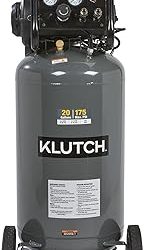
Klutch 29-Gallon Vertical Compressor
With a tall 29-gallon tank, 2.5 HP motor, and 175 PSI maximum pressure, the Klutch is the strongest choice here for users who need a larger air reserve and want to conserve floor space. Its vertical format suits a dedicated workshop, but its greater size makes it less convenient to move and more than most hobbyists need for brief touch-ups or airbrushing.
California Air Tools CAT-4610AC
The CAT-4610AC is a smart fit for small workshops where portability and low noise matter more than maximum spray duration. Its twin-tank layout and oil-free 1.0 HP motor offer a tidy, compact solution for detail work, trim pieces, and smaller paint guns; it is better viewed as a portable finishing compressor than a full-panel production unit.
VEVOR 13-Gallon Air Compressor
VEVOR’s 13-gallon oil-free compressor offers a useful middle ground, with a larger reserve than compact portable models while retaining wheels and a relatively modest footprint. Its 4.6 SCFM at 90 PSI can support many intermittent automotive and woodworking tasks, but painters should still test their spray gun at the intended pressure rather than relying only on the advertised tank size.
Timbertech ABPST08 Mini Compressor
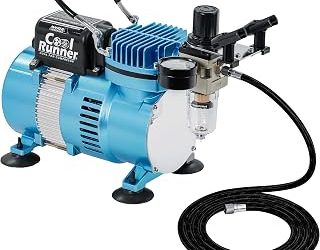
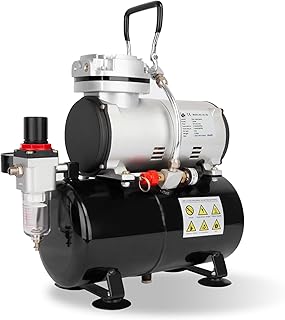
The Timbertech ABPST08 is designed for controlled, low-volume work such as automotive graphics, model painting, touch-ups, and detailed finishes. Its three-liter tank, regulator, moisture trap, and cooling fan make it more practical than a tankless airbrush compressor, but its output is not intended for conventional full-size automotive spray guns or large panels.
Frequently Asked Questions
What size compressor is best for automotive painting?
For occasional panel work, a compressor with a useful tank reserve and output that exceeds the spray gun’s stated CFM requirement is a sensible starting point. Larger automotive guns may require substantially more airflow than compact home compressors can provide, so always compare the compressor’s CFM at 90 PSI with the gun’s specifications.
Is an oil-free compressor suitable for car paint?
Yes, an oil-free compressor can work well for hobby and intermittent automotive painting, especially when convenience and low maintenance are priorities. Use a quality regulator, water separator, and final inline filter because clean, dry air is essential for a smooth finish.
Can a quiet compressor be used indoors?
Quiet models are more comfortable in a garage or shared home workspace, but “quiet” does not mean silent. Provide proper ventilation, keep the unit clear of combustible vapors and overspray, and follow the manufacturer’s electrical and operating instructions.
Is a mini compressor enough for automotive graphics?
A mini compressor such as the Timbertech ABPST08 or AS186 can be appropriate for airbrush graphics, lettering, small repairs, and detailed accents. It will not normally provide the sustained airflow required by a conventional full-size spray gun covering doors, hoods, or entire vehicles.
Final Thoughts
For a balanced home-workshop setup, the California Air Tools 8010 PK is the most convenient all-rounder, while the Klutch 29-Gallon Vertical Compressor is the better choice for higher air demand and longer sessions. Choose the CAT-4610AC or Timbertech ABPST08 when compact storage, portability, and detailed work matter more than continuous spray capacity.